photos @labyrinth.project
I wasin Luxembourg when I first heard about the raid on Labyrinth.
Before moving abroad, the Labyrinth night club had been like a second home for me in Baku. Like many queer people in Azerbaijan, I associated the space with freedom, friendship, and the rare feeling of being able to let my guard down. Even after leaving the country, I remained deeply connected with the community that gathered there every weekend.
It was the night of 27 December, just days before New Year's Eve, when a friend called me. She was trying to reach people who had gone to Labyrinth that night but nobody was answering. At first, I thought she was joking — she used to play such jokes on me. But when I started calling friends and got no response, a sense of panic set in.
I did not sleep that night.
I followed every update from afar, as reports began to emerge online. It felt as if I had been detained alongside my tribe. While others were celebrating the arrival of a new year, I spent those days contacting journalists, international organizations, and human rights groups, trying to bring attention to what had just happened. The images, testimonies, and uncertainty surrounding the raid overshadowed the beginning of 2026 for me.
This May, I returned to Azerbaijan to report on the Labyrinth raid. I felt compelled to make that journey, because I could not let my community down.
But first, let me tell you something about the country.
Azerbaijan is located between Eastern Europe and Western Asia, and bounded by the Caspian Sea and the Caucasus Mountains. It has long been shaped by a complex blending of traditions.
In 2000, the transcontinental nation decriminalised homosexuality. More than two decades later, however, LGBTQ+ people continue to live without legal protections against discrimination or violence.
On the night of 27 December 2025, police raided Labyrinth, a nightclub in the capital Baku. According to witnesses who spoke to queer.lu, 106 people were detained. Many reported psychological abuse, threats, physical violence, and violations of privacy during almost twelve hours in police custody. The raid drew international criticism and attention from human rights groups and international electronic music communities, who described the operation as an attack not only on LGBTQ+ people, but on queer joy itself.
Police Raid Queer-Inclusive Venue in Baku
"My name is Sabina Alishova, also known as DJ Venusian," says Sabina Alishova (she/her). "For the past two years, I was a resident DJ at Labyrinth Club. We built that space from zero with our own energy, love, and dedication."
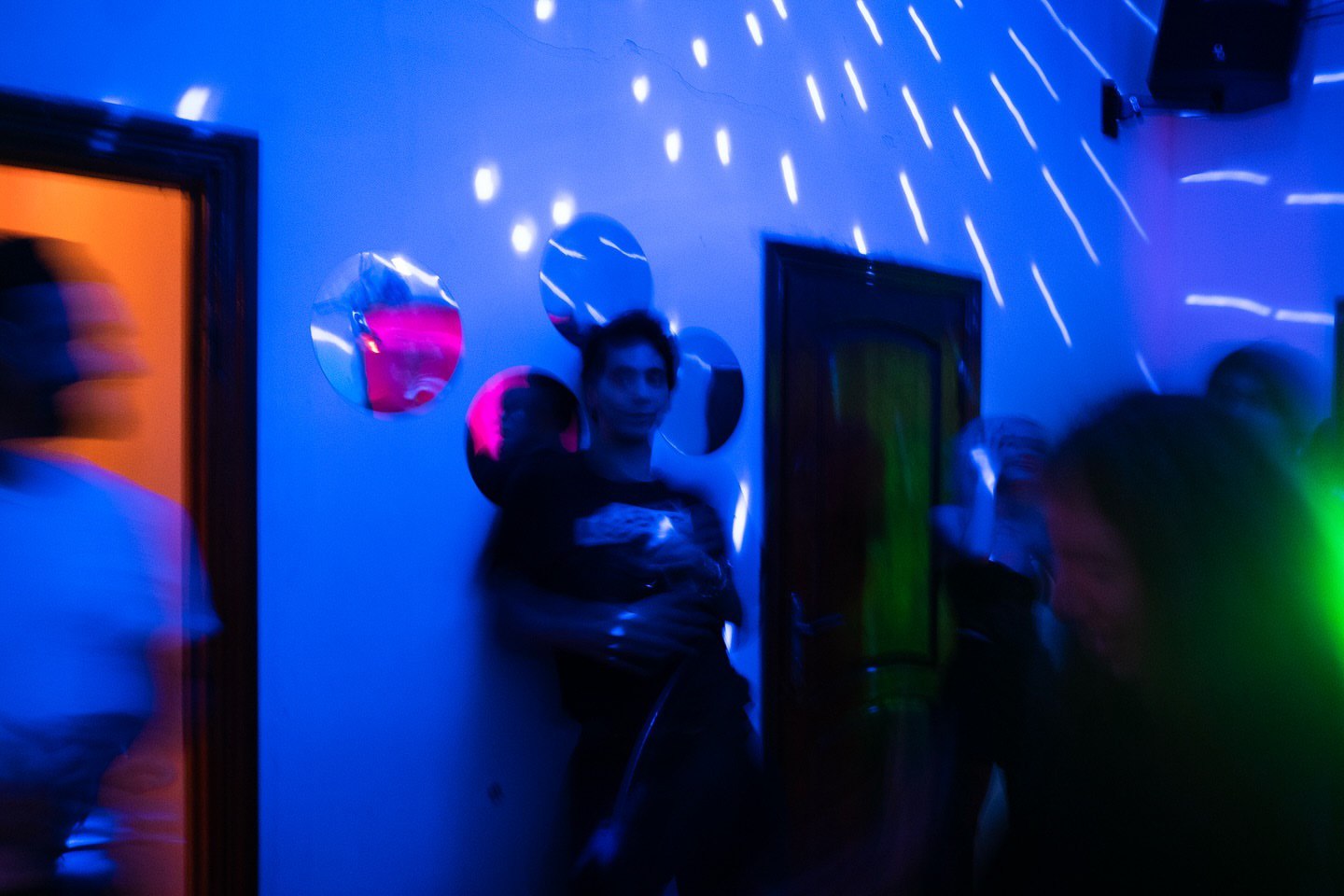
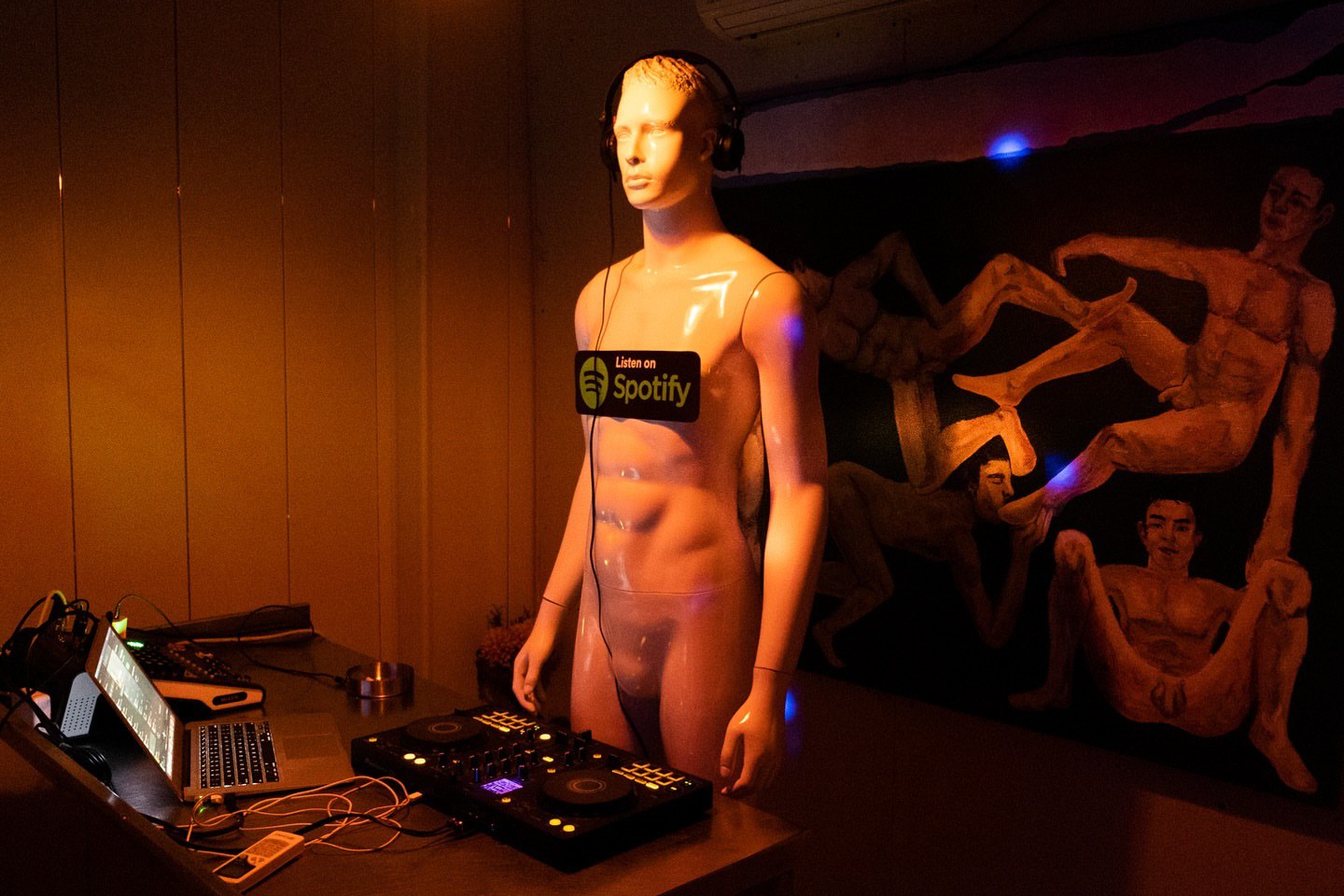
Sabina describes or defines Labyrinth as a rare cultural refuge in a society where queer people often navigate fear and social hostility. It was one of the few openly queer-inclusive spaces in the country, a place where people could dance, dress, kiss, and exist freely, even if only for a few hours.
Personally, Labyrinth meant much more than a club. It was like a home every weekend. Music, community, and the people there helped me through difficult periods in my life, including depression.
Sabina Alishova (she/her)She refers to the venue as a "PLUR space" — built on peace, love, unity, and respect — where people from different backgrounds gather to feel safe and free.
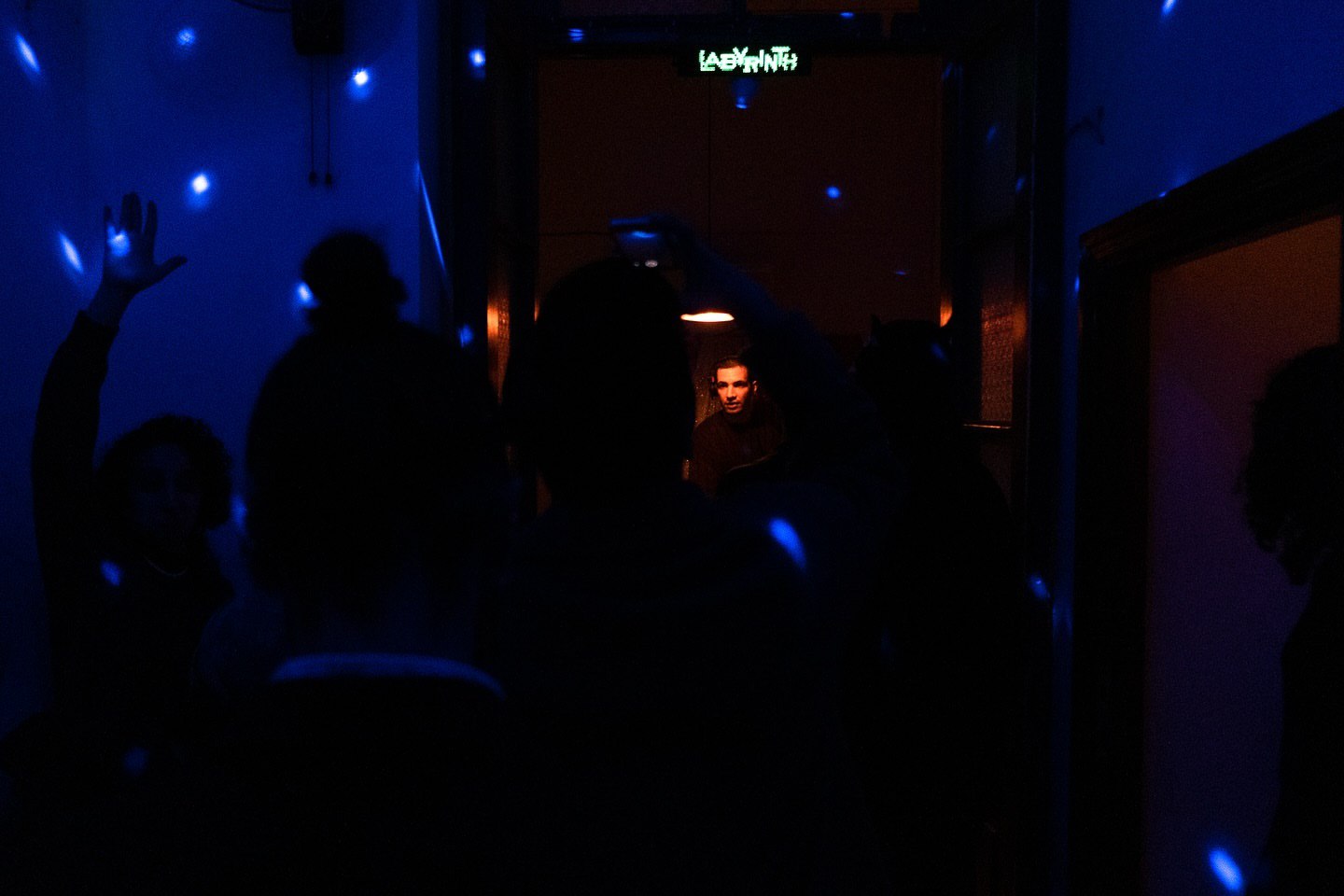
On the night of the raid, Sabina was DJing when masked police officers stormed the venue.
Around 00:40, a large group of masked armed police officers, uniformed police, and civil police suddenly entered the club. For a second, I genuinely thought it was the last day of our lives and that we were all going to die.
Sabina Alishova (she/her)Witnesses told queer.lu that the music was abruptly cut off as police forced people onto the floor, handcuffed some attendees, confiscated phones, and shouted threats at the crowd.
"At that moment, I kept thinking: what did we do wrong?" Sabina says. "We were simply dancing, playing music, and sharing beautiful memories together."
Among those detained that night was Emil Zeynalov (he/him), who describes the experience as life-changing.
photos @labyrinth.project
27 December 2025 is the day that divided my life into 'before' and 'after.' The day when security forces tried to break not only me, but 105 other people who were there with me.
Emil Zeynalov (he/him)According to Emil, the raid began just as he and his friend ran toward the DJ booth to dance to their favorite song.
"I saw a man in a bulletproof vest and a balaclava. The only thing visible were his eyes — filled with hatred and aggression," he recalls. "He shoved me so hard I almost fell. Seconds later, the music was cut off."
He says people were pushed against walls, mocked, filmed without consent, and threatened into silence.
"They laughed in our faces, filmed us on their personal phones against our will, as if we were trophies rather than human beings," he says.
One of the most disturbing moments for Emil was watching police violently assault a young man who refused to hand over his phone.
"Four police officers jumped on him right in front of all of us," he says. "They punched him, twisted his arms, and tried to rip the phone away by force. He screamed in a way I still remember to this day."
Detainees were later transported to a police station where, according to testimonies received by queer.lu, they were denied basic necessities and subjected to degrading treatment for nearly twelve hours.
"We stood outside in the cold without coats for almost an hour and a half," Emil recalls. "People were not allowed to use the bathroom. One boy wet himself in the crowd because he couldn't hold it anymore."
He also describes witnessing a friend suffering a panic attack being dragged across the floor by police officers.
"When he collapsed, they slapped him and told him: 'We don't need your performances here,'" Emil says.
Some detainees reported sexual harassment and forced phone searches. Others say they were denied water and forced to stand for hours without sitting down.
The worst part is not even the physical violence. The worst part is the feeling of absolute helplessness — when people try to strip you of your dignity and make you feel like you are nothing.
Emil Zeynalov (he/him)When questioned about the operation, Azerbaijani police maintained that the raid was linked to alleged drug use at the venue. However, according to multiple media reports, no narcotics were ultimately presented as evidence, and detainees were instead fined under administrative regulations related to indoor smoking. Authorities have not publicly addressed many of the allegations raised by those detained, including claims of physical violence, humiliation, coercion, and invasive searches of personal phones.
Ali Malikov (they/them), an Azerbaijani LGBTQ+ activist and blogger, believes the raid must also be understood within the wider political and social climate in Azerbaijan.
A Pattern of anti-LGBTI Repression
Ali Malikov (they/them), an Azerbaijani LGBTQ+ activist and blogger, says the raids need to be framed (or understood) within a wider pattern of state pressure on queer communities and civil society. They note that, while police have long been associated with harsh methods, the Labyrinth raid triggered intense international scrutiny and criticism.
Ali argues that the latest incident differed in tone from earlier crackdowns in 2017 and 2019, when queer people were directly targeted in coordinated raids across the capital city Baku.
In 2017, more than 100 LGBTQ+ people were detained across the country. Human rights organizations, including Human Rights Watch and Amnesty International documented arbitrary detentions, ill-treatment, and forced medical examinations during these operations. Many were held without access to legal representation and released only after days of detention, with reports of intimidation and humiliation. Human Rights Watch also documented cases of violence, coercion, and extortion during the raids, noting that the operations generated widespread fear and international condemnation.
In those years, police specifically hunted LGBTQ+ people in streets and public spaces. This time it felt more like a display of intimidation and force toward a group seen as outside social control.
Ali Malikov (they/them)Still, the consequences have been severe.
"Labyrinth was one of the first openly queer-inclusive clubs in Azerbaijan," Ali says. "Today there are still some spaces where the community gathers, but they operate under constant pressure. Many people are now afraid to attend because they fear the police will spoil the joy."
According to Ali, everyday safety for LGBTQ+ people in Azerbaijan remains fragile.
"We are always careful — on the streets, on dating apps, on social media," they say. "Most people simply wanted a place where they could spend time with friends and feel comfortable. But overnight, they found themselves in police stations, and the next day their photos were circulating online."
Ali also points to the growing lack of safe and stable spaces for queer cultural life.
"Events are pushed into private homes because safe venues are rare," Ali says. "Most cafés and restaurants avoid hosting LGBTQ+ cultural events. In Baku, there is almost no stable place where a queer young person can simply exist safely."
Ali adds that increasing repression on civil society since 2023 has weakened independent journalism, legal aid, and human rights advocacy.
Many victims did not file official complaints because they do not believe institutions will protect them. The international community needs to understand the broader context we live in. We are surviving in an environment where many forms of repression overlap.
Ali Malikov (they/them)In October 2025, the European Commission against Racism and Intolerance (ECRI) stated that Azerbaijan failed to implement its recommendation on collecting and publishing comprehensive data on racist and LGBTQ+-phobic hate speech and hate crimes. While authorities highlighted a general awareness campaign on hate speech, ECRI concluded that no meaningful steps had been taken to create a transparent monitoring and reporting system.
photos @labyrinth.project
Resilience despite pressure
Despite the trauma, many connected to Labyrinth insist the community remains intact.
"The raid deeply affected the local queer nightlife and community," Sabina says. "Many people were heartbroken and traumatized afterward. But we stayed together. We continued meeting, dancing, singing, laughing, and even making jokes about that night as a way to heal."
For her, Labyrinth was never only a venue.
"It was always about the people," she says. "That spirit still lives inside of us."
Sabina continues her work as a DJ and artist.
Music is how I share my inner world. For me, music and love are the answer — maybe the last real magic we have left.
Sabina Alishova (she/her)The ILGA-Europe Rainbow Europe Index 2026 gives Azerbaijan a score of 2%, placing it alongside Russia among the lowest-ranking countries in Europe for LGBTQI+ equality and protection.
The organisation recommends anti-discrimination legislation covering sexual orientation, gender identity, gender expression, and sex characteristics, alongside the creation of an equality body and the introduction of hate crime and hate speech laws that explicitly include LGBTQI+ protections. It also calls for the depathologisation of trans identities and access to safe, trans-specific healthcare.
These recommendations reflect long-standing gaps in protection that continue to shape the everyday lives of LGBTQ+ people. While legal reforms remain necessary, the testimonies of those affected by the Labyrinth raid reveal a more immediate concern. Such as the ability to exist safely in public space. For many, the issue is not only about laws and policies, but about being able to meet friends, dance, build community, and experience joy without state intervention.
As Sabina and Emil's experiences demonstrate, queer spaces are often much more than entertainment venues. In a society where LGBTQ+ people are frequently marginalized, they become rare places of belonging, and self-expression.
Yet Azerbaijan's queer community has no intention of giving up — not now, not ever.