 English
 Français
 Deutsch
We all know the story: in 1969 in Greenwich Village, New York, there stood a bar called the Stonewall Inn where drag kings and queens, trans, gay and lesbian folks alike built their merry paradise in an oppressed age and time. When the police conducted yet another raid of the establishment in the early hours of 28 June, handing out fines to anyone not wearing at least three articles of “gender-appropriate clothing” and taking several people into custody, someone threw a brick – or a bottle or a Molotov cocktail – and, over the next few days, the LGBTQ+ rights movement was born. So far so good. But when the only thing being thrown in the streets is glitter, we must ask ourselves: what is left of this movement now?
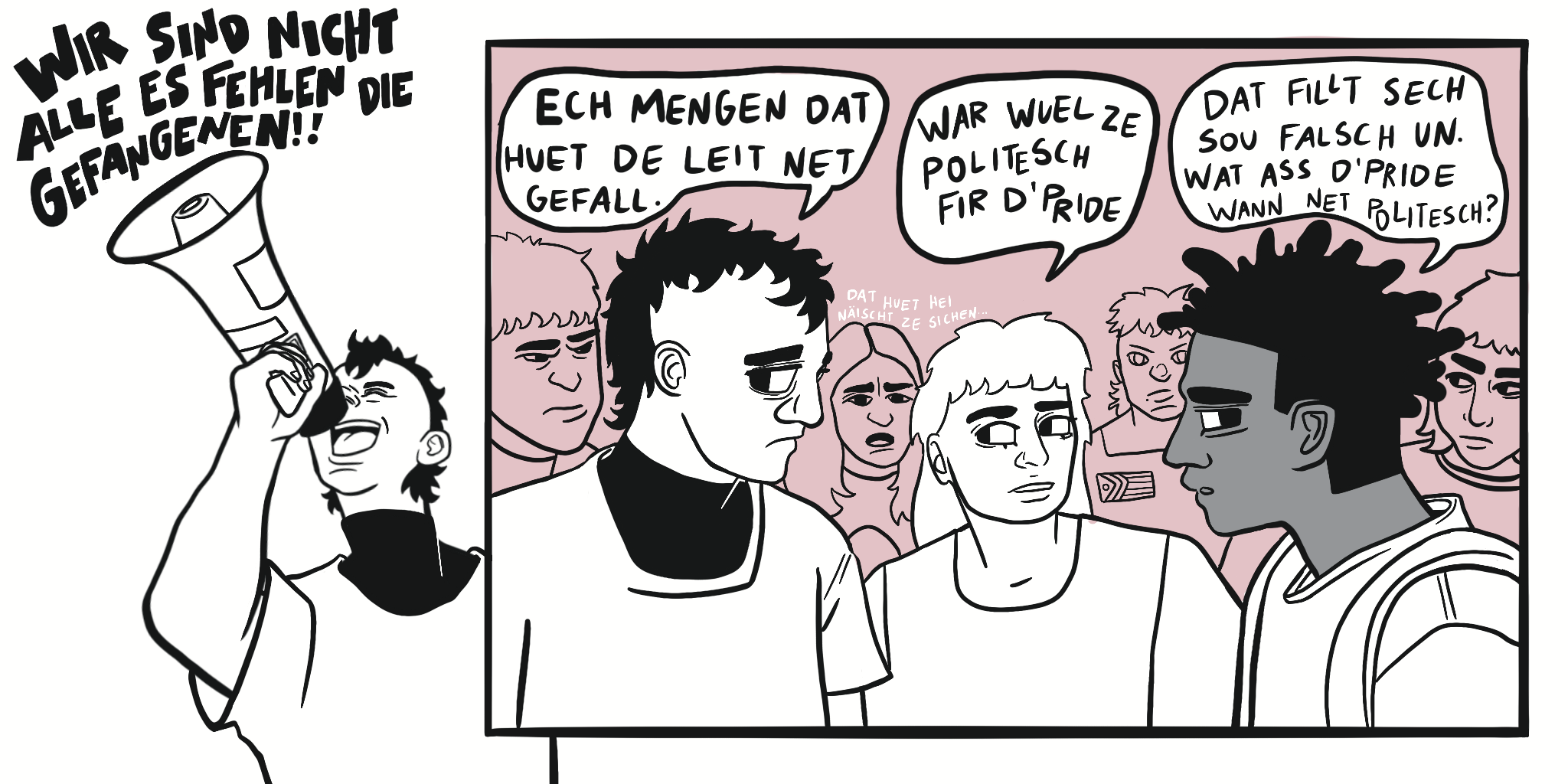
Posts from Pride events across Europe and the USA appear almost cartoonish; middle-aged men waving and throwing stickers from their floats into the crowd below, company after company passing by followed by NGO after NGO, and only then, at the very back, a throng of young people with political signs, purpose and a fighting spirit. And yet, the music blasting over their chants and estranged stares seems to pose the question: "Why are you always so negative? Pride should be a celebration”.
Celebration, of course, is not the problem – there is nothing wrong with queer people taking up space, being visible, or simply enjoying the freedom to celebrate who they are. But somewhere along the way, visibility itself has become increasingly understood as a political act. The issue is that visibility alone does not protect anyone, and representation does not necessarily create political power.
A high-profile figure like Xavier Bettel may live the “out and proud” life but he has little in common with the average queer person, who is likely to face harassment, violence, poverty and discrimination. Queer youth are particularly vulnerable, facing disproportionately high rates of suicide, depression, homelessness and abuse. At the same time, wealth and power remain heavily concentrated: the richest 1.6% of adults control nearly half of the world’s wealth. Yet governments continue to prioritise war and political interests over protecting vulnerable communities.
Legal protections are not permanent. Many states that have pledged to protect human rights are introducing new legislation that restricts queer people's rights or actively discriminates against the LGBTQ+ community. In Luxembourg, discrimination based on sexual orientation or gender identity is prohibited, but legal protections do not guarantee safety. In neighbouring Germany, Pascal Kaiser was denied police protection despite receiving death threats after proposing to his boyfriend during a Bundesliga game. He was attacked in his own garden just 20 minutes after being told there was no immediate danger, illustrating just how inadequate legal protections can be. Recent reports demonstrate the scale of the problem: LGBTQ+ people in Germany continue to face widespread violence; nearly 2,400 queerphobic offences were recorded in the country in 2025, marking a 12.8% increase from the previous year.
Rights that were given can easily be taken away. Assuming the law will always protect us allows governments to gradually erode those rights while vulnerable communities are left to fight back alone. It is easy to look at countries like Luxembourg, where LGBTQ+ people have gained significant legal recognition, and assume that the hardest work is already behind us. But a movement cannot survive on visibility alone.
So what happens when activism becomes uncomfortable? What happens when people challenge the institutions and movements they are supposed to belong to? What happens when there is little space for those who want to organise differently?
These are questions that are particularly worth asking in a small country like Luxembourg, where, although queer people have gained significant legal recognition, political organising can still feel surprisingly difficult.
For this issue of queer.lu, we spoke with Gabrielle Antar about her experience of activism in Luxembourg, the communities she has tried to build, and what happens when you keep fighting for change in a place that does not always seem ready to make space for it.
“You Can Fight, But You Can’t Fight For Too Long, You Know?”
On activist burnout, fractured movements, and the difficulty of making space for new ideas
After years of organizing and building communities in Luxembourg, activist, writer and cultural organizer Gabrielle Antar sits down with R22 to reflect on her fight, her challenges and her hopes.
R22: What brought you to activism?
Gab: Because I always wanted to be one. You know how other people want to become lawyers and doctors. I wanted to be an activist. I grew up in the US, and when I learned about Martin Luther King Jr. as a kid, I thought, “Wow, that’s what I want to do.”
Obviously things evolved from there. I participated in the demonstrations in Lebanon during the 2019 revolution and I continued joining protests after the Beirut explosion. I was there when it happened. That radicalized me. I moved to Luxembourg shortly after.
Then, in 2023, when the genocide in Gaza started, I attended the first demonstration that was organized in Luxembourg, and I could clearly see how far behind the country was when it came to radical action. So I decided I had to do something about it.
Could you tell us in more detail what exactly you have worked on here in Luxembourg?
I primarily focused my energy on the 2 collectives that I helped found. One of them is an alternative media and community platform called déi aner. It started with me publishing articles because I felt like certain voices were not included in the press. I realized that doing it alone was not going to work; I needed a community behind me. So I made an open call and we built a community around it. And now it has become what it is today.
We really try to highlight marginalized voices. We also organize events to support more marginalized people. It's really all about being a community that supports each other.
Then there was Waassermeloun, which was founded in 2023, at the beginning of the genocide in Gaza. From my personal point of view, there weren't enough events being organized to really educate people about what was and still is happening in Palestine, what the actual narrative is, and how to be efficiently active for Palestine. I believe that if your activism is about asking for a two-state solution, you're actually betraying the Palestinian people. That's why our first two events, before we were even called Waassermeloun, were screenings of documentaries on Ghassan Kanafani and Leila Khaled, who are both very important figures in the Palestinian liberation movement. We went on to organize cultural and activist events as well as demonstrations.
When you first started working on all of these things in Luxembourg, did you feel like it was welcomed? Did people give you positive feedback, or was there a pushback to you trying to build something new?
At the beginning, it was mostly negative feedback. I remember working on déi aner with my journalist coworker who co-created the collective with me - she posted a reel about queer history, and somebody just commented trashing us. “Who are you guys? Are you even queer? What do you think you're doing? You're not even real journalists”, or something like that. We responded by saying that if there were things we were getting wrong, we were more than happy to get feedback, but there was no need to put us down, you know?
When we were creating things with Waassermeloun, obviously we were starting to build a very strong community, but there was no space given to us. I think that was the common thread with everything: you had to fight for every little centimeter of space you wanted and for recognition.
I don't feel like we've been recognized in these spaces. I mean, look at the die-in we organized for the 8th of March with Megaphone. JIF (Journée Internationale des Femmes) officially hates us now. Instead of seeing us as courageous for speaking up and challenging things, it's like, “Oh no, how dare they say something against us?” And then they cast us aside, even though I would say we are the most important critical voices in Luxembourg. People don't want to be criticized, right? Even with Waassermeloun, we tried to talk to other “pro-Palestinian“ organizations, but every conversation was us having to tell them, “what you just said was racist. You can't say that”. At some point, they obviously don't want to work with you anymore.
How did it feel to get that kind of pushback from people and organizations you're also trying to uplift?
I mean, there's a reason why I want to leave Luxembourg. You can fight, but you can't fight for that long, you know?
Obviously, on an individual level, we have a lot of support. But I would say I was most disappointed by the feminist and queer communities, because I expect better from people who are supposedly on our side.
You don't have a lot of radical thinkers in powerful positions in Luxembourg, and everyone who agrees with us is in a precarious position in some form or another. Even within the institutions we're talking about, there are people who agree with us, but they're not the boss. They'll say, “I support you on the down low, but I can't fully support you because then I'll also lose my job”. And I've been told this by multiple people.
Wow, this is really depressing. Sometimes you forget how fucked up it all is, and then you have to talk about it and you're like, “fuck, okay.”
It is depressing. But that's exactly why it's important to talk about it. You’ve talked about how people can be afraid to openly support you because of the consequences. How has being sued by Xavier Bettel, and dealing with that kind of legal action, affected you and the people who support you?
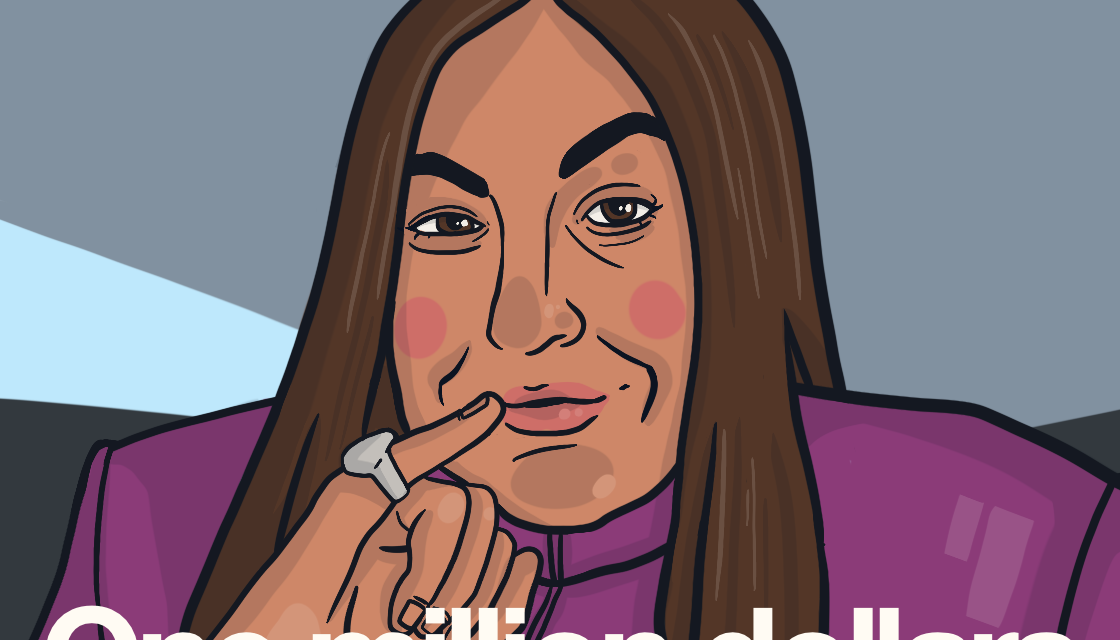
I found out at the beginning of November 2025 that he was suing me. I was very shocked because the meme was a word-for-word quote from the movie Mean Girls. That was the biggest issue I had with the media coverage – a lot of the media reported on it without even mentioning that it was a quote from the movie.
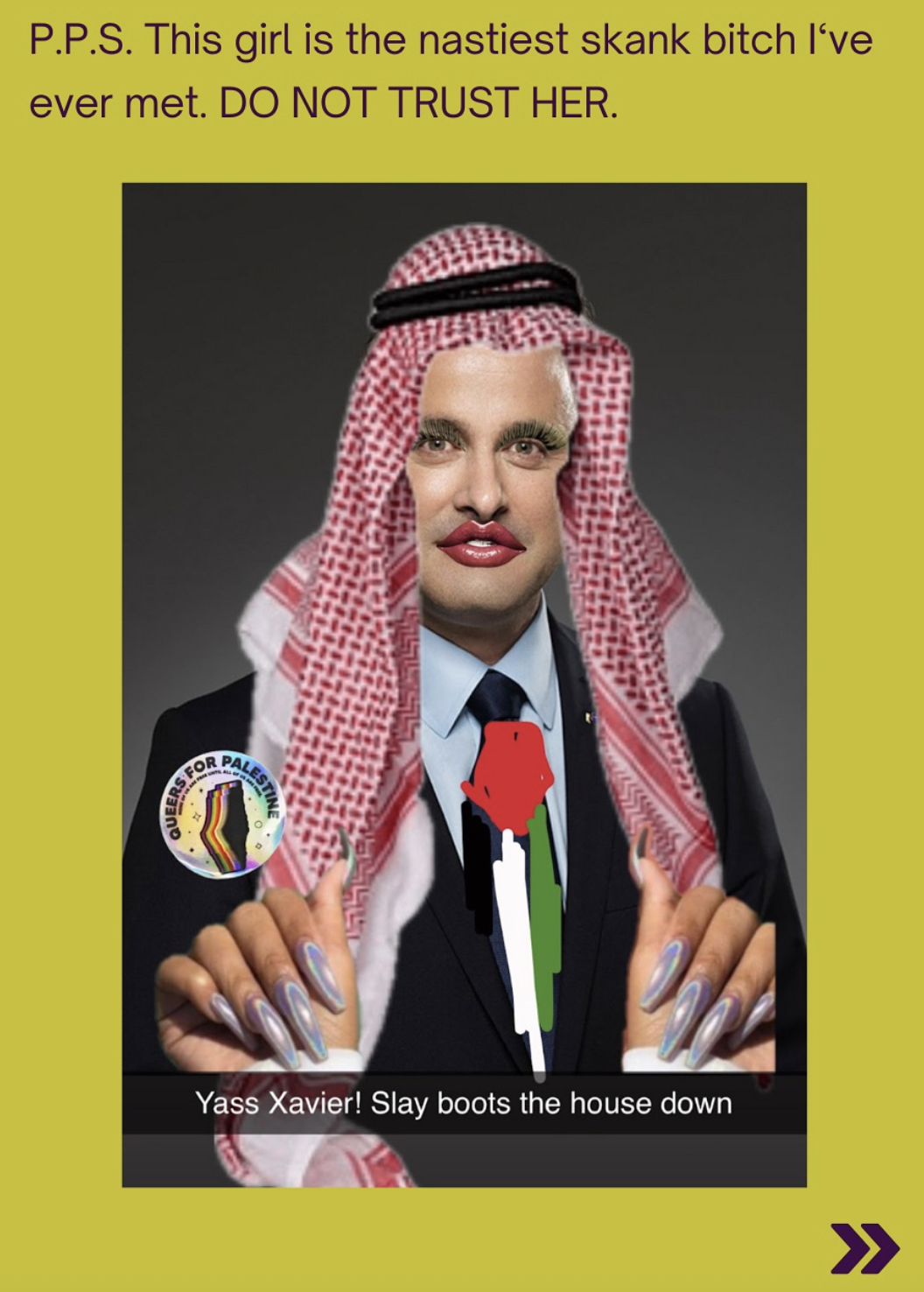
The reporting was insane. I was shocked by how they tried to portray me. It felt very racist, like I was being depicted almost as a terrorist. Or at least in the same scope of narrative building that they do towards angry, aggressive Arabs. I was very disappointed by the press.
I felt like this was a huge story, but the people who could have reported on it properly didn't. The only really good article was by Maura Lehmann from RTL Today. Some articles even compared what I did to a death threat. Comparing a meme to a death threat is completely absurd and extremely unfair. I'm not a violent person.
And it's still ongoing. I was interrogated by the police for three hours, and now I have to wait and see whether the court decides that any of his claims are valid. There's been no update since.
The interrogation was very traumatizing, especially because the officer took it so seriously and told me, “This is not how it's done here.”
And I’m like, I've been trying to speak directly to politicians since the beginning of the genocide. I stood in front of the Chambre des Députés, and people from the DP and CSV wouldn't even talk to us. So when I'm being told that I've gone too far, I'm thinking: how are we still supposed to ask nicely when we've already asked and been ignored?
The world is burning, people are dying, and these politicians could have saved lives by helping evacuate the families of Palestinian-Luxembourgish people who were trapped in Gaza. They chose not to. And I don't feel like I had support.
The only organizations that put out a statement supporting what I did were Richtung22 and Déi Jonk Lénk. That's it. And I feel like this is such a big violation of freedom of expression and it was just swept under the carpet like that.
It’s really scary because it sets such a big precedent. If a public figure can sue you over something as inconsequential as a meme, what does that mean for what we can say and do in the future? It's scary that instead of taking a step back and saying, “Wow, we cannot let this happen”, the community shifts the blame onto you as an individual.
I do think a lot of people who didn't say anything actually thought that the reaction was wrong. But this is also a typical thing in Luxembourg; people see something that's really unfair but don't do anything about it.
That's what I felt when I started my activist career in Luxembourg. Everyone was like, “Oh, this isn't fair, but I don't know what to do”. So I stepped in and started doing things, hoping more people would join. But honestly, it's not enough for me to stay. I expected more from people, especially from the cultural sector, which has more leeway to speak out. And there was nothing.
Would you say this situation was the tipping point that made you want to leave Luxembourg?
Maybe now, reflecting on it, yeah. But it's also a question of culture. In Lebanon, there's a much stronger sense of community, where people really have your back and take care of you. In Luxembourg, there's a much more individualistic culture, so people don't necessarily step up and say, “This is wrong”, even when they have much more privilege. I think I also craved a different kind of society. And honestly, this situation has affected my job prospects too. I can't find a job now, which is also one of the reasons I'm leaving.
Thinking positively, what would need to change for you to feel like, “I can stay here. I want to stay here. I want to give this country and this community another chance”?
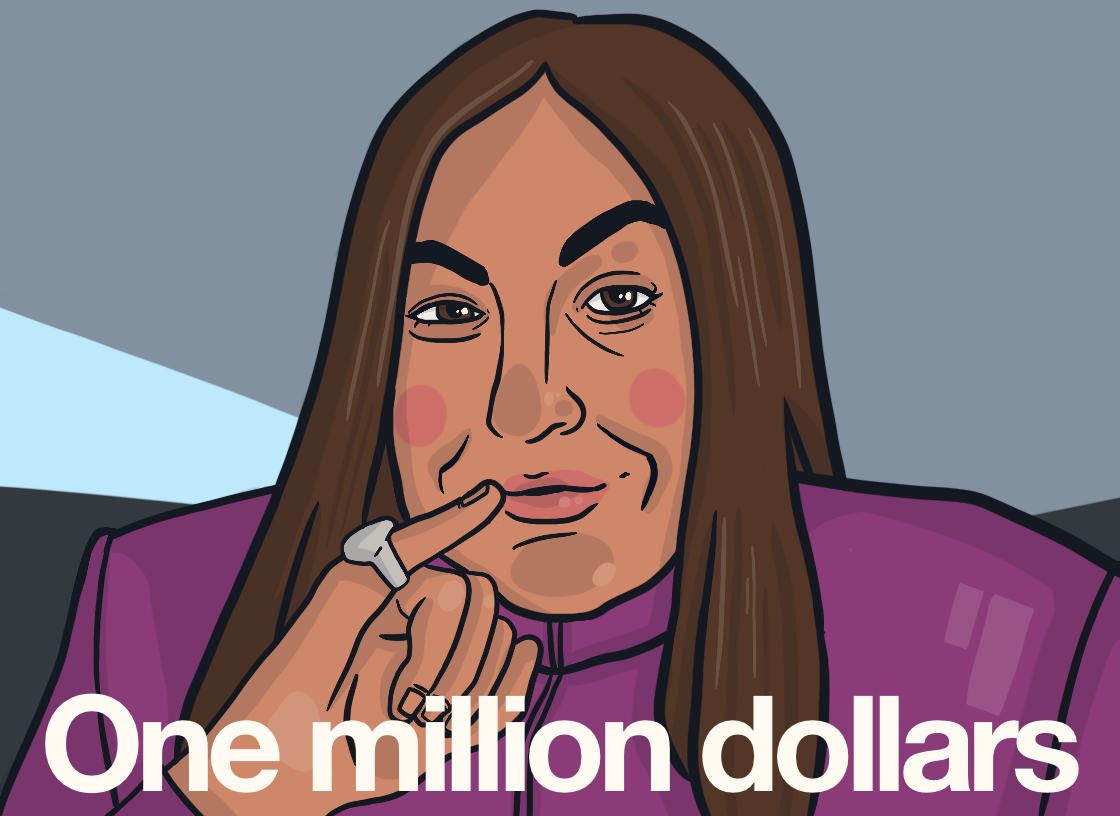
They give déi aner €1 million. Some beautiful person with a lot of money gives me enough money to finance déi aner completely. We finance Megaphone, we finance Waassermeloun. We buy a place.
Oh my God, yes. A house project.
An actual big-ass place that becomes a café, a club, an artist residency, a co-working space, a community space. Everything. Just give me €1 million. We'll make it work.
Luxembourg is full of empty properties, yet the state keeps funding temporary cultural events instead of giving people permanent spaces to build something themselves. Maybe that’s because self-managed spaces are harder to control. Bâtiment4 in Esch is a good example. It was meant to be autogéré, but when people actually started shaping the space themselves, the city pulled back. They got scared. But you can't build a community through events that happen every few months. People need a permanent place to meet, organize, and create something on their own. A friend from Berlin recently asked where the leftist and anarchist spaces in Luxembourg were because they wanted to connect while visiting. We had to tell them that there are none. We have groups and events, but we don't have a space where people can simply come together and build something.
Not even anything close to it. There's nothing. Even if you just want to get a drink, where do you go?
You’ve talked about why you're leaving Luxembourg and what you feel is missing here. Do you see leaving as a step away from activism, or as a way of redirecting your energy somewhere else? And what do you see as the next step in your activism, especially with going back to Lebanon?
I’ve always wanted to go back to Lebanon, partly because I'm Lebanese. I don't believe I should be putting this much energy into a country that, in my opinion, somehow doesn't deserve it.
Ideologically, I think it's important that I put my activist energy into Lebanon. The West will not liberate us. We will liberate ourselves. The closer I am to my Indigenous roots, the more I feel like I'm putting my energy into people who actually deserve it. In Luxembourg, I was getting to a point where most of the conversations I had with people outside the communities we'd built were just me explaining why something was racist. And I don't want to spend my whole life explaining to people what's racist. That's not what I'm here for.
So I see this as the next step in my activism: putting that energy into my homeland and my people. And if I'm going to be drained and burnt out, at least it's for my people. But I'll be back. I'm not fully gone. I'll always be writing shit. And now I have even more freedom because you can't catch me anymore. I’ll be on another continent.
What do you hope your departure changes, both for yourself and for the community you're leaving behind? Do you think something positive will come from it?
I think one positive thing has already happened; there's a stronger community now. déi aner is a functioning community with or without me, which is beautiful. What I hope is that more people join the movement, because the world is burning and we're running out of time. I genuinely don't understand how people can live a normal life, go to work, party on the weekends, and just accept the world as it is without doing anything. I hope more people find the confidence to get involved. I started out not knowing anything, and one of the best pieces of advice I've ever gotten was, “Fake it ’til you make it”. I did exactly that. I don't think people realize how much a small number of people carry to keep things happening in Luxembourg. There’s not many of us, and we take on so much. It would be beautiful if more people stepped up instead of waiting for someone else to change things. Get off your ass and change things. So yeah, not that positive, sorry.
No, but it’s a call out and a call to action. That is positive in a sense. Don’t just roll over, do something.
Exactly. I recently saw someone say that if you've already given up, then the worst will happen. It's only if you keep going and hold on to hope that the worst will maybe not happen. And I think that's something worth fighting for.
Read more:
- déi aner is an online platform amplifying alternative perspectives and celebrating marginalized voices. (https://www.deianer.com/)
- Waassermeloun is an independent decolonial collective of people looking to spread awareness on Palestine in Luxembourg (@waassermeloun)
- Megaphone is an autonomous platform dedicated to bringing an alternative approach to activist spaces and movements in Luxembourg that gives a voice to people who are ignored in existing movements. (http://megaphone.lu/)
- Thin skins make fragile democracies - Maura Lehmann, RTL today, 9.11.2025
- Activist Burnout: A Rare Sighting in Luxembourg - Gabrielle Antar, queer.lu, Issue 6, Spring 2026.