 English
 Français
 Deutsch
Suicidal Empathy and the Attack at Berlin Pride
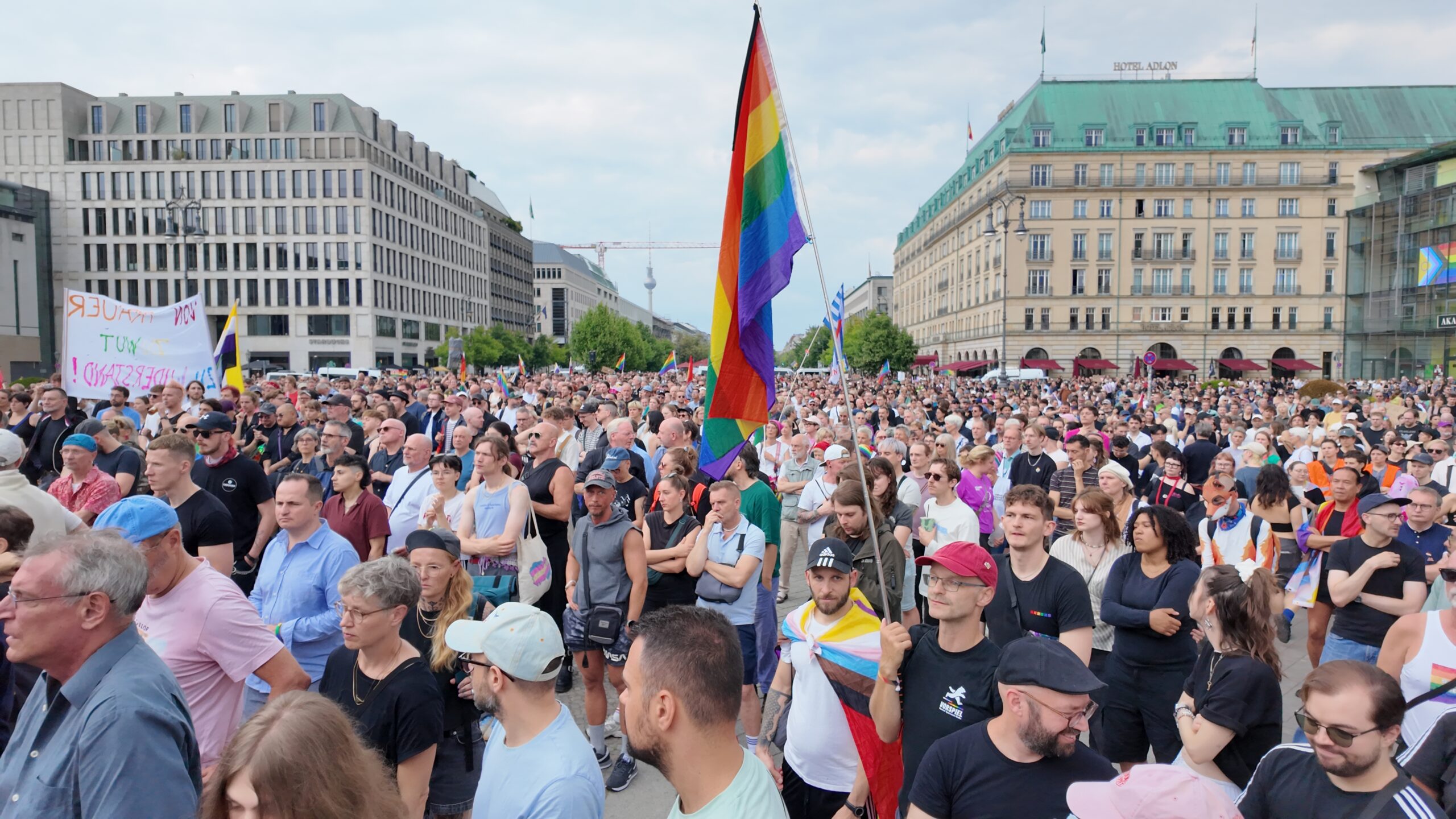
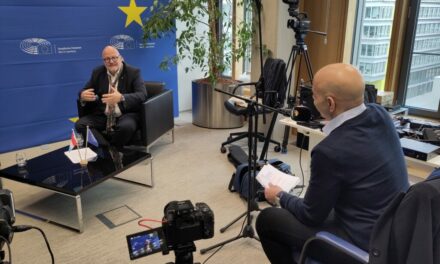
The day after the attack, journalists from Luxembourg contacted me. I’ve been living in Berlin for twelve years, but I’m originally from the Grand Duchy. Suddenly, I was expected to explain how the queer community here was doing. In an interview that aired that evening on Luxembourgish television, I said two things right after each other: I described the attack as Islamist. And I said that I was afraid for my Muslim partner because I feared the attack would be used to further fuel racism against Muslims.
Shortly afterward, an acquaintance from Luxembourg sent me a message. She didn’t ask how I was doing. Instead, she told me it wasn’t right for me to remain silent about the anti-queer sentiment of radical Islamism. What was disturbing about this was almost banal: I had spoken about exactly that. Nevertheless, my concern about anti-Muslim racism seemed to prove to her that I was downplaying Islamism. Less than 24 hours after a deadly attack on my community, my grief turned into a test that I apparently could only pass by hating the “right” group.
This reaction made me so angry because it imposes a false choice. Either you talk about Islamism and accept that Muslims will collectively come under suspicion, or you challenge this generalization and are accused of ignoring the danger. Especially after an act like this, we need language that becomes more precise, not cruder.
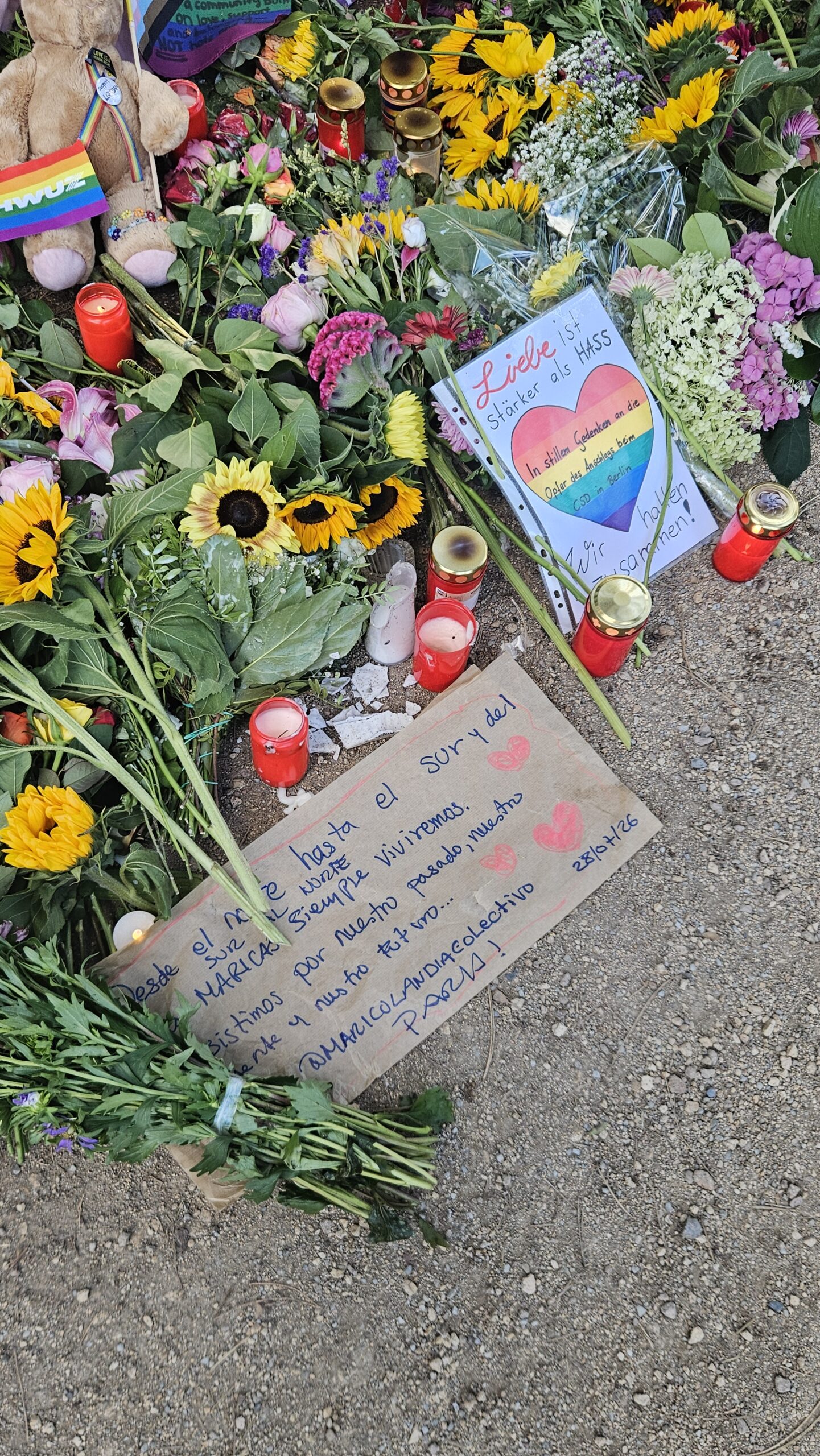
The established facts leave little room for obfuscation: In the attack on July 25, one woman was killed and 31 people were injured. On the suspected perpetrator’s cell phone, investigators found a video in which a masked person, believed by the Federal Prosecutor’s Office to be the perpetrator himself, pledges allegiance to ISIS. The Federal Prosecutor’s Office took over the investigation. There is therefore substantial investigative evidence supporting an Islamist motive.
I do not want to downplay this aspect. Religiously motivated hostility toward queer people exists, and violent Islamism is a real threat to queer people. Anyone who, out of fear of racist exploitation, no longer dares to utter the word “Islamism” makes political analysis less precise and helps no one. But I know very few people –— particularly very few queer people –— who actually do this.
The problem starts when the ideology of an individual perpetrator is used to pass judgment on Muslims as a group. It is precisely this leap that I refuse to make. An Islamist is not “the Muslims.” Islam is not Islamism. And Muslims are not outside the queer community either. Queer Muslims have to live with Islamist hostility toward queer people while also facing a public discourse that, after an attack like this, is all too ready to suggest that they really belong on the other side.
An Islamist is not “the Muslims.” Islam is not Islamism.
When I later articulated this position on Instagram, the post went viral worldwide. Hundreds of people commented. Many once again explained to us, the very community that had just been attacked, how we should think, speak, and grieve. One phrase in particular stuck with me: We were said to have “suicidal empathy.”
I despise this term. Not only because I consider it analytically disastrous. I find the idea behind it morally repugnant: that our ability to even perceive another person’s suffering is reinterpreted as an illness, a weakness, or self-destruction. Anyone who directs this term at a grieving community is effectively declaring its refusal to hate a pathological defect.
Canadian marketing professor Gad Saad coined the term “suicidal empathy.” In 2025, Elon Musk told far-right podcaster Joe Rogan that empathy was a “fundamental weakness of Western civilization,” a “bug,” a flaw in the social system that is exploited through people’s empathetic responses.
This language frightenes me. Empathy is not a defect that a society should try to unlearn. It is the ability to see another person as a human being, especially when fear, anger, or political affiliation tempt us to perceive them only as a representative of a group. It is the reason why we mourn victims we have never known. Out of empathy, we want perpetrators held accountable because the suffering of those who have been attacked is not something we can be indifferent to. And out of that same empathy, we refuse to make innocent people pay for an act they did not commit.
When I look at queer history, I find it hard to see empathy as a weakness. I see it as one of our greatest strengths.
Before the AIDS crisis, lesbian and gay movements were by no means one harmonious extended family. The 1970s were marked by political and personal conflicts. Lesbian feminists criticized sexism and male dominance within gay movements; many deliberately organized independently of men. Deep political divides existed between lesbian feminism and parts of the gay men’s movement. People argued over power, sexuality, and political priorities. Then AIDS began to kill primarily gay and bisexual men.
And lesbians stepped in. They cared for the sick, organized, demonstrated, and donated blood after men who had sex with men were barred from donating blood. In San Diego, starting in 1983, the Blood Sisters organized blood drives for people with AIDS. This lesbian solidarity emerged explicitly in response to a situation in which those with the disease urgently needed transfusions, while their gay friends were no longer allowed to donate.
That still moves me to this day. Because this solidarity didn’t require old conflicts to disappear. Lesbians didn’t have to pretend they hadn’t experienced sexism from gay men. They didn’t have to idealize gay men. They saw people who were falling ill, losing friends and partners, and being abandoned by their families and society. And they decided: “Your lives matter to us, too”.
I find something incredibly beautiful in that. Empathy didn’t erase differences. It made the other person’s humanity more important than the old conflict. People who had previously argued with one another suddenly stood side by side at hospital bedsides, at demonstrations, and at blood drives. That isn’t naivety. It’s the decision to let another person’s suffering move you and to let that give rise to a sense of responsibility.
Also in the 1980s, British Prime Minister Margaret Thatcher referred to the unions as “the enemy within.” At the same time, the National Coal Board was attempting to close or privatize mines, threatening the jobs of countless miners and workers. In response, the Lesbians and Gays Support the Miners (LGSM) was formed in the United Kingdom. Homophobia was commonplace in 1980s Britain. Some LGSM activists had grown up in mining regions themselves and had experienced violent, homophobic treatment there.
At the same time, it would be wrong and classist to claim that homophobia is a distinctive trait of the working class; queer people encountered it in London and other social environments.
What matters is something else: The activists knew that some of the miners for whom they were raising money might reject them. Even within the queer community, some therefore considered it naive to support workers who were perceived as homophobic.
Nevertheless, lesbians and gay men stood outside queer bars with collection boxes. The London LGSM group alone raised around 22,500 pounds for striking families. They didn’t demand a political purity test beforehand or a guarantee that their solidarity would ever be reciprocated. They saw people whose very existence was threatened, who were under pressure from the government and the police, and decided that their dignity should not depend on whether they already understood or accepted gay and lesbian people.
To me, that is empathy in its bravest form: I don’t need to know whether you’ll defend me tomorrow to recognize today that you shouldn’t be humiliated.
To me, that is empathy in its bravest form: I don’t need to know whether you’ll defend me tomorrow to recognize today that you shouldn’t be humiliated.
And then something happened that LGSM hadn’t expected. Solidarity was returned. In 1985, hundreds of miners marched with their union banners at London Pride. The National Union of Mineworkers subsequently supported demands for lesbian and gay rights within the Labour Party. Groups of miners later became allies in the fight against Section 28, the law that prohibited local authorities from so-called “promoting homosexuality.”
People hadn’t shown solidarity because they were guaranteed something in return. But their solidarity created relationships, and those relationships changed politics. Prejudices can dissolve when people stop viewing one another as abstract camps. For that to happen, someone has to take the first step.
This idea becomes even more radical to me when I think of Willem Arondeus and Frieda Belinfante in Nazi-occupied Netherlands. Arondeus was an openly gay, non-Jewish artist. Belinfante was a lesbian conductor; her father was Jewish, her mother was not. Both were part of a resistance network in Amsterdam. They forged identification documents for Jewish people and others who had to hide from the Nazis. Belinfante created hundreds of such false identities.
What moves me about this, first and foremost, is something very simple: Arondeus didn’t have to be Jewish to understand what was happening to Jewish people. Neither he nor Belinfante had to ask whether the people they were helping were like them, shared their sexual orientation, or would one day repay them. They saw people who were being disenfranchised, persecuted, and deported. That was enough. Their empathy didn’t remain a feeling. It became action. It became a forged ID, a hiding place, a new identity – —and thus, for some of those being persecuted, a chance to avoid detection.
But the forged papers had a weakness. The German occupiers could cross-check them against the data in Amsterdam’s resident registry. So the resistance group made an incredibly dangerous decision: On March 27, 1943, they attacked the registry and set parts of the archive on fire to make it harder to verify the forged identities. Belinfante was involved in the planning; Arondeus was one of the key participants. Thousands of records were destroyed.
Arondeus was betrayed and arrested a few days later. During interrogation, he took responsibility; in July 1943, he was shot. Before his execution, he asked to leave a message for the world: “Homosexuals are not cowards.” Belinfante escaped arrest, hid for months disguised as a man, and eventually fled to Switzerland.
I do not wish to equate this story with our present day. An Islamist attack in Berlin, anti-Muslim racism, and the Nazi extermination of European Jews are historically completely different things. What interests me about Arondeus and Belinfante is the decision that becomes apparent through their actions. They witnessed the persecution of other people and did not first ask: “Are these our people? Will they ever defend our people? Do they hold the right views about us?”
They asked what people owe one another when another person’s humanity is under threat.
That is precisely why this story so powerfully contradicts the idea that empathy should be derided as “suicidal.” For Arondeus and Belinfante, solidarity really was life-threatening. They knew that resistance could mean imprisonment, torture, or death. Arondeus paid for it with his life. Nevertheless, it would be grotesque to describe their empathy as a tragic flaw. Precisely at a time when a regime was systematically sorting people into categories, stripped them of their rights, and ultimately murdered them, their humanity lay in refusing to let those categories determine the value of human life.
For me, this is one of the most beautiful and, at the same time, most difficult forms of empathy: to look at a person who may have nothing in common with me and still say: I cannot be indifferent to what happens to you. Not because I’ll be rewarded for it. Not because you’ve promised me the same solidarity. But because your life has a value that does not depend on whether you belong to my group.
Perhaps this is precisely where the connection lies between LGSM, the lesbians during the AIDS crisis, and today’s queer solidarity with Muslims. Empathy does not require denying dangers or glossing over political conflicts. It demands something more challenging: recognizing another person’s humanity even when it would be easier to view them merely as part of an enemy camp.
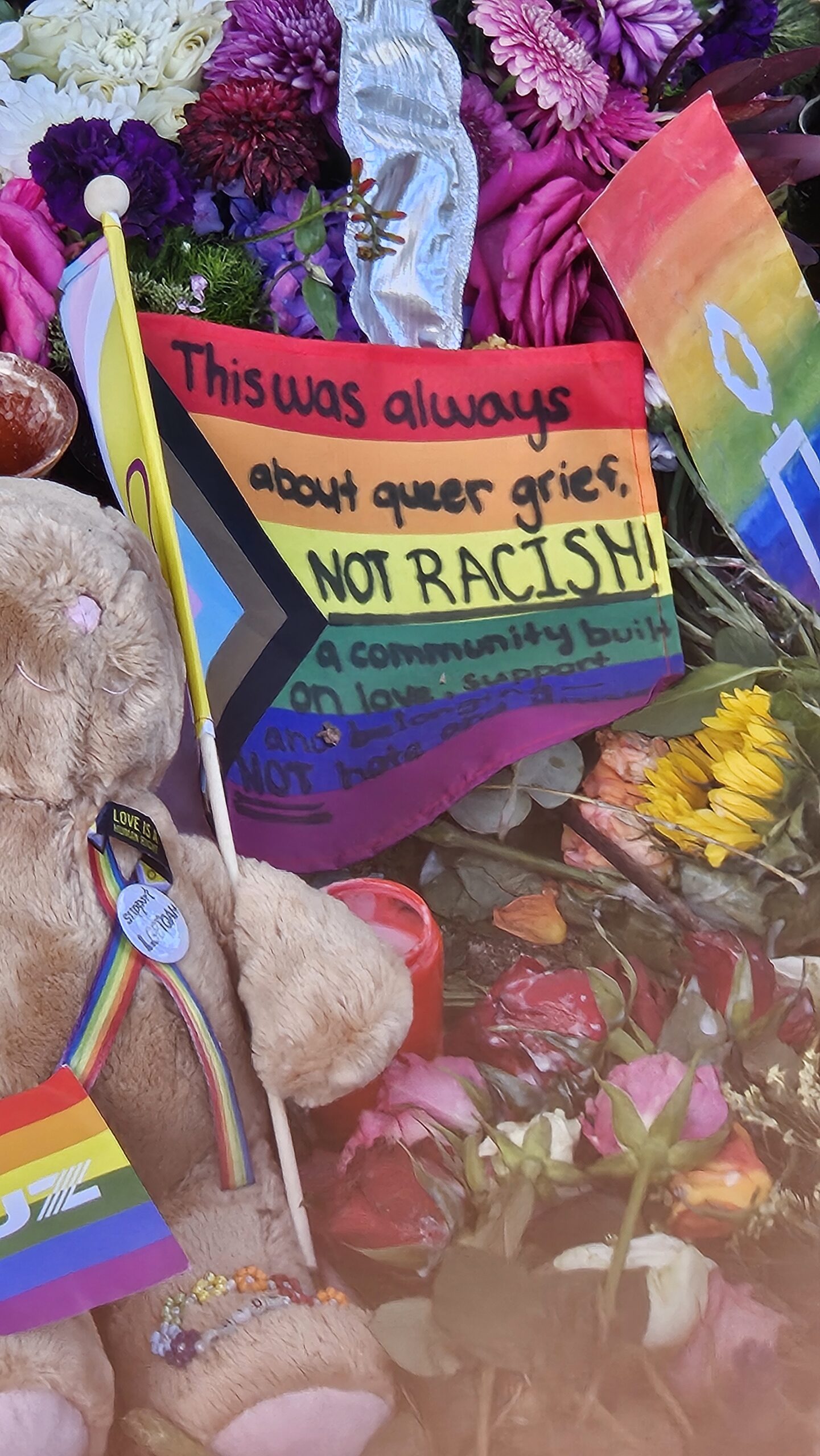
That’s why I also think of today’s queer solidarity with Palestinians, of initiatives with names like Queers for Palestine. One doesn’t have to deny homophobia in Palestinian societies or downplay Hamas to say that the Palestinian people have a right to life, safety, and dignity. Queer Palestinians, in particular, highlight just how absurd the notion of two neatly separated camps is. Solidarity does not require the person whose life I’m defending to share my political background or love me.
The same applies to Muslim people in Berlin or Luxembourg. I don’t need a guarantee that every Muslim person approves of my sexual identity. Of course, not everyone does. Nor do all Christians, Jews, or atheists. But the idea that Muslim and queer people are two opposing camps simply doesn’t correspond to my own life. As recently as August, I was sitting in a Palestinian-Muslim-run café in Berlin-Neukölln, which was also staffed by heterosexual people. A poster advertising a Pride event was hanging in the window. It was just a poster in a café. And yet I couldn’t help but think about how rarely such everyday images appear in a debate that seeks to turn “the queers” and “the Muslims” into two monolithic blocs. In my own circle, there are many Muslim people who stand in solidarity with the queer community. Others are hostile toward queers. Both things are true. That’s why I need neither a romanticized view of Islam nor a demonization of Muslims. I can combat Islamist hostility toward queers and still reach out to a Muslim person who experiences racism. Perhaps even precisely because of that.
In the days following the attack, I cried often. I thought of the woman who was killed, the injured, and their loved ones. I saw the outpouring of solidarity. I wrote about empathy in queer history. And at the same time, I thought of my partner. These feelings do not compete with one another. My empathy is not a security risk. It doesn’t blind me to people who hate me. It prevents their hatred from determining the kind of person I become.
Perhaps that’s the point where the term “suicidal empathy” hurts me the most. Queer people know quite well, historically speaking, what it means when others refuse to see our humanity. We have survived because people brought each other food, donated blood, opened their homes, took to the streets, and became families even though they weren’t biologically related. Empathy wasn’t always gentle. Sometimes it screamed. Sometimes it blocked streets. Sometimes it threw fake blood at government buildings. Sometimes it sat by a hospital bed. Sometimes it held a hand when no one else was there.
And sometimes it even reached out that hand to someone without knowingit didn’t know if they would ever reach back.
I won’t let anyone talk me out of this ability by calling it a weakness.
I won’t let anyone talk me out of this ability by calling it a weakness. The attack has already taken enough from our community. I won’t surrender my pain as a weapon against innocent people.