Never
Shallow
Atena Cosenza on her 2025 album Object of Desire and the struggles of art, transness, femininity and existing between cultures
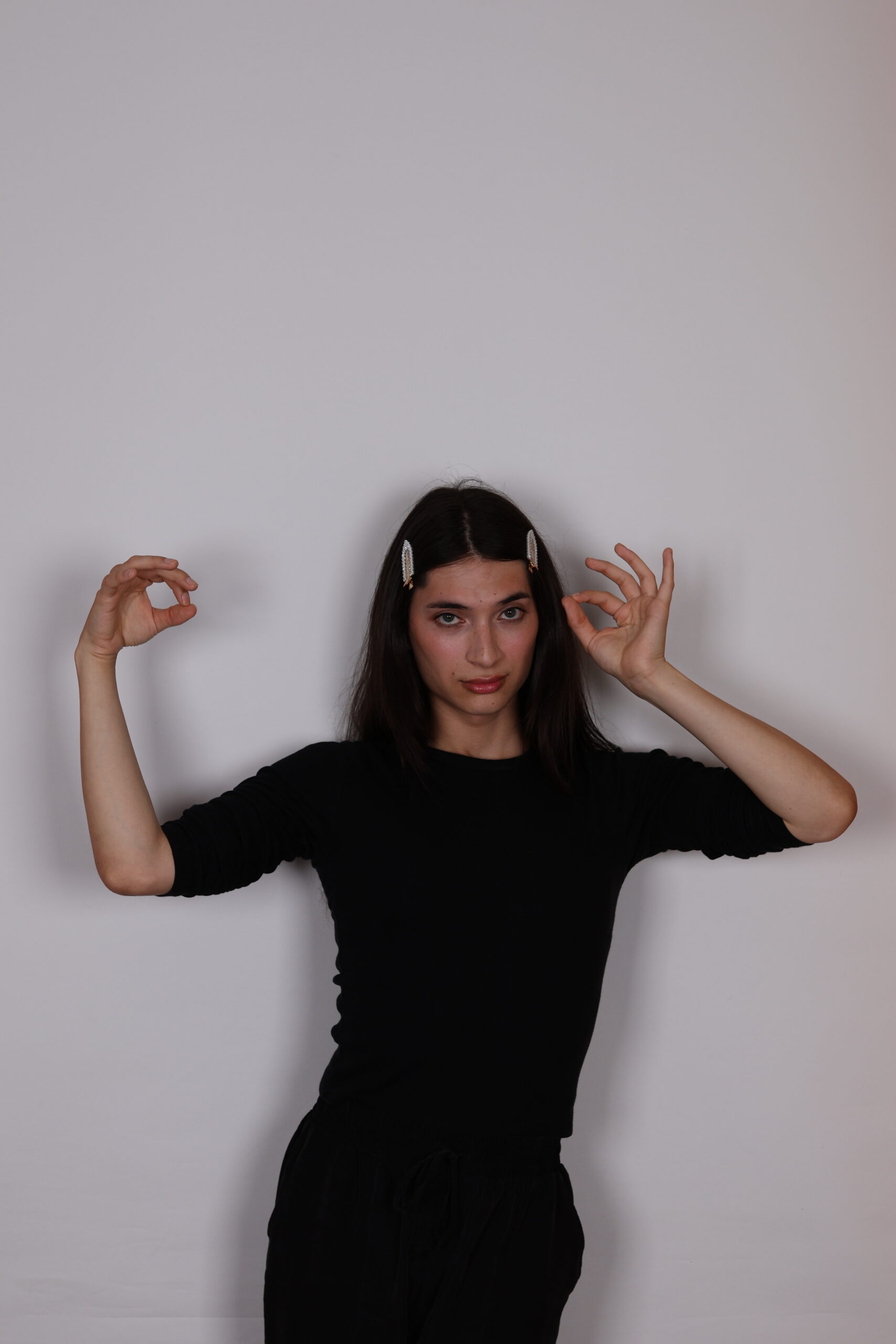
It’s the second half of August, the latest heatwave has finally subsided and, after a couple of rainy days, a bit of afternoon sun accompanies much more tolerable temperatures. Atena arrives by bike, asking if she can bring it with her inside the Rainbow Center, seeing as there is no possibility of locking it up outside. While we share one last cigarette before starting the interview, she gets to talking about her work – that is, her main day job at a factory canteen in Trier, where she lives. She tells me about her transphobic manager’s weird fixation on her hair (“we all know that’s a guy”), the different ways she learned to deal with the gazes of the men working on the factory floor, their mix of desire and disgust.
The bike, as I’ll learn later, is slated to be sold off. To finance her transition. Along with her keyboard, the laptop she uses to work on her music as well as her record player.
Not the records, though. She would never touch her vinyl collection. It is quite an eclectic one, gathering traditional music from all over the world all the way to rock and pop classics. But curiously enough – for a Venezuelan who spent a good chunk of her childhood growing up in Spain – it comprises only one Spanish-language musician: Isabel Pantoja, whom she describes as a very “folkloric” artist, representative of an almost “schizophrenic” culture, incorporating, on the one hand, many elements from its Arab past as well as Roma cultural expressions, while at the same time trying to hide away these “shameful” origins.
It is the opposite direction that she takes in her own musical process, fully embracing these roots, blending western and Arab cultural worlds in an artistic identity defined by their confluence. “My two pillars are Haifa Wehbe and Lana del Rey”, she laughs.
Atena’s debut album, Object of Desire, finished in 2025, was created during her studies in audio engineering in Berlin, as her thesis project. She financed it by working in hotel gastronomy – her weekend job now, in Trier. She wanted to – and did – work with musicians from all over the Middle East, “to incorporate the real stuff, not shallow fetishisation”, real experience over musical theory. She remembers in particular how she was looking forward to working with a Syrian music professor – a collaboration that never came to be due to political factors.
Although her fascination with Arab music began much earlier, through Shakira’s covers of iconic Lebanese singer Fairuz, it was Berlin with its sizeable Middle Eastern diaspora that allowed her to deepen her knowledge of Arab culture. “There weren’t that many Latinos but a lot of Middle Easterners”. An opportunity to go “straight to the source”, to reconnect with the Andalusian roots hidden within Spanish culture.
The process of working on the album also coincided with her first steps towards transition. “I was transitioning unconsciously. To me, it was just being myself” – a state of being that nonetheless brought fundamental changes with it: in outside perception, in romance, in sex. Along with religion(s), these are central topics of the album.
“There is no right or wrong. You have to create your own world, and if it doesn’t hurt anyone, go for it.”
“Trans girls are either objects of desire or hatred and ridicule. That sexualisation can be a strong protection”. Heterosexual womanhood, defined by patriarchal order and gaze as “both a prison and a circus”. And yet there is power to be found in this role, power in being underestimated, in feigned or exaggerated submissiveness.
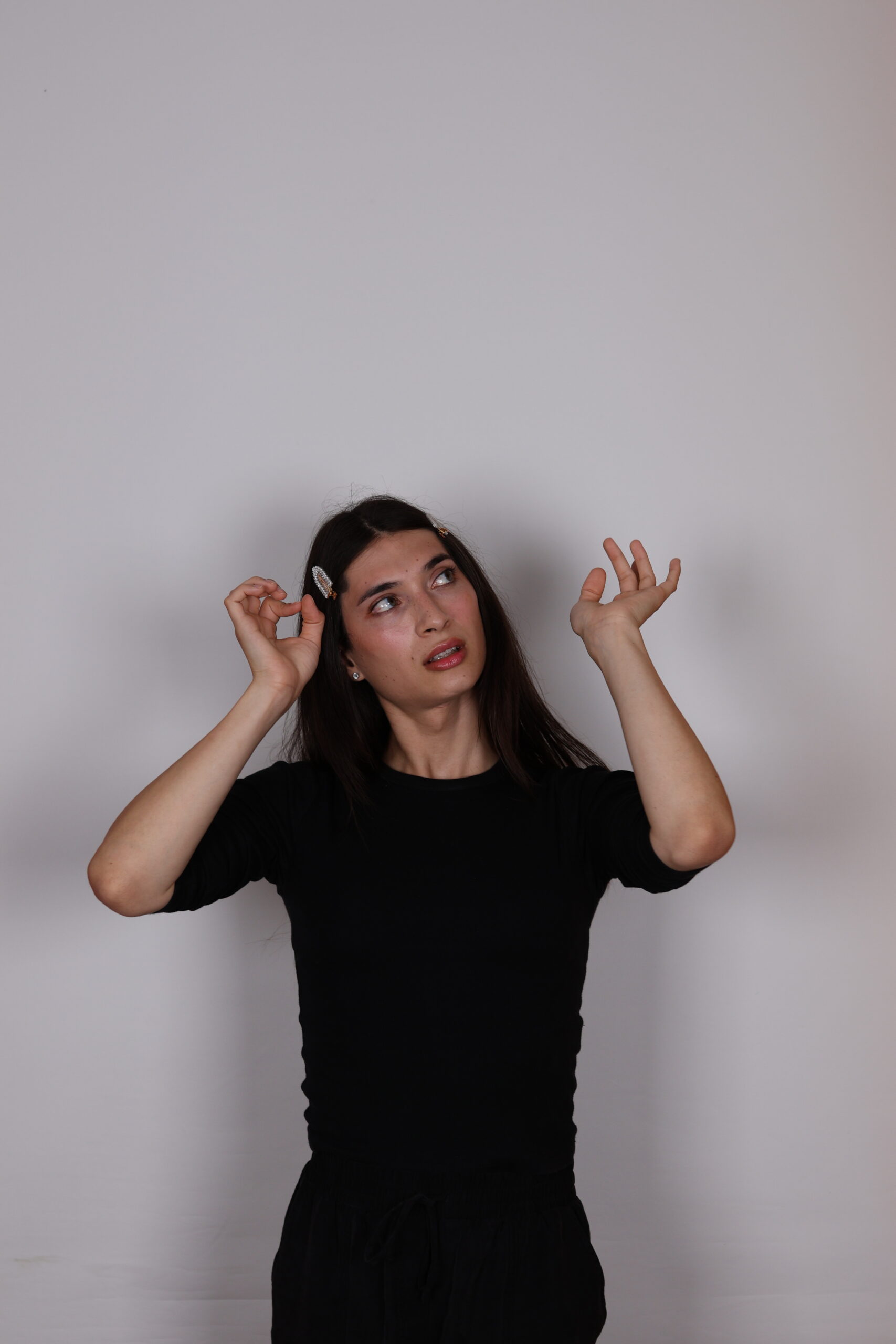
She sees a similar dynamic at work in how the Abrahamic religions relate to sex and the original sin, symbolised by the apple, prominently featured on the album cover.
“How can the apple really be sin, if God put it in the garden? What is sin? Does it come from God or the Devil? Sex is a natural part of life, regardless of how people associate it with shame.” Desire and shame, inextricably linked. Having grown up in a Catholic household, she amusingly states: “I don’t own a Bible but I have a Quran”.
For her, contrary to what homo-nationalist discourse might want to have you believe, there is no contradiction between her fascination for Arab culture and her transness. Quite the opposite.
On a more surface level, there are the parallels in the ways Western societies discriminate against both minority groups, the ways both are marginalised and dehumanised. Diving deeper, she sees trans art and culture being invisibilised in a fashion analogous to how Spanish culture tries to hide away its historical Arab and Roma influences.
“Even big artists get no recognition”, she says, giving the example of Arca, “Venezuela’s biggest artist”, who lives in Barcelona but is almost never mentioned in her home country, unlike celebrated musicians with similar achievements. For Atena, this is the latest in a long line of trans women in electronic music – an under-discussed legacy and history.
On a more spiritual level, there are similarities in how both Arab art and her native Latin American culture treat and portray femininity: hyper-feminine beauty as a form of power, something that deeply resonates with her. This stands in contrast, in her view, to a Western cultural context where “women had to become more masculine to be taken seriously” and that treats femininity with a certain disdain.
A controversial statement on its face, but not necessarily a wrong one: one look at the behaviours of women in important positions such as politicians and executives, as well as social condemnation and derision directed at, for example, media aimed at teenage girls or the hyper-feminine presentation of a subset of trans women, vindicates this view. The difference, then, between Latino and Arab femininity is more a matter of how sexuality is presented, with one valuing modesty and the other embracing hyper-sexualisation.
The way Atena’s upbringing informs her relation to cultures goes beyond merely her Latina roots. Born in Venezuela and presently residing in Trier, she has spent her life on the move. First from Latin America to different cities in Italy, where part of her family lives, then around Spain, Germany, back to Spain, Trier, Berlin and back to Trier, only spending, at most, a couple of years in each place.
Having thus felt like an immigrant her whole life, it became inevitable to absorb elements from different cultures, to adapt to them. As a result, she ended up creating her own culture. “There is no right or wrong. You have to create your own world, and if it doesn’t hurt anyone, go for it”.
While Atena has never lived in Luxembourg – a country where her mother resided for a stretch of her life – the Grand Duchy has had a deep impact on her development during her first stint in Trier back in 2017-2018. Back then, many of her friends lived over the border and she ended up spending almost every weekend here.
“Luxembourg is a country that cares about the artistic expression of the people, even though it’s so corporate.”
It was a deeply impactful period of her life. Despite it being a “smaller and more conservative country”, she felt like it gave her more space for self-exploration, feeling safer cross-dressing here as opposed to Germany.
Nowadays, she visits less often, much of her time being tied up in her different jobs, and the country has turned from a safer space into a land of opportunities.
“Luxembourg has better artist programs. There are no Hollywood opportunities here but definitely more than in Germany. It’s easier to get in touch with associations, institutions, etc.” As opposed to Germany’s more “traditional” attitude to art, to her, “Luxembourg is a country that cares about the artistic expression of the people, even though it’s so corporate”.
Her projects here include one performance – with more to follow – as well as a yet-to-be- published music video. For now.
“Other people believe more in my art than I do.”
Many of the opportunities Atena is getting in Luxembourg are due to friends of hers, many of whom are somewhat involved in the local culture scene.
“Other people believe more in my art than I do”, she laughs.
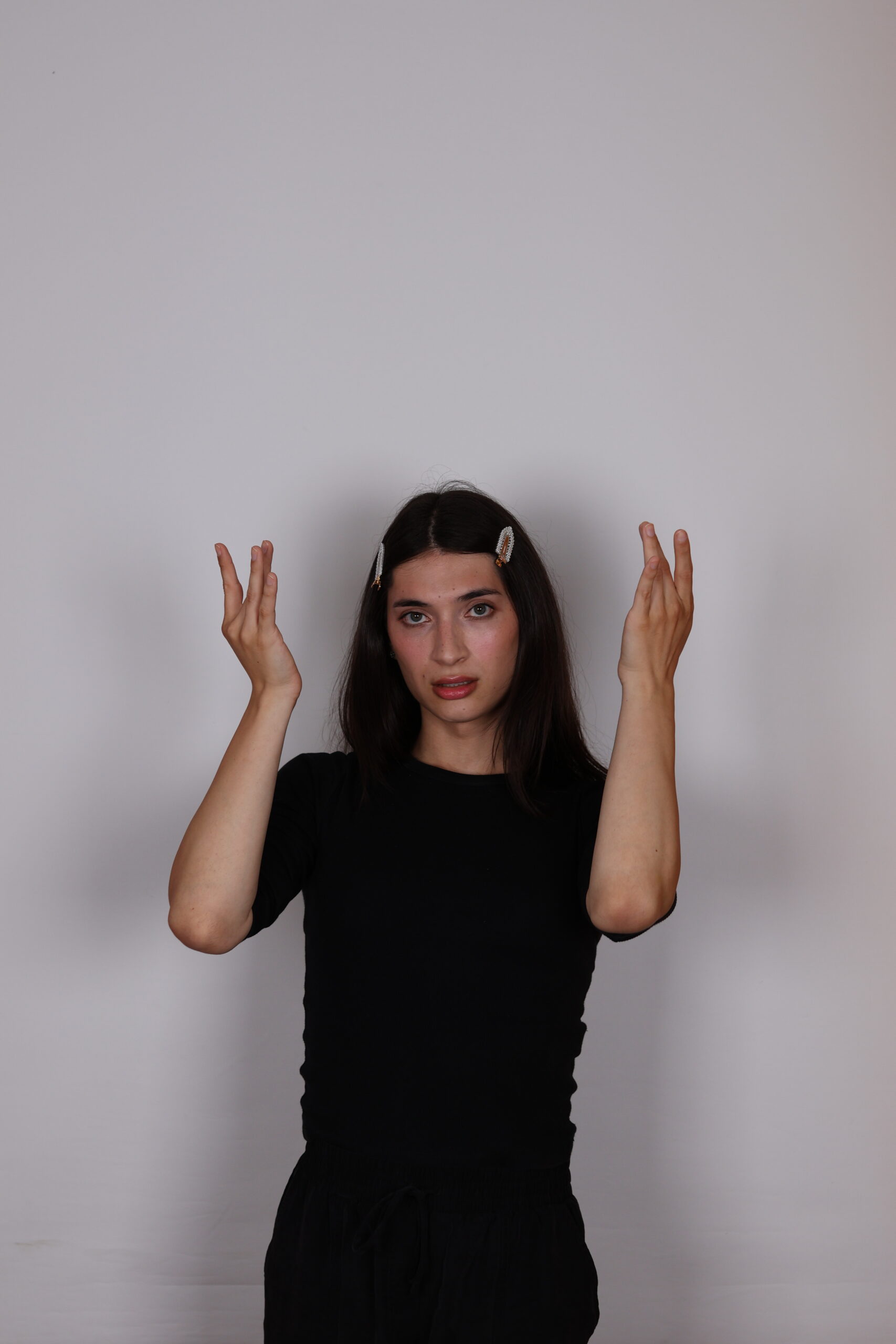
She adds, bemusedly, how they follow along with her different hyperfixations, proud of how she ends up getting them to love the same things. “I think it’s because it’s never shallow. It’s never some random obsession, I always see things through”. Connecting with different topics, she says, helps her explore aspects of herself.
That said, she is consciously taking a step back from music these days.
On the one hand, there are the economic pressures, exacerbated by the cost of her transition. She’s working two jobs – three even, if you want to count her online activity – while still having to sell off a number of crucial belongings, some of them being the very tools needed to make music, such as her keyboard or laptop.
True to the “survival first” attitude of her Latin American roots, she takes it in stride: “Material things can always come back. It’s like having to take one step back to go take two steps forward. I see it as making space for something new”.
And that something new, right now, is reinventing herself. Finding the answer to the big “What now?” that arose after “everything collapsed” upon leaving behind Berlin after six years of studying and “crazy life”. After coming back to the small town that is Trier.
A new lived reality that goes beyond a change in scenery, not just as far as her transition is concerned, how it changes how the world relates to her and vice-versa, but also in terms of exploring different artistic directions. Different attempts and avenues at connecting with these new versions of herself.
She tells me she journals a lot these days, focusing more on poetry. Looking back, she sees “Object of Desire” as part of her growth as an artist – if she were to do it now, it would take different shapes.
“I think I’m still trying to find who I am.”
An unexpected part of that self-exploration is her presence on TikTok. She regularly livestreams on the social media platform, doing “a little bit of everything” during these performances. She sees it as a different kind of art, a digital stage.
But as she is put on said stage, exposed to the gaze of anonymous viewers, she also sees her audience. Just as her “fans” know a very specific facet of her, she gets to see a “very different part of society”, one that the anonymity of the internet has freed from a lot of taboos.
It is also the direct nature of the format that appeals to her. “There isn’t a lot of production involved. It’s very dynamic, very natural”.
In addition to her more purposeful approach to content creation, her experience of online transphobia – the bane of every trans person’s internet experience – is also somewhat singular. On the rare occasions that she encounters it, she simply meets it with annoyance.`
“You have to face the same bullshit all the time.”
The more interesting part, however, is how her online performances inform the ways she has adopted in order to deal with the latent transphobia in her everyday life. Thus she learned how to “put on a show to survive”, how to play with the gaze of the workers at the factory.
“I wear pigtails and it’s a thing. I wear braids and it’s a thing. It’s so funny, honestly!”
The power of weaponised femininity.
For her, then, online transphobia and misogyny manifest more on a structural level. She feels like she has to restrict herself a lot and wonders if she has been shadow-banned (i.e. not getting actively recommended by the algorithm) on the platform.
“There are literally guys jerking off on camera, but if I were to simply apply cream, it would get flagged as “pornography”. I need to be careful to not show too much skin”. As a matter of fact, she already had one account banned – without any official explanation, of course.
As much as Atena is fascinated by the very notion of culture, at the end of the day she says she is more focused on individual identities than groups, the unique rather than the universal. Something that is reflected by the writing she does these days.
A lot of it is about flowers.
She tells me about her landlord’s rose garden. The rose as an ancient motif of the ephemeral nature of beauty. The cycle of bloom and death, the unique nature of each and every flower.