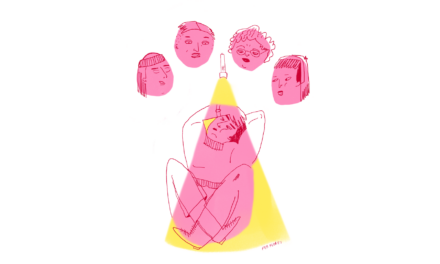
“I hate having ADHD. It is so stigmatised, and I feel I’ve internalised every judgement people have about neurodivergence. I don’t like being part of a neurodivergent community.”
“…And yet, you thrive in your queerness despite all odds.”
“Yes, I learnt to accept that I am queer and I love being queer now but it was a long journey… I don’t see what that has to do with my ADHD.”
This is a snippet of a conversation that I had with one of my clients, in my work as a neuro-affirming and queer-affirming psychologist.
Key Terms
Neurodiversity
The natural variation of neurocognitive functioning among all people. This includes neurodivergent and neurotypical people.
A neurodivergent person
Someone whose neurocognitive functioning differs from the societal majority. This can include ADHD, autism, dyslexia, dyspraxia, Tourette’s syndrome and more. Part of the neurominority, part of neurodivergence.
A neurotypical person
Someone whose neurocognitive functioning reflects the societal majority. Part of the neuromajority.
Neuronormativity
The societal assumption that there is a single correct way for the human brain to function, think, behave. Inherently discriminatory of those that deviate from this standard. Part of the pathology paradigm.
Heteronormativity
The assumption that heterosexuality is the only normal and natural form of sexuality and that there are only two distinct and complimentary genders (woman and man; gender binary). Attributes traditional gender roles to the two genders it accepts as valid. Inherently discriminatory of anyone that deviates from these standards as well as people that do meet them by holding certain expectations for men or women and discriminating if those are not met. Works well together with patriarchy, racism, ableism etc. to create a white male dominated society.
Paradigm
A set of fundamental perspectives or assumptions, shapes how people within the paradigm think and ask questions. For instance, the geocentric paradigm (the sun and planets revolve around earth) vs. the heliocentric paradigm (earth and other planets revolve around the sun).
To understand neuro-affirming therapy, it is important to understand the paradigms underpinning our views of neurodivergence.
Pathology vs. Neurodiversity Paradigm
Pathology Paradigm
The pathology paradigm is a clinical framework that starts from the unquestioned assumption that autism (and other neurodivergence) is a disorder and that being autistic is inherently inferior to not being autistic.
Brain variations such as autism, ADHD, dyslexia etc. are seen as neurodevelopmental “disorders”—a “condition” that begins in childhood and affects how the brain works, impacts learning, behaviour and emotions when compared to a societal norm.
Within this paradigm, neurodivergent traits are referred to as symptoms that deviate from a “normal” brain. The aim thus is to “cure” or “treat” these “conditions”. Within this set of ideas, autistic people are supposed to get rid of their autism, or at least act like they are not autistic, act “normal”, fit in—forced to mask who they really are.
This rhetoric is highly reminiscent of “scientific” discourses about race and gender that frame(d) LGBTIQ+, non-male and/or non-white demographics as “less than” and enabled the World Health Organisation to classify homosexuality as a mental disorder until 1990.
Such discourse produces structural oppression of autistic people, akin to racism and sexism, and should be met with the same criticisms.
In this paradigm, neuronormativity operates much like heteronormativity.
Autistic people are supposed to get rid of their autism, or at least act like they are not autistic, act “normal”, fit in – forced to mask who they really are.
Neurodiversity Paradigm
The neurodiversity paradigm—coined by Judy Singer in the 1990s—refers to the understanding of neurocognitive variation as a natural form of human diversity, subject to the same societal dynamics as other forms of diversity such as race, gender, ethnicity or sexual orientation. It recognises neuro-minorities as social groups subject to similar dynamics as other marginalized identities.
Since the brain of neurodivergent people is just differently wired compared to those of neurotypical people, aiming to “cure” neurodivergence would mean changing someone’s fundamental wiring. Neurodivergence is not a mental health disorder with a clear on- and offset such as depression, for instance. One does not have an autistic episode the way that one can have a depressive episode—one is autistic. Being neurodivergent does not equal a decline in mental health. Neurodivergence comes with strengths such as having unique problem-solving skills, thinking outside of the box, thinking boldly, deeply, critically, acting in ways that are sensitive, passionate, thorough, genuine, just, original, loyal, compassionate, attuned, and spontaneous, oftentimes to a higher degree than neurotypicals. I do not want to generalise the neurodivergent experience here because there is an immense deal of individuality within neurodiversity. Nonetheless, just like any other human diversity, when embraced, neurodiversity brings upon new creative ways of thinking and being.
What often causes suffering is the chronic mismatch between neurodivergent needs and neurotypical societal systems. A neurodivergent person’s needs and ways of being are often disregarded or looked down upon in the neuronormative society: for instance, some autistic people might struggle with sensory overload; they become overstimulated in a crowd of loud people and might need to retreat, use earplugs, avoid eye contact, or engage in other regulating activities. Yet those self-regulation skills are often frowned upon, lead to social rejection (in many cases even social trauma) and autistic people often feel forced to mask—to act neurotypical and not give themselves what they actually need.
Because neurodiversity is not a mental health disorder, person-first language (e.g., person with autism) is strongly disencouraged and identity-first language (e.g., autistic person) is encouraged (think of how it would sound to say a person with homosexuality rather than a gay person).
Providing psychological therapy within the neurodiversity paradigm means providing neuro-affirming therapy that does not pathologise or aim to cure neurodivergent people but rather encourages neurodivergent people to better understand and accept themselves, understand and communicate their needs and experiences and recognise unique strengths in a world that is designed against (or at least not for) them. It is about helping people unmask—be unapologetic about what they need and who they are, and not try to act in ways that would make them pass as neurotypical, because that is harmful. In a very similar way, providing queer-affirming therapy is creating a safe, non-judgemental, validating and encouraging space for any and all genders and sexualities in a world that oppresses, a space where exploration of one’s identity can happen.
In essence, neurodivergent empowerment needs a paradigm shift—a radical change of thinking, speaking, acting around neurodiversity. The idea is that one cannot attain liberation in a system that discriminates—we need to throw away the master’s tools because “the master’s tools will never dismantle the master’s house” (Lorde, 1979).
Neuroqueer
Nick Walker coined the term neuroqueer in 2008.
While one might feel inclined to call oneself neuroqueer to describe being both neurodivergent and queer (and that is absolutely fine, especially if it aids one’s identity expression), what Nick Walker originally meant was that to be neuroqueer is to engage in acts that reject neuronormativity and heteronormativity at the same time. In fact, Nick Walker highlights the importance of using neuroqueering as a verb:
“The reason I focus on neuroqueering as an emergent array of subversive and transformative practices, is that my central priority is the cultivation of human potentials for creativity, well-being, and beautiful weirdness—and our capacity to bring such potentials to realization ultimately depends not on our choice of identity labels but on our choice of practices.”
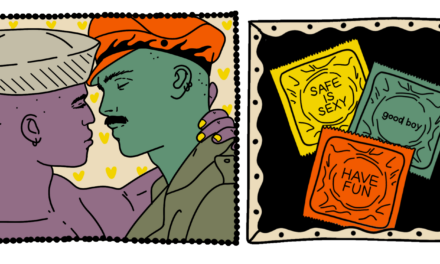
Within neuroqueer theory, both neuronormativity and heteronormativity are symbiotic systems that manufacture “normalcy” and punish those that do not meet that standard. Therefore, queering one often means queering the other because both depend on the same cultural machinery of control and conformity and binaries (normal vs. abnormal / cisgender/heterosexual vs. queer / neurotypical vs. neurodivergent).
Thus, whether or not one is neurodivergent or queer, anyone can and is invited to neuroqueer—not only neurodivergent or queer people. And anyone that does can call themselves neuroqueer:
“Anyone who engages in any of those practices can call themselves neuroqueer anytime they damn well want to. Anyone who says otherwise is misappropriating a concept intended to be liberatory, and turning it into just another excuse to form a special little club that they can exclude other people from to make themselves feel more important. Anyone trying to police other people’s self-identities is just another tedious cop, and a cop is pretty much the most un-queer, non-liberatory thing a person can be.” – Nick Walker.
Neuroqueer Theory in the Therapy Space
Similarly to how people do not suffer because they are queer but because of the heteronormative society we live in and how it frames queerness as abnormal, I believe people do not inherently suffer because they are neurodivergent but mainly because our neuronormative society frames our way of being as less deserving. Suffering often arises from the interaction between being a neurodivergent person and a society that is structured around neurotypical norms, including pressure to mask, chronic invalidation, and a lack of accommodations. When neurodivergent people are truly understood, supported and allowed to be themselves, mental health improves significantly.
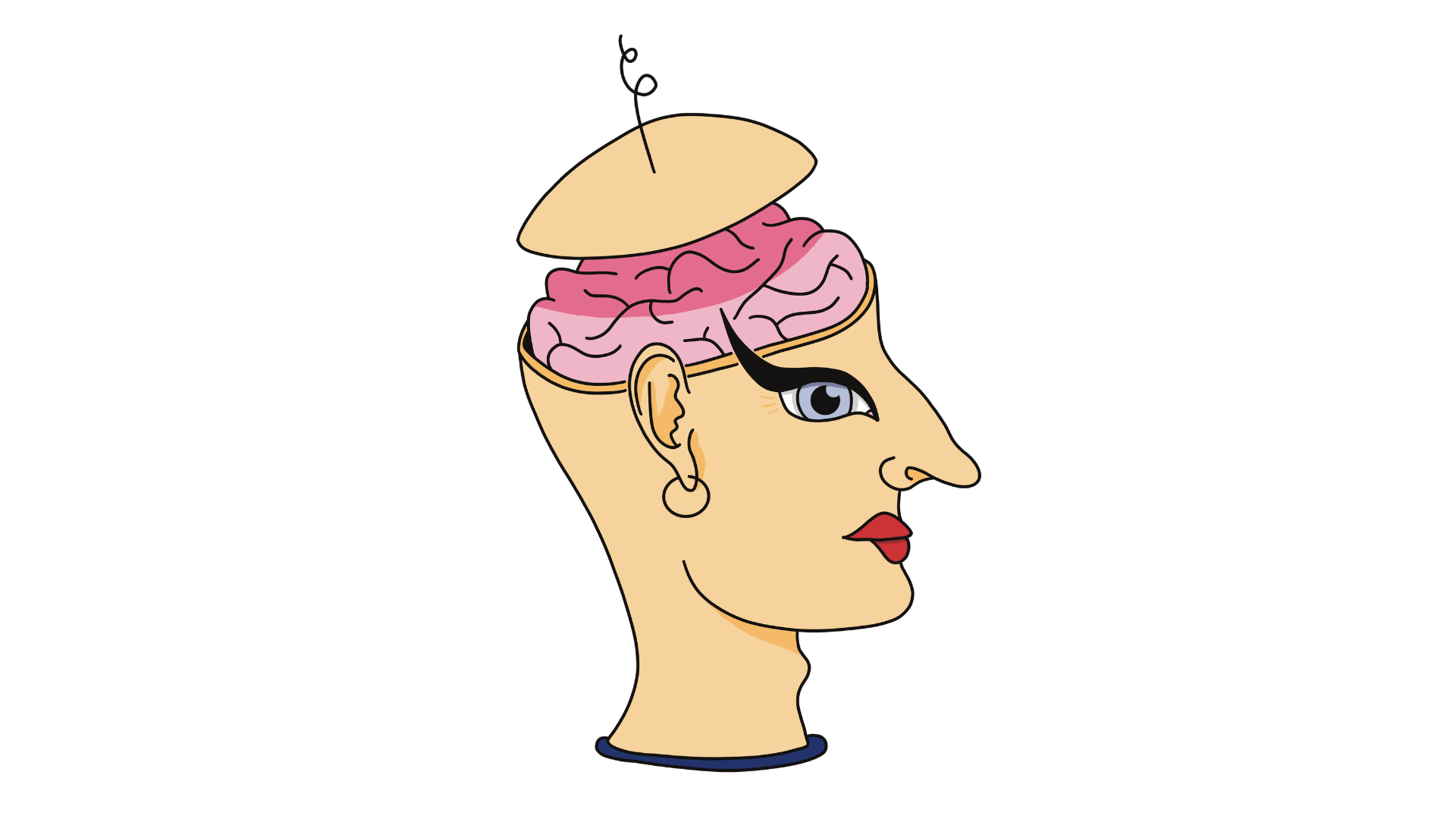
It’s through a mechanism of internalised oppression that one starts questioning oneself—the words and ways of thinking of the dominant group are so widely accepted and taught that they start living in our own heads (“I should be normal” / “Something is wrong with me”).
My client is already unlearning heteronormativity, but has not yet unlearned the pathology-based messages they’ve absorbed about neurodivergence. Through a neuroqueer lens, I aim to help them recognise that, just like their queerness, their neurodivergence is not an internal defect to fix—but another identity harmed by systemic bias; another oppressive framework that they have internalised.
In my work, I help clients clarify and live by their values. This particular client values authenticity, creativity, equality, fairness, freedom, open-mindedness, critical thinking and a strong rejection of conformity. These values already inform how the client relates to their queerness and I hope that through linking queerness with neurodiversity, they will let their values also guide how they relate to their neurodiversity: in ways that transform acceptance into resistance against normative shame, rather than an internalisation of being ‘broken’. This reframing, alongside other therapeutic strategies, creates the kind of cognitive dissonance that makes it difficult to affirm one marginalised identity while rejecting another.
Take home message
It is heartbreaking how many neurodivergent people internalise pathologising narratives and turn them inward—resulting in self-punitive messaging that creates shame and guilt about our very nature. The amount of labour that we as either neurodivergent or queer people must do to deconstruct toxic global discourse is unfair, yet essential for the well-being and liberation of both causes and both communities.
I invite readers to question the fictitious idea of normalcy and the limitations it imposes. Human diversity is not a deviation, but inherently beautiful and necessary. Happy neuroqueering!
It is worth mentioning that as with any other topic, there are intersectionalities that further complicate the issues mentioned in this text. Yet, this text is only an introduction.
Much of this work draws on Nick Walker’s “Neuroqueer Heresies”, which I highly recommend.
illustration Jeff Mandres