Back when Pride was still called Gay Mat
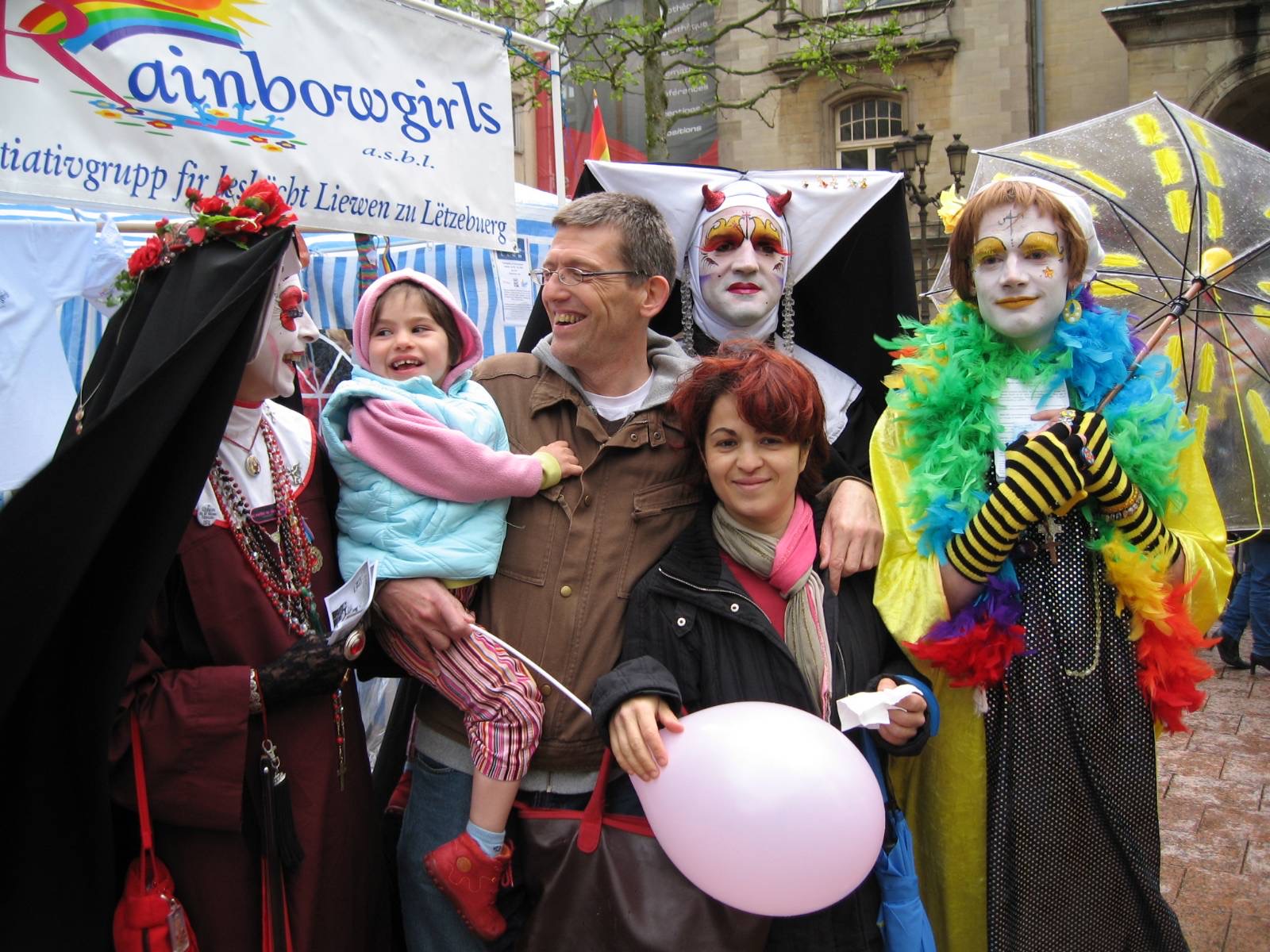
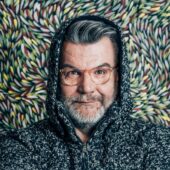
Photo: François Diderrich
In this column, we look back at queer history (and histories), both personal anecdotes and the events of the time.
If you'd like to contribute, get in touch: info@queer.lu.
The yearwas 2009. It was when Gay Mat took place in the capital for the last time. What was it like back then? What was there to see, hear and experience? Were the political demands the same as today? And why did the event move to Esch-sur-Alzette in the years that followed? Together with Andy Maar and Laurent Boquet, from the Luxembourg Pride organising committee, we took a look back.
The name 'Gay Mat' was coined by Claude Neu and derives from the Luxembourgish phrase 'Géih mat!', meaning 'Come along!', in which the verb 'to go' is pronounced like 'gay' in its imperative form. The first rallies were a beautiful, dazzlingly colourful parade. The focus was on raising the community's visibility. But over the years, political demands were also added. The aim was to get the message across to the public. For example, in 2004 the event was called 'Gay Mat Wielen' and in 2001 'Lénks Leie Gelooss?'.
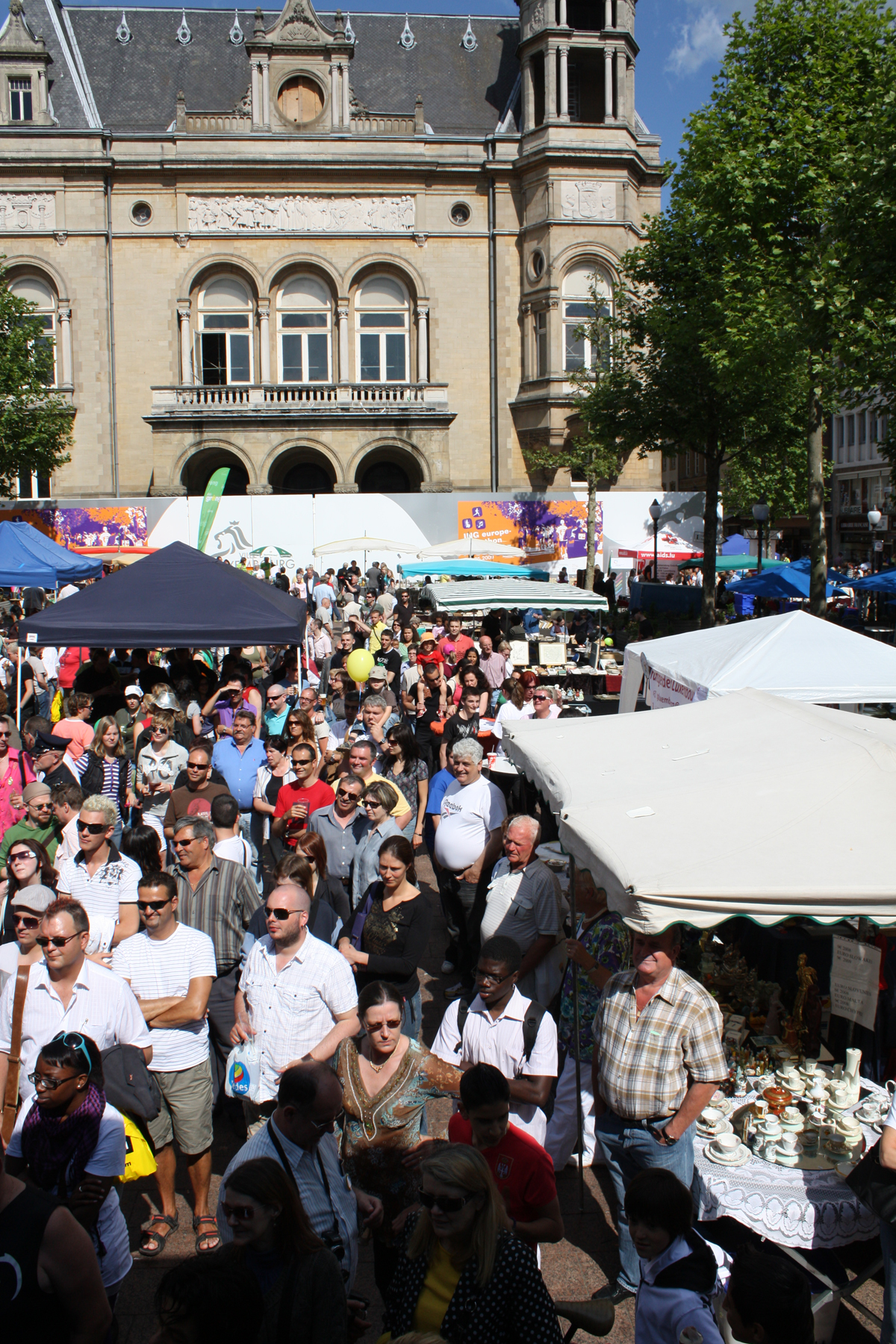
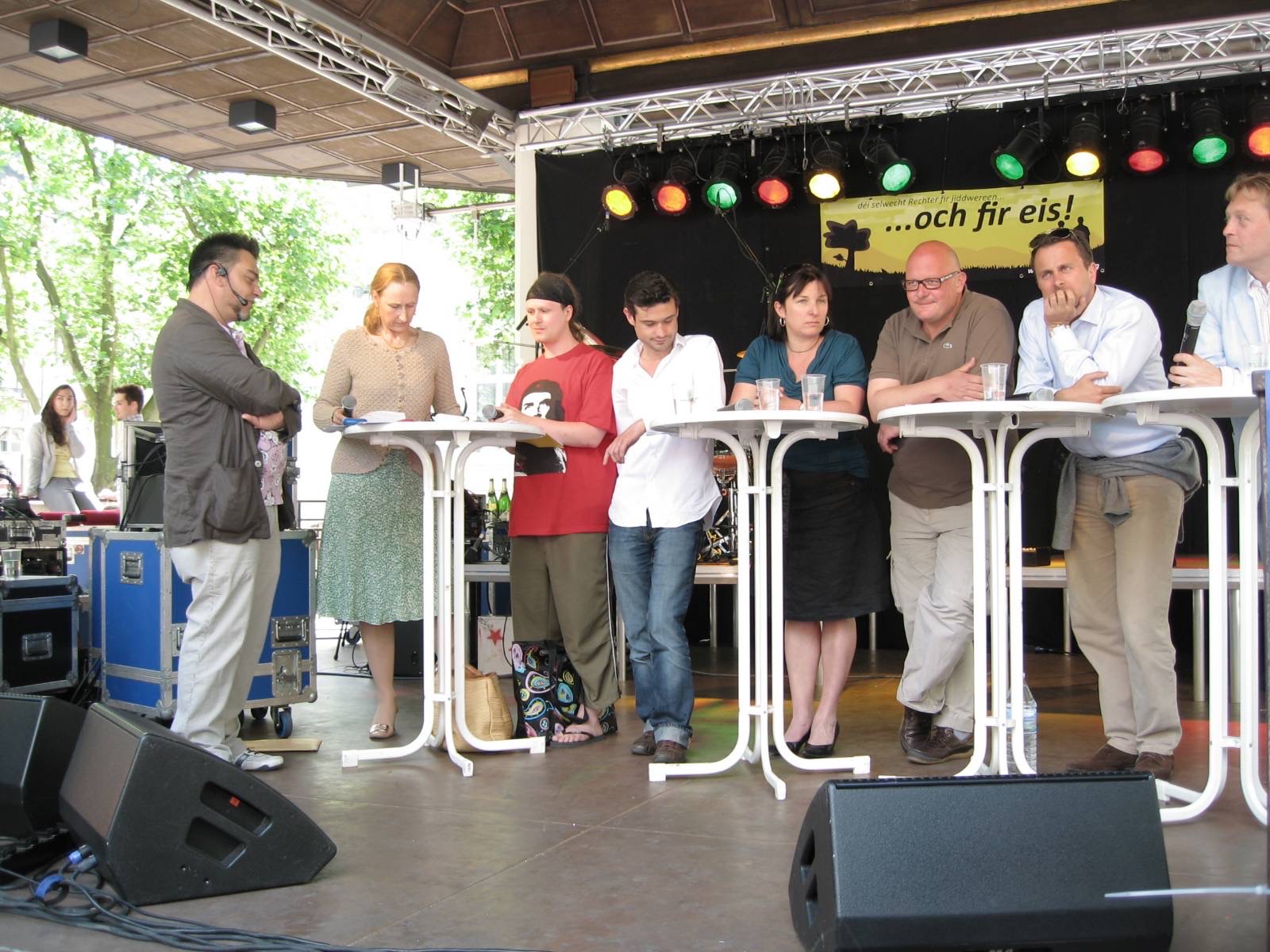
In 2008, the year following the Year of Culture, Gay Mat did not take place. The event returned in 2009 under the title 'Gay Mat …Och Fir Eis!'. Andy Maar and Laurent Boquet joined the organising team for the first time. The parade still took place, and at the Place d'Armes they had booked the bandstand for a live talk and other artistic performances, as well as a drinks van.
However, this turned into a logistical problem. Laurent Boquet recalled that it was "difficult":
We'd tried to organise the 2009 edition more professionally and had obtained permission to set up on the Place d'Armes. A lorry with a capacity of 9 tonnes arrived carrying all the stage equipment, and there was also a drinks van. But the lorry didn't reach its destination because the square had also been allocated to the flea market traders on the same day, and they'd already set up all their stalls in the very early hours of the morning.
Laurent Boquet
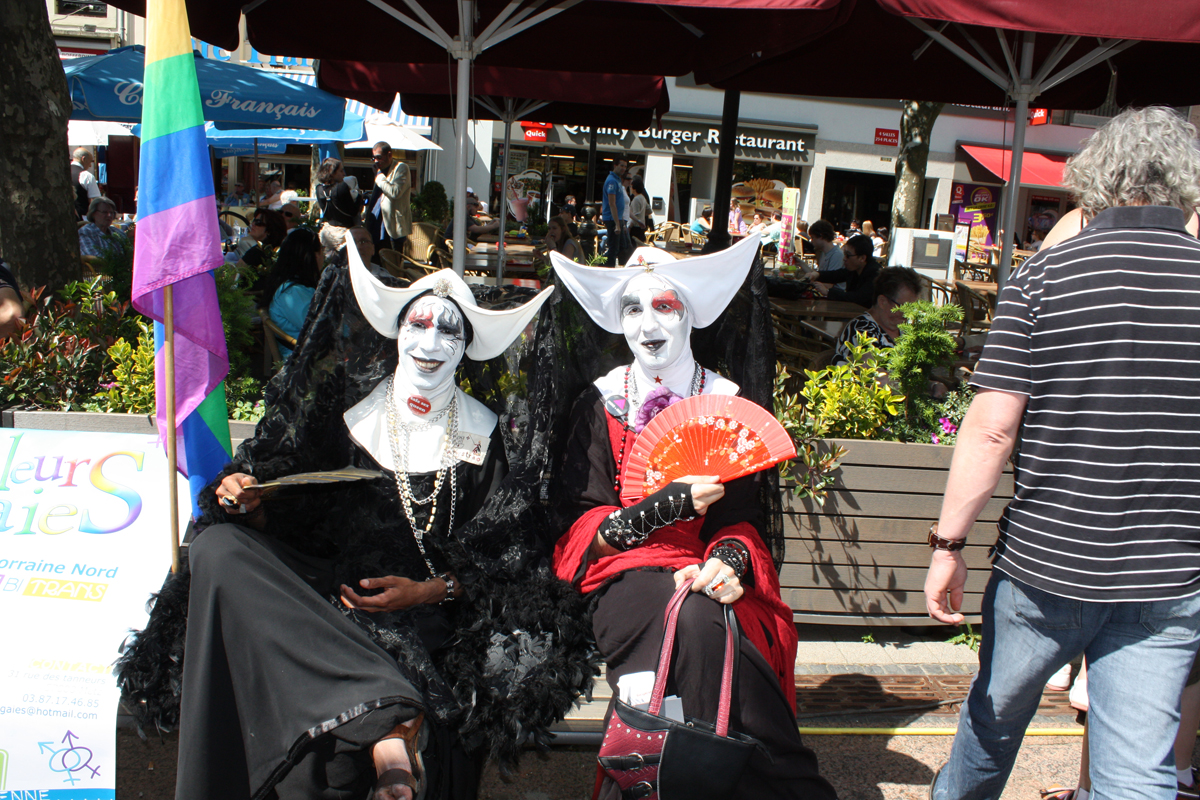
Photo: Rosa Lëtzebuerg / Archives
Andy Maar recalled:
The City of Luxembourg had double-booked the square, and we had to figure out how to squeeze our information stands in between the flea market stalls. But the setbacks had already begun a few days earlier, when the local council informed us that we were not allowed to sell drinks. They said the restaurants weren't happy about the competition. That very same day, we carried out a survey among the restaurants and found that the restaurant owners actually had no objection. On the contrary, if Gay Mat attracts lots of people, it also fills the restaurants and terraces.
Andy Maar
Rosa Lëtzebuerg also used the event to publicise its petition and collect signatures. The aim was to introduce same-sex marriage – with all the rights and obligations of a heterosexual marriage – in addition to the same-sex registered partnership (Pax), which already existed at the time. To this end, a panel discussion had been organised, and politicians of all stripes were only too happy to take part, as parliamentary elections were also taking place that year. Laurent recalled that Alain Frast, an MP from the far-right, ultra-conservative ADR, had a very tough time defending his position during the discussion. "I almost felt sorry for him," he added with a wink.
When asked about their favourite events, Andy and Laurent didn't necessarily single out Gay Mat itself, but rather the fringe events.
The fringe events
The Transcultural Film Days
Andy recalled the Transcultural Film Days, which were later lost entirely. Today, the Lux Film Festival features a section dedicated to queer films, and it's nice to know that this tradition hasn't been lost entirely.
The Queer Arts Festival
For Laurent, it's the Queer Arts Festival that gave – and still gives – many artists from the community, who wouldn't stand the slightest chance in the mainstream, an opportunity and a platform to showcase their art publicly.
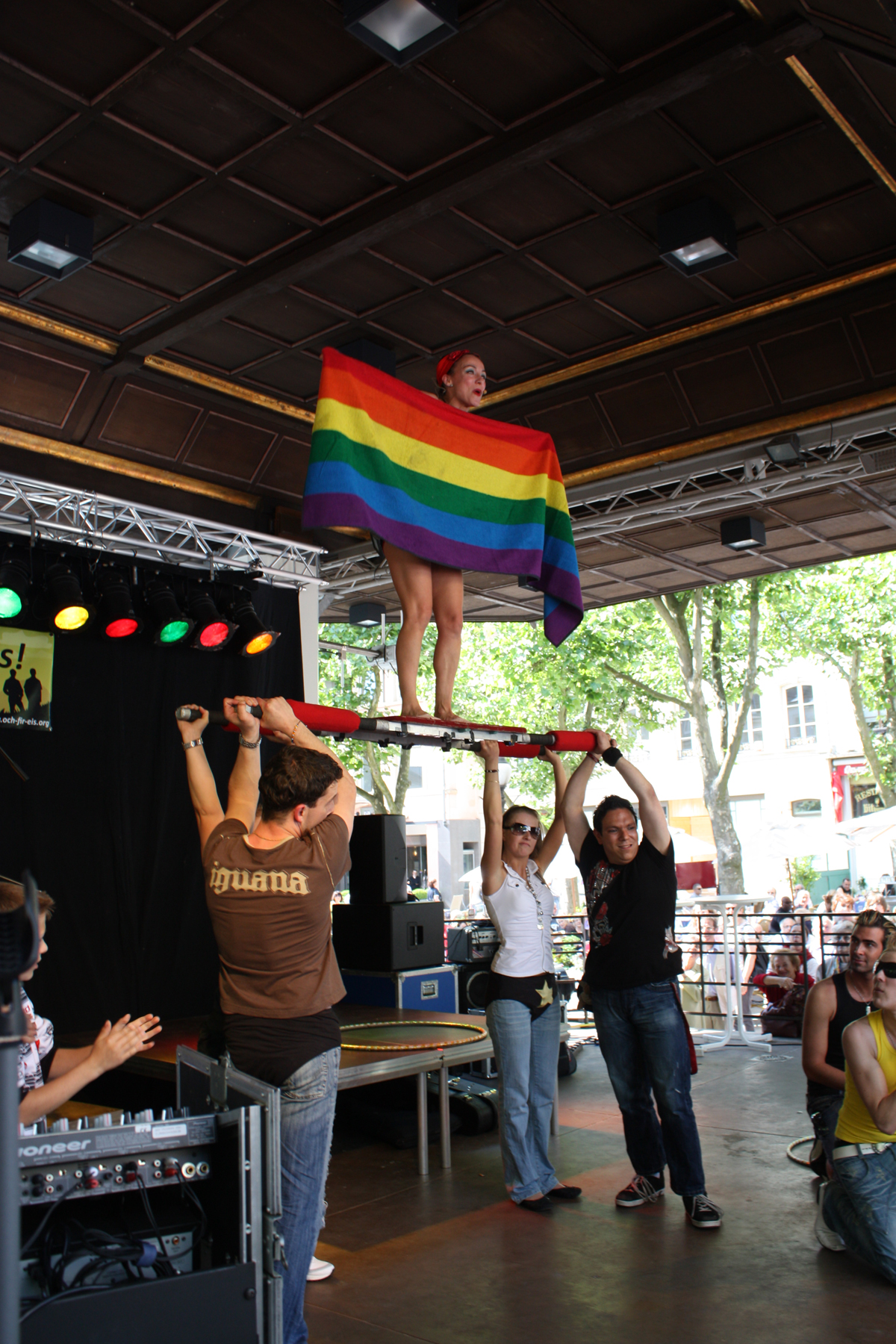
Photos: Rosa Lëtzebuerg / Archives & François Diderrich
There was no Gay Mat in 2010, as it was becoming increasingly difficult to find a suitable venue and a date, and the City of Luxembourg showed no real interest. In 2011, Rosa Lëtzebuerg got off to a fresh start in Esch-sur-Alzette, where the then mayor, Vera Spautz, welcomed them with open arms and offered them active support.
But that's another Historically Queer story.