Disclaimer: This article weaves personal testimony with sociocultural context to explore mechanisms of social surveillance and judgment in Luxembourg.
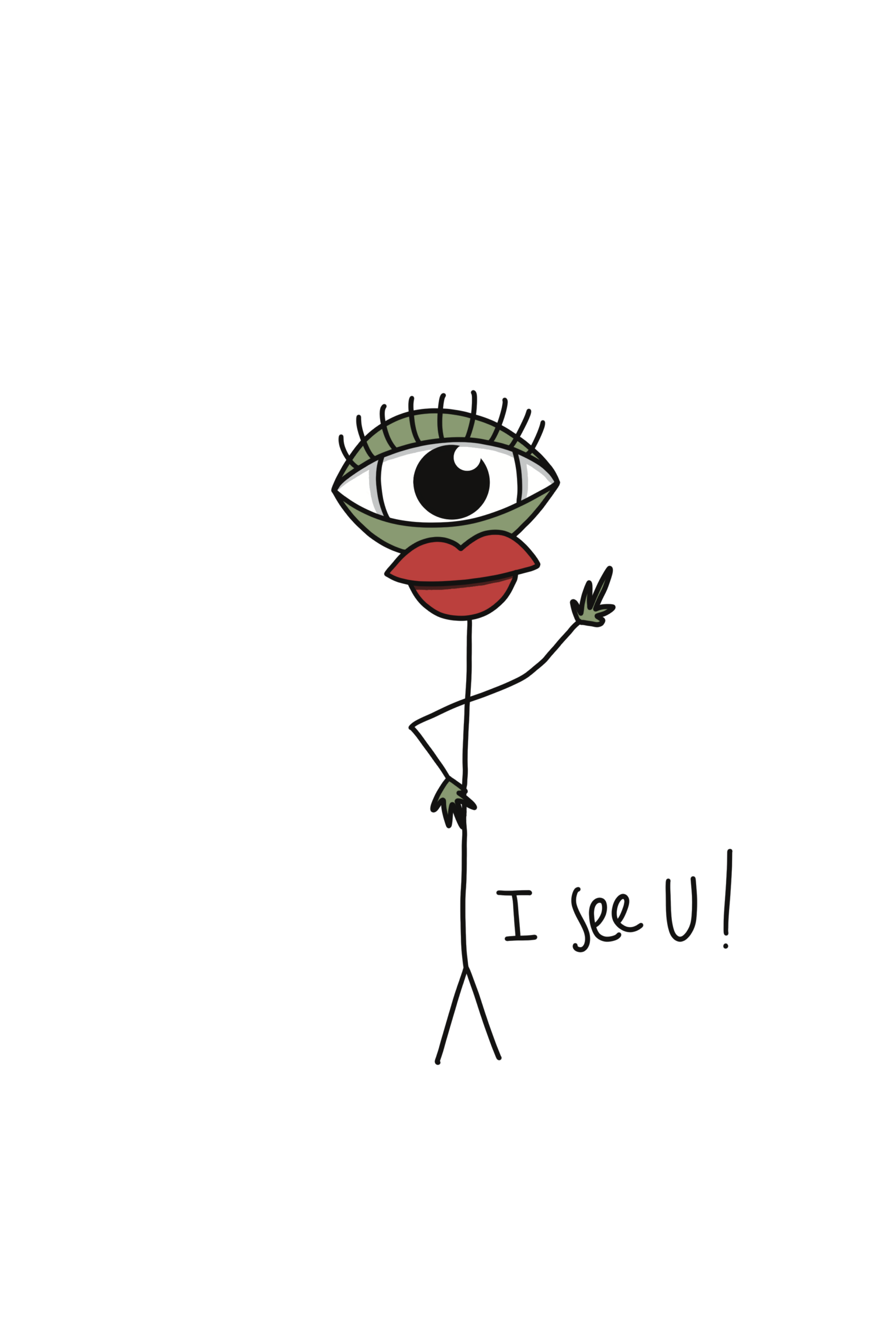
In Luxembourg we watch ourselves watching each other.
The country’s signature gaze is reserved, almost polite. Walking through its neat, luxurious streets, contained smiles and gentle nods often hide a conservative suspicion of anything ‘other’. New acquaintances rarely come without a backstory—a common friend, a shared link, a whispered detail. The appetite for gossip is high.
Luxembourg’s eyes, ever present, send a shiver down your spine that will discipline you eventually. They convey a shame that never shouts, but makes sure to squeeze you back into your grey suit-lined closet. In small towns and villages, this national pastime of watching and judging can quickly take a personal toll. Your face becomes a ‘Visittekaart’—a business card, an identity card. Anonymity does not exist.
My identity simmered for years under Luxembourg’s eyes. My coming out happened in fragments, then all at once.
Church as a breeding ground for shame
Growing up in Luxembourg means that the first gaze you meet is the moral one. The ethical Catholic church codes make law enforcement seem like an afterthought. Here, the real policing flows through chronic shame. As a subtle but constant regulatory force, shame works in tandem with the country’s historical interweaving of religion and identity. A group emotion used for ‘the common good’, through uncomfortable signals of threat.
Some of us learned early that community approval is essential to preserve a fragile belonging. In a God-fearing and wealthy society, only a certain type of selfish individuality is allowed. Everything else requires regulation of perceived inadequacies. For queer people, shame makes authenticity feel dangerous: a fear of not being perceived as the “right kind” of person and losing that belonging you worked so hard for.
Luxembourg was built under a long-standing ‘concordataire model’, where Church and State are tightly linked. Religious norms have quietly shaped moral expectations through religious education in school, clerical authority, and the symbolic weight of Catholic tradition. Although recent reforms have shifted the landscape—the 2015 agreements that formally separated the Catholic Church and the state (putting an end to Catholic religion classes at school), or the 2018 law abolishing church factories and ending communal financing—the legacy of an intertwined system still lingers in our bones and realities.
I still remember reciting the ‘Vater Unser’ (Lord’s prayer) in ‘religion’ class, serving the pastor as one of three ‘Massendénger’ (altar server) in our village church, and the 3x NEE referendum in 2016 (No to (1) lowering the voting age to 16, (2) granting voting rights in national elections to long-term non-Luxembourgish residents, and (3) limiting the duration of ministerial mandates) confirming conservatism once again in Luxembourg. Feeling some type of way, but conforming without knowing why.
Small-town dynamics: expectations at the centre
Gossip in Luxembourg works as a social glue—rarely questioned, rarely resisted. Each of us, with our judging looks, our inquisitive eyes, our silent evaluations, are guardians of the system. It almost feels like important work. Whenever fleeting moments of vulnerability emerge, the spine-straightening gaze of others ensures that the body stiffens and freezes until the danger of being seen passes.
The alternative is to perform—in an “acceptable” way.
To wear the drag that reassures the collective: nuclear families with a mum and dad, discreet gender-conforming clothes, hiding any personal struggles and societal criticisms under a big fat smile.
On top of that, ‘levels of acceptance’ are introduced. Under both the law and the communal gaze, the person with the best dispositions/status is married, property-owning, financially stable (ideally in the civil service or banking world), with kids—and maybe a dog. There are steps to get there, but it feels like fulfilling each of these criteria will earn you a gold star and a whiff more of Luxembourgish pride. Left behind, are single people (that ultimately pay more taxes), people without access to property (and generational wealth), people with an immigration background (regularly excluded from the systems they help sustain), people with more unconventional jobs (unheard of by the square-thinking government officials), and queer people, often ‘lacking’ multiple of these markers.
This is where intersectionality comes in—and not the good kind. Yes, judgment here is intersectional. It is shaped by wealth, language, origin, gender, and the unspoken rituals of belonging. Shame becomes its sharpest tool.
Luxembourg’s eyes are everywhere because the communal gaze completes the moral one. Signs are unmistakable: Louis Vuitton and Longchamp bags. Skinny jeans and fake eyelashes. Heteronormative codes etched into high schools, cafés, clubs—even the way people walk down the street. Cliques. City kids vs village kids. Status and privilege. Price as exclusion.
If you choose to be openly queer in Luxembourg, it is almost like taking a stand. At least it was to me. Nothing is apolitical, but here nothing is mundane and left unseen. Your identity becomes a statement eventually, so you might as well make it a loud one.
When I returned after 8 years abroad (because yes, I left too)—baby queer freshly out of the community womb, second adolescence at its peak—my main concern wasn’t even my family, it was Luxembourg’s eyes. I realised how deeply I had internalised them. I had to confront church eyes, village and high school eyes—all at once—just for the sake of standing my ground.
And then the final boss: my own internal eye, the judgment you carry. Seeing and unseeing your own eyes was and still is one of the hardest tasks of my life.
I owe my teenage self a big hug, while looking right into their eyes and thriving, under the very pressure that once tried to contain who I was meant to become.
illustration Jeff Mandres & MM