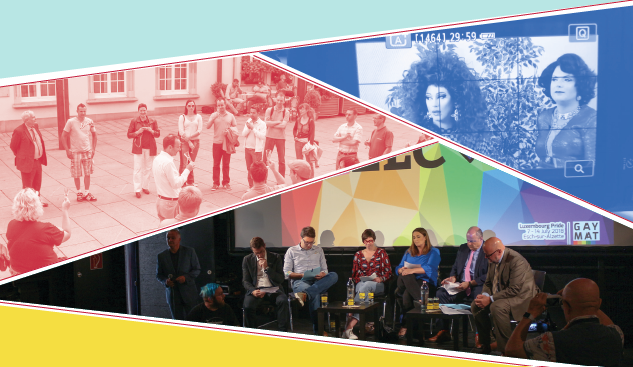
Design: Lloyd Dunn: Presseconferenz Avis – 28.02.2011, Aktioun bei der Chamber – 21.07.2009, IDAHOBIT-Videoprojet – 2019
This year, the association Rosa Lëtzebuerg asbl celebrates its 30th anniversary and, after three decades of commitment, it is time to take stock. What started out as a small political initiative has now become a relevant socio-political actor, working actively in the fields of human rights, culture and community work. In light of political developments both in Luxembourg and abroad, the question of how Rosa Lëtzebuerg can continue to develop and where the association positions itself is becoming increasingly important.
Historical overview and current circumstances
Rosa Lëtzebuerg was founded on 6 June, 1996 and is the oldest LGBTIQ+ organisation that still exists in Luxembourg. However, its creation was no coincidence: various associations had already attempted to strengthen the rights of queer people. The ‘Initiativ Grupp Homosexualitéit – Lëtzebuerg (IGHL)’, founded in 1981, disbanded in 1990. As Marc Grond, the then-president of Rosa Lëtzebuerg, explained in an article in Lëtzebuerger Land on 16 August, 1996, the initiative had been “paralysed by its members’ fear of public exposure”. Carmen Kronshagen, another founding member, recalled that its goals had been “too vague”.
Rosa Lëtzebuerg emerged from these experiences with a clear vision and a strong will. The aim was not only to unite queer people as a strong interest group, but also to foster a sense of cohesion and solidarity that would lay the foundation for progress and visibility.
Following on from Marc Grond’s earlier discussion of the fear of being visible, Rosa Lëtzebuerg continues to campaign for the visibility and social recognition of queer people. Visibility should not be viewed in isolation, but is closely linked to the ongoing development and protection of queer rights. It remains true that a lack of engagement with queer realities leads to ignorance – an ignorance that in turn fosters a lack of respect. This is illustrated by the proverbial “wat de Bauer net kennt, frësst en net” (what the farmer doesn’t know, they won’t eat), highlighting how unfamiliarity often leads to rejection.
The Rainbow Centre has been making an important contribution to this work since it opened in Luxembourg City in May 2023. It is a centre that focuses primarily on raising the visibility of local queer culture and also serves as a first point of contact. Through its presence in public space, it aims to be visible to a broad audience and offer queer people a place to meet and exchange ideas.
Keeping in mind the goal of representing diverse queer lives, we celebrated a major milestone for queer rights in Luxembourg in 2015 with the introduction of marriage equality. For a large part of the public, this political decision meant that equality for all had now been achieved. The annual Luxembourg Pride, formerly known as ‘GAY MAT’, can create the impression that queer people no longer lack rights and acceptance.
When I was able to actively participate in Luxembourg Pride for the first time in 2022, I became very aware of how much work, time and emotional energy goes into such an event – and how much this effort continues in the daily work of the association. As a newcomer to this field, this experience opened my eyes to everything that usually remains in the background. It permanently changed my view of the importance of visibility within the local queer community and was ultimately decisive in my decision to join the board of Rosa Lëtzebuerg in 2023.
This commitment also prompted some personal reflection. Looking back, I realised that despite believing that I had a certain understanding of queer realities, I had ignored or simplified many things, even viewed them with ignorance. The queer community I had imagined was characterised by a certain idealised unity. In reality, the queer community turned out to be more complex: characterised by different political attitudes, social experiences and individual perspectives. Unity was found less in a shared identity than in the shared experience of discrimination and exclusion. This realisation, both sobering and enriching, made it clear that even within the community, there are different views of how far-reaching legal equality actually is and where structural inequalities continue to exist.
Although Luxembourg is considered to be relatively queer-friendly compared to some other countries, both within and outside the EU, its legislation still has significant gaps. On closer inspection, it is striking that the marginalisation of queer people remains a problem, for example through the pathologisation of trans people, the lack of automatic recognition of same-sex parents or medically unnecessary surgeries on intersex infants.
For Rosa Lëtzebuerg, this means that political work remains indispensable: it is important to keep raising awareness among decision-makers about queer political issues and to advocate for reform. This involves a constant struggle for visibility, recognition and action. While public perception is often shaped by visible events such as Luxembourg Pride, a significant part of the work takes place behind the scenes: discussions with ministries, efforts to communicate complex issues such as trans healthcare, legal loopholes or structural discrimination in an understandable way and bring them to the attention of the relevant authorities.
Political work is a continuous process that rarely yields quick results – not due to a lack of motivation, but because political change takes time and is often shaped by lengthy decision-making processes.
The association works continuously – together with other organisations – to gain political contacts and influence decisions, even in periods when queer issues are not a priority for politicians. Progress is not linear, it consists of advances, delays and moments of frustration. This is exactly what political work looks like in everyday life. Progress is often incremental: small adjustments, changed wording, new working groups. Rarely spectacular, but politically significant.
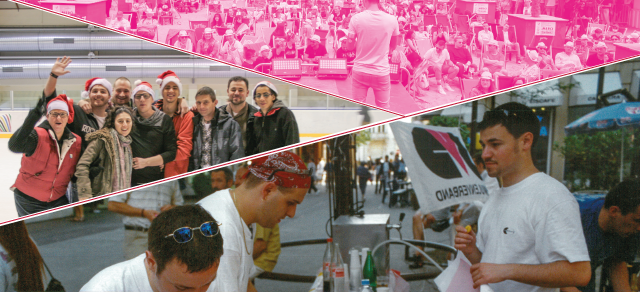
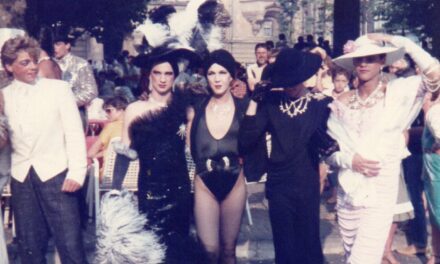
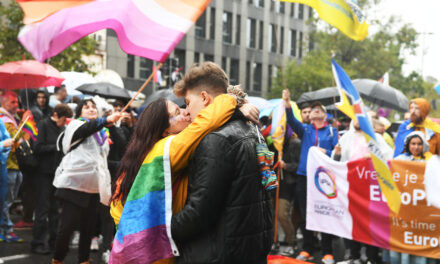
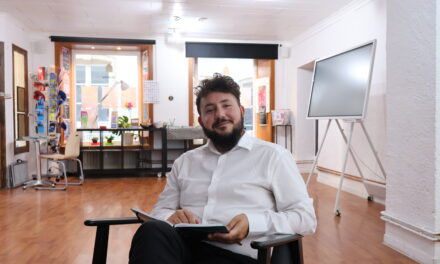
Pride Luxembourg – 2021, Rosa on Ice – 24.11.2012, Gaymat – 1999. Photo Rosa Lëtzebuerg Archive
Structural challenges within the organisation
Alongside its ongoing political work, the organisation itself faces the challenge of adapting its internal structures to growing demands. Volunteer work remains at the core of the organisation, but it is increasingly reaching its limits. Projects, consultation requests, political dossiers, training programs and community work require a level of professionalism that can only be sustained long-term with stable resources.
Thanks to the establishment of the Rainbow Centre, the dimensions, but also the reach and visibility of Rosa Lëtzebuerg have expanded. Despite its small number of employees, the centre provides a socio-cultural hub for queer people, offering information as well as space for queer culture and discussion. From youth groups to the Golden Gays, from the Queer Choir to Luxembourgish courses, a small on-site team works to create a safe and inclusive space for everyone.
Due to the constantly changing social situation, queer issues are becoming increasingly visible, but visibility brings increased expectations. Community members, the media and political partners are increasingly demanding clear positions, quick responses and statements from experts. For an association rooted in volunteer structures, this means a new form of responsibility.
Additionally, Luxembourg is increasingly being noticed internationally in the context of LGBTQIA+ issues, which increases the pressure to further develop standards and legal frameworks. Rosa Lëtzebuerg is part of this process, but it is not all-powerful, so changes often take longer than hoped.
At the same time, the board is increasingly reaching its limits when it comes to representing all queer people in Luxembourg. It is important to remain realistic that a relatively small board cannot reflect an inherently diverse community. Rosa Lëtzebuerg therefore also relies on the active support of committed volunteers who, with their own ideas and motivation, ensure that the socio-cultural offerings at the Rainbow Centre are constantly expanding and diversifying.
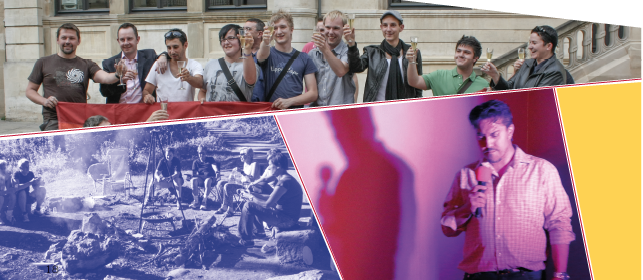
Aktioun bei der Chamber – 21.07.2009, Rosa Summerfest – 2012, Rosa Karaoke – 23.10.2015. Photo Caroline Buck
Looking ahead
The association’s vision for the future is characterised by pragmatic goals: a solid structure, stable financing, a clear distribution of tasks and a stronger position in political decision-making processes. There are numerous goals and visions for the board and staff of the Rainbow Centre, too.
On the one hand, the ‘Rainbow Centre’ project is to become the ‘Rainbow House’, as was originally planned. Larger premises will allow the Queer Archive to be expanded and made more accessible, as well as improving the use of the space for members and partner organisations. Furthermore, full accessibility is a central goal. However, if the Rainbow House project is implemented, the expansion would bring more work and more responsibility. The board has one major wish above all else: the continued commitment of the local community.
Fortunately, there are always people who speak out loudly for queer rights, but in times of political uncertainty – which repeatedly reveal the fragility of these rights – sustained political engagement is often lacking. For an association that relies on volunteer work, this can lead to stagnation. This makes it all the more important that more people contribute their perspectives, ideas and energy. The association wants to not only give space to diverse voices, but also actively encourage them to become part of the work. Every single person who gets involved helps to make the community stronger, more visible and more sustainable. Together, we can achieve far more than any one person alone.
An association committed to diversity must, of course, do more than just formally represent different voices. True participation only occurs when all members have the opportunity to actively participate and contribute their perspectives to decisions. To speak of genuine participation, it is not enough for opinions to be heard – they must be taken seriously and lead to concrete actions. For this to succeed, both external transparency and more active involvement of individual volunteers and associations are necessary.
A culture of listening is central to this effort. In heterogeneous communities in particular, there is often a risk that experienced, self-confident or institutionally supported voices will dominate the discourse. Our association must therefore meet this challenge by creating spaces where less vocal voices or previously marginalised perspectives can also be heard. After all, equality of opportunity does not automatically mean justice – true justice requires levelling out inequalities and actively strengthening disadvantaged positions.
Enabling diversity means recognising different realities and regularly questioning one’s own perspectives. Differences in political views, social experiences or needs are not obstacles, but expressions of the community’s complexity. Our association embraces this diversity, views conflicts as learning opportunities and sees this freedom of expression as the basis for joint development, while always maintaining respect and clear boundaries.
As a grassroots organisation, many members are much more than just a number: they give political weight to our demands, ensure a democratic structure and enable stable, sustainable work. The more people stand behind Rosa Lëtzebuerg, the stronger the organisation becomes, the more clearly queer interests can be represented, and the more resilient the movement remains. That is why we need people who not only sympathise but also want to become part of Rosa Lëtzebuerg.
In addition, membership fees not only provide a reliable financial basis that secures the association’s work in the long term, they also strengthen its political voice. The more people stand behind the association, the greater our influence on decision-makers, the more visible our community becomes and the more independently we can act. Every membership is a signal: we are many, we are visible, and together we are shaping a future in which queer rights are considered a given.
So it is clear: Rosa Lëtzebuerg remains an organisation in transition, balancing grassroots work and political strategy, volunteering and professionalisation, between an established identity and new challenges. What Rosa Lëtzebuerg will become in the future is not only decided by the association but by every individual willing to be part of its story. The work continues, and together we will write the next chapters.