Are activists too radical?
In November 2025, an activist from déi aner, an alternative digital media outlet, learnt via a report in the newspaper Wort that the Minister of Foreign Affairs, Mr Xavier Bettel, had filed a complaint against them. The issue? A meme posted on Instagram depicting him with plumped-up lips, make-up and a keffiyeh. This image led to the queer collective déi aner being accused of homophobia towards the openly gay minister. However, ‘yassifying’ — that is, making an image more glamorous — is a common practice in web culture, particularly within the LGBTQIA+ community, as the collective pointed out in its statement.
Did déi aner take it too far? Has activism in Luxembourg become too radical? If we look at the etymology, ‘radical’ comes from the Latin ‘radicalis’, meaning ‘at the root’. Being radical therefore simply means tackling the root of the problems.
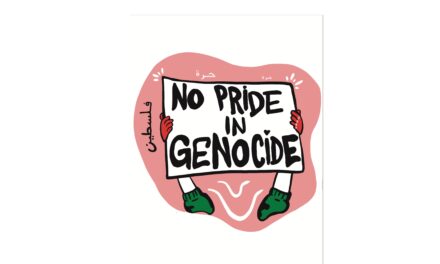
It is now clear that the genocide of the Palestinian people has only been able to continue thanks to the international support given to the State of Israel. Despite Luxembourg’s recognition of Palestine in September 2025, the Grand Duchy maintains structural links with the war effort, notably by authorising the sale of Israeli government bonds on the European market via Luxembourg’s financial centre. These securities contribute to the direct financing of the State of Israel’s budget, in which defence constitutes the largest area of expenditure. The Foreign Minister could have called for sanctions at European or national level, which would have legally compelled the regulator to block these bonds’ access to financial markets. Consequently, tackling the mechanisms of the conflict behind the genocide means taking on those who support it — and this is precisely déi aner’s approach.
« If denouncing injustice makes us radicals, then so be it. »
— the collective also commented on 5 November 2025
After all, between a satirical meme and genocide, the choice is a simple one. Even Karin Weyer, director of respect.lu, the non-profit organisation responsible for deradicalisation in Luxembourg, emphasised in the press the importance of distinguishing “legitimate activism in a democracy from a more extreme form of activism, which crosses legal boundaries and resorts to violence”, adding that “we must not denigrate all forms of activism, even when we do not share the cause” (L’Essentiel, 7 November 2025).
A political meme: legitimate freedom of expression?
Political caricature dates back to ancient Egypt and has continued to evolve throughout history. In the Middle Ages, woodcut engraving was the medium of expression, and from the 17th century onwards, the paper format became predominant. Today, Bettel’s ‘yassified’ meme continues this tradition.
Exaggerating or altering a politician’s features naturally provokes all manner of reactions, and this is part and parcel of democracy. déi aner has stated: the aim was not to insult or defame the minister, but rather to challenge and engage in dialogue. This is therefore a perfectly legitimate exercise of freedom of expression. The minister’s reaction — taking legal action against a figure from déi aner, who is not even the creator of the meme — thus appears to be a disproportionate response, aimed at silencing criticism.
Who will be next?
In recent months, pro-Palestinian activists have faced increasing pressure in Luxembourg: dismissal for activism in their private time, intimidation and legal proceedings. Meanwhile, logistical and financial support for the State of Israel continues.
This situation reminds me of Martin Niemöller’s quote on passivity in the face of Nazism: “They came for the communists, I said nothing; I was not a communist. They came for the Jews, I said nothing; I was not a Jew. They came for the trade unionists, I said nothing; I was not a trade unionist. They came for me, and there was no one left to speak out.” If defenders of Palestinian rights are now the outcasts of public debate, who will be the next target?
How can we ensure that the civic space remains open to everyone? If we do not take action to put an end to intimidation and politically motivated dismissals, where will this downward spiral end? A world that tolerates such injustices is, quite literally, far too ‘radical’. In this case, it was not déi aner who crossed the line, but Minister Bettel.