What Castro means to queer visitors from countries where Pride is still a crime
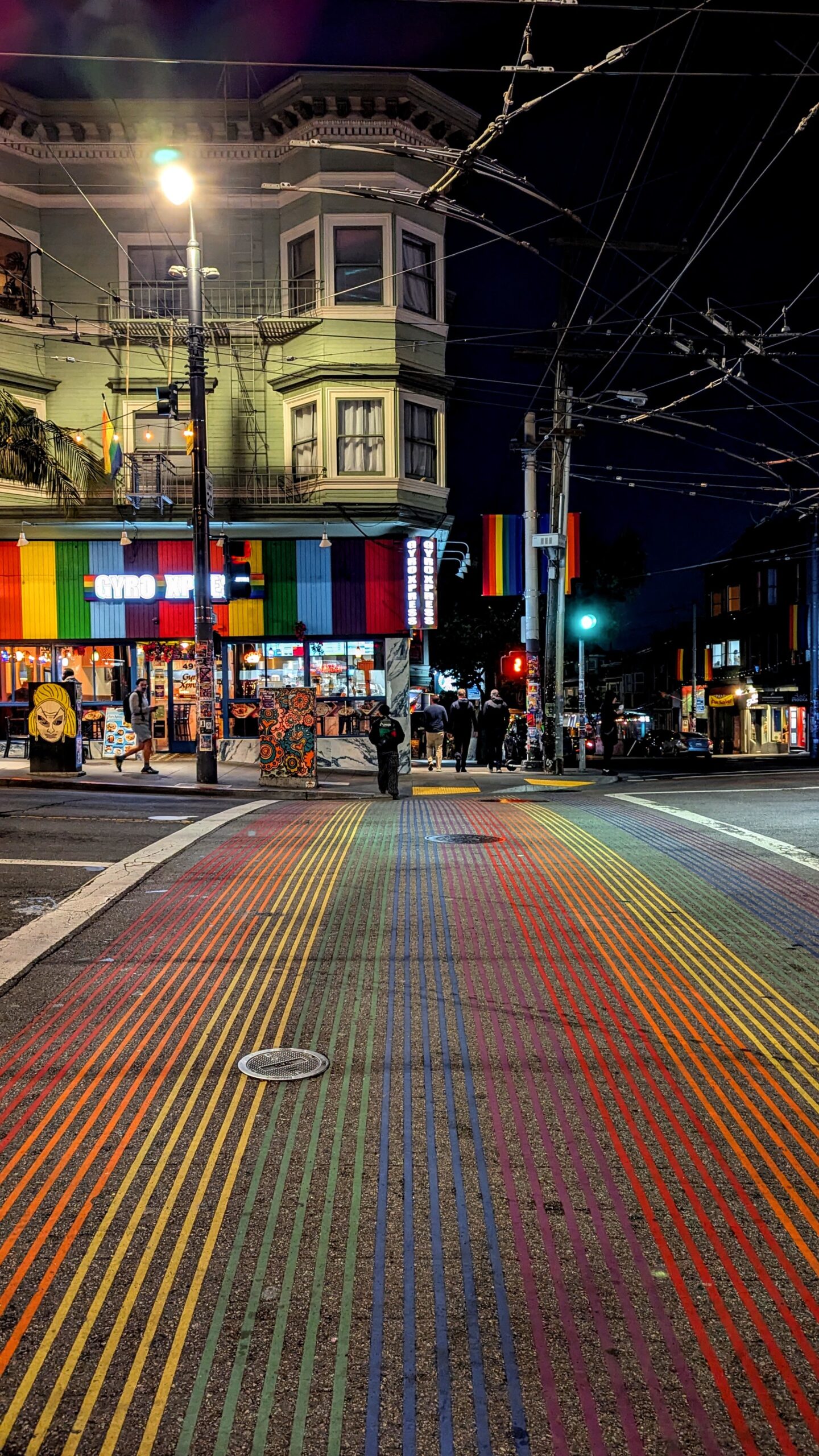
San Francisco’s Castro District is one of the world’s most iconic LGBTQ+ neighbourhoods. But for queer visitors from countries where visibility comes with social and legal risks, it is often the first place where they can be their authentic selves.
A gay couple holding hands and exchanging playful banter on a rainy evening along Luxembourg’s Chemin de la Corniche, the city’s panoramic promenade, is rarely a sight that would draw attention. They blend seamlessly with the rest of the couples, standing against the historic walls overlooking the Alzette valley below.
Thousands of kilometres away, along Mumbai’s Marine Drive, another scenic promenade overlooking the Arabian sea where couples gather during sunset, the same gesture may raise eyebrows. India decriminalised homosexuality only in 2018, when the Supreme court struck down a colonial era law criminalising same-sex relationships. Yet public expressions of queerness are still stigmatised and scrutinised. Most Indian queer couples exercise caution in public spaces, maintaining a careful distance from each other, choosing not to hold hands and speaking in hushed tones.
The contrast is telling.
Very few spots in the world underscore that contrast as strikingly as San Francisco’s Castro District, where queerness is so deeply embedded into daily rhythms of life that one barely notices it.
For the Luxembourg couple, it may seem like an extension of a life they are used to. For an Indian queer couple, holding hands in public for the first time would feel remarkable and unusual.
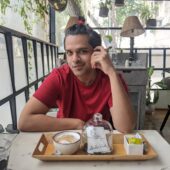
Sunny, a 33-year-old onboarding consultant from India, vividly remembers his earliest walks through Castro District. His memory does not drift to his first Pride parade or a drag performance. Instead, he remembers a montage of almost mundane sights: a queer couple walking their dog, another holding hands while entering a grocery store, and rainbow flags swaying gently from cafes.
It was the ordinariness that touched him the most. “Nobody was hiding, and most importantly, nobody was staring,” says Sunny, who moved to San Francisco in 2024.
Though today he is more comfortable with his queer identity, growing up in India taught him that comfort and freedom do not necessarily mean the same thing. “Even in the most progressive circles back home, there is an invisible layer of restraint,” he says. “I didn’t fully comprehend how much of that residual guard I carried until I spent time in Castro.”
Sunny’s residual guard is also reflective of India’s legal system. Despite decriminalising same-sex relationships, the country’s LGBTQ+ communities continue to fight for basic protections. There is no constitutional right to marry. A partner cannot be assigned as next of kin if the other is hospitalised. Joint adoption remains legally unavailable to LGBTQ+ couples. This legal uncertainty forces queer Indians to harbour a quiet sense of protective social caution.
“You learn to become hyper-aware of how you walk, speak, look at someone, and simply take up space in public,” Sunny says. Moving to San Francisco, he adds, shifted how he expressed himself, though it did not happen in a dramatic fashion. “But in small, daily releases of tension,” he argues. “I slowly stopped overthinking whether I looked ‘too queer’,” he says.
For immigrants arriving from countries where being openly queer still carries severe legal, social, or familial repercussions, Castro’s acceptance feels deeply meaningful. Yet the ability to experience Castro does not extend to all queer individuals, especially those whose lives are not shaped by privilege and lack the socio-economic means to travel. Migration and overseas academic pursuits remain inaccessible to many queer people, for whom Castro exists more as a symbol of freedom, and less as a lived-in experience.
The neighbourhood has held an almost mythical place in queer memory for decades: AIDS activism, Harvey Milk, Twin Peaks Tavern (the country’s first gay bar to have open glass windows), rainbow crossings, and queer resistance.
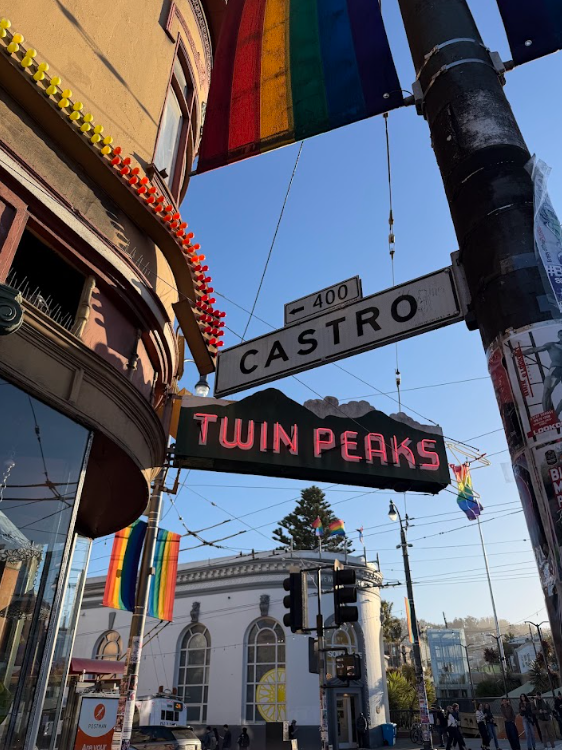
“The Castro is not merely a neighbourhood in San Francisco,” says David Eugene Perry, founder of San Francisco’s LGBT Rainbow Honor Walk and a spokesperson for The Castro Theatre. “It is an idea made physical: a place where history, visibility, grief, celebration, politics, cinema and daily life have converged for generations.”
Perry says visitors from Asia often approach Castro with a kind of reverence that Americans rarely understand. “They are not simply sightseeing. They are measuring what public freedom can look like.”
At the centre of the symbolism stands the Castro Theatre whose marquee, stage, and its very location communicate something bigger than entertainment. “Spaces such as these offer something irreplaceable about walking into a room and knowing that you belong,” says Perry.
The theatre isn’t simply a screening room, but a part of a much larger tradition of reclaiming physical space: bookstores, churches, community centres, streets, parks and sidewalks.
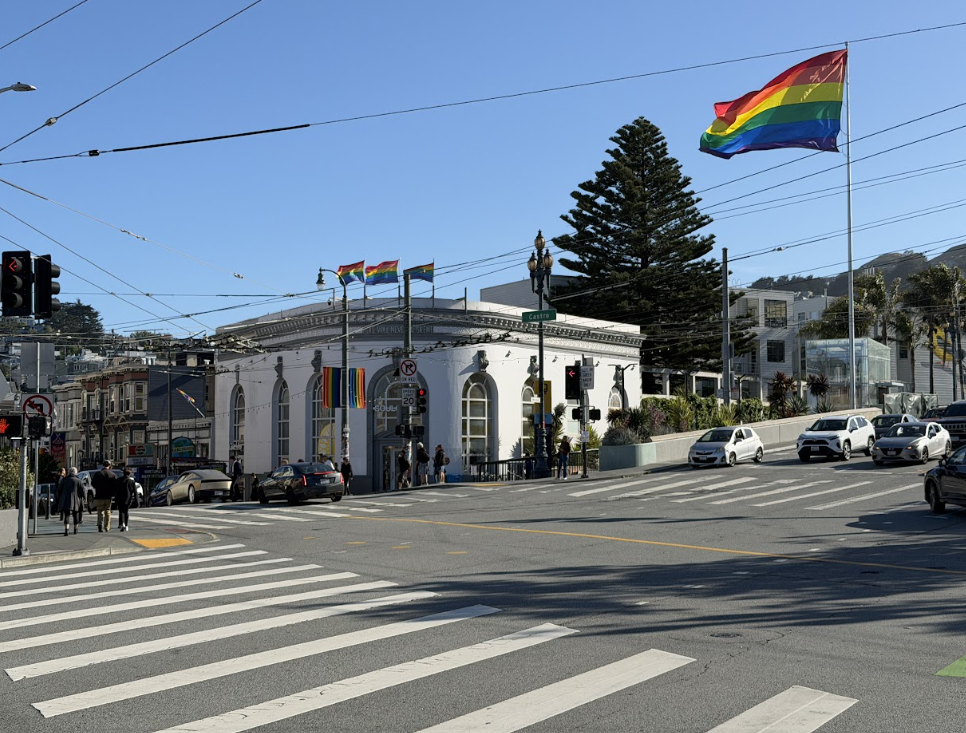
But before Castro became a global queer landmark, it was simply a neighbourhood trying to figure itself out. Martha Asten, CFO of Cliff’s Variety, a historic store located in Castro since 1936, has witnessed the renaissance first-hand since she started working at the store nearly 58 years ago.
Asten recalls how in the 1960s Castro was primarily a quiet family neighbourhood. “But in the late 1960s to early 1970s, driven by the counterculture movement, younger gay people moved to San Francisco drawn by affordable rents and the possibility of living more freely.” She says the hippie and free-love movements allowed them to thrive in a more communal manner.
“The neighbourhood gradually became more queer,” she says. By 1972-73, Harvey Milk had moved in, and his historic victory in 1977 made him one of the first openly gay elected officials, further cementing Castro’s position as a LGBTQ+ mecca.
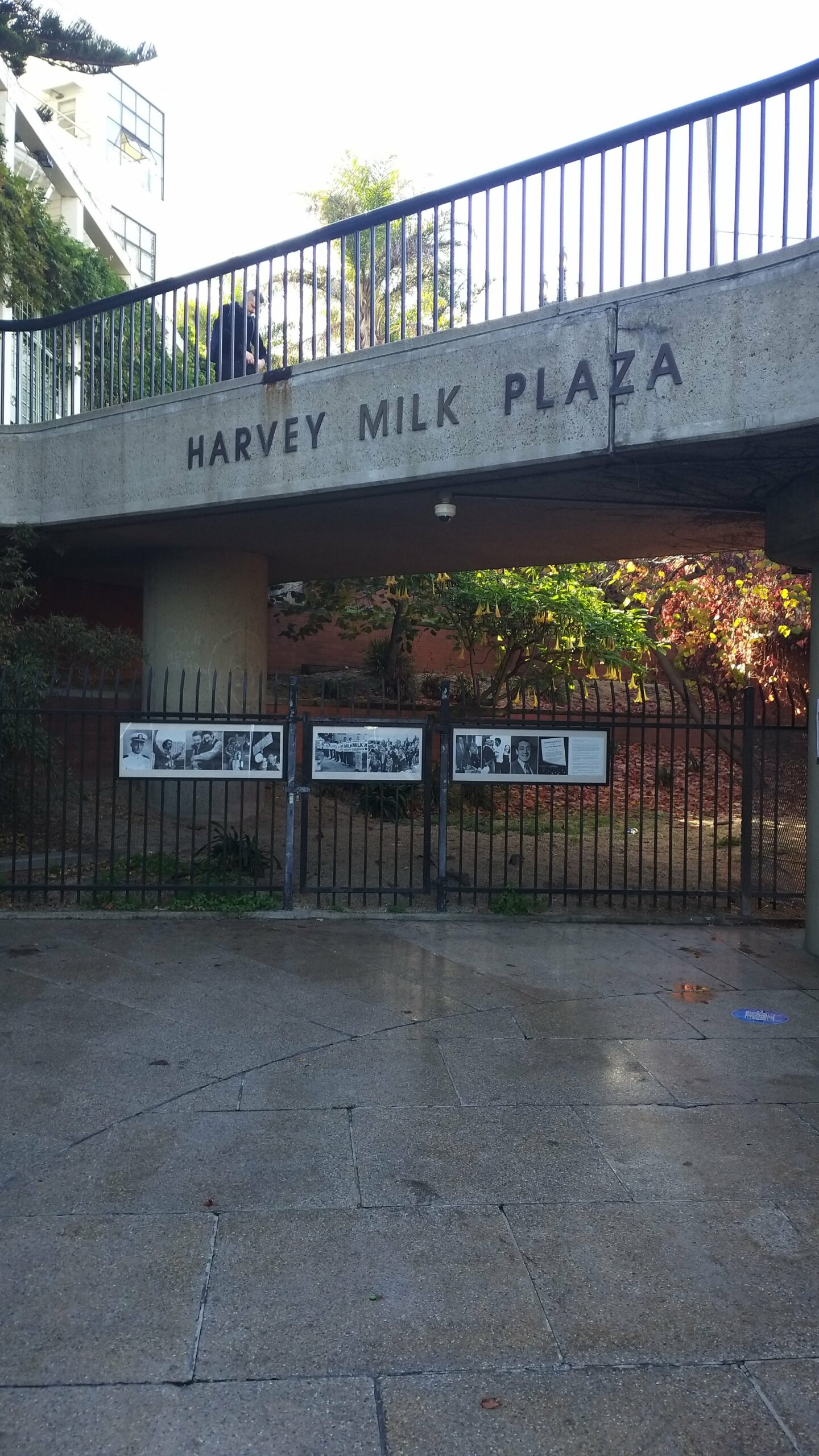
Then came AIDS. Asten becomes wistful. “By the 80s, the district was heavily impacted by the AIDS crisis. I witnessed friends die week over week.”
The Castro that emerged carried memories of devastating loss as well as celebration.
This memory continues to breathe in quieter spaces. Fabulosa Books stands at the space once occupied by A Different Light, the queer bookstore that anchored Castro during the AIDS crisis.
For Alvin Orloff, writer and owner of Fabulosa Books, public queer spaces carry emotional heft. “Many of us who now live here grew up in less tolerant times and know all too well what it’s like to live without such spaces.” The store also runs the ‘Books Not Bans’ programme through which it sends books to organisations in more conservative parts of the United States.
He says that such programmes are necessary because despite the legality of gay marriages, conservative Americans live in cultural bubbles. “There are some places, not outside of the USA, that are still lagging behind in the fight for LGBT+ rights,” he says.
Before moving to San Francisco in 2022, after living in Taiwan, China, and Singapore, supply chain strategist Jerry Kun-Zhe Lee carried many of the subtle social habits common across Asian societies. When he visited Castro, something shifted.
“People here were not constantly monitoring themselves socially.” He remembers his first time visiting Castro’s popular gay club, Beaux and running into Evan Low, one of the country’s youngest openly gay, Asian-American mayors. “I was shocked that a politician would casually visit a gay club on a Friday night,” he says. “This would never happen in the countries I’d lived in.”
For many people in San Francisco, that may seem completely normal, but for someone raised in Asia, it felt emotionally significant. “Even though Taiwan has made major progress on LGBTQ rights, there is often a cultural tendency toward subtlety and emotional restraint.”
Across Asia, LGBTQ+ rights remain deeply ambiguous. While Taiwan legalised same-sex marriages in 2019, its Asian counterparts still lag behind. Singapore repealed a law criminalising sex between men in 2022, but same-sex marriage and civil unions remain illegal. China does not recognise same-sex marriages either and the government continues to heavily regulate and censor art that is remotely queer. During the release of the 2025 American body-horror film “Together”, Chinese theatres digitally altered a same-sex wedding scene with a heterosexual one. In Pakistan, same-sex sexual acts remain criminalised, with penalties that can include include life imprisonment, while in Malaysia, they are illegal under both federal civil and state-level Sharia laws.
These legal limitations are precisely why queer individuals such as Sunny and Jerry find Castro to be a safe haven. Sunny recalls another moment that had a profound effect on him: An elderly queer couple sitting outside a coffee shop chatting about everyday things. Growing up in India, he had rarely seen queer people age visibly in public life. “Safe queer expression often gets relegated to heavily-coded spaces,” he says. That moment offered him a glimpse into a future he thought he would never have.
At Castro Indian Restaurant & Bar, owner Ajay Khadka delights in seeing queer South Asian visitors experience cultural and queer acceptance co-existing in the same space. “For many, it is the first time they have been in a room that is familiar culturally as well as welcoming of who they are.” Originally from Nepal, he understands why queer visitors from South Asia and Asia experience Castro with a completely different emotional intensity. “It can feel like the first time they have ever been somewhere that reflects a version of themselves they have had to hide their entire lives.”
Brandon Frost, who works in San Francisco’s queer nightlife scene as a gogo dancer, says interactions with people from conservative countries changed his perspective about queer freedom. “I’ve seen someone cry because they could never imagine being so open in their home country.”
He is particularly welcoming of drag performers from the immigrant community celebrating queer Middle Eastern and Latin culture. “These communities still face struggles with inclusion and racism, especially in the light of America’s rising anti-immigration policies,” says Frost. “But they still show up and celebrate.”
The freedom experienced at Castro does not necessarily translate across the rest of the United States. State legislatures have advanced bills limiting protections of transgender individuals and restricting their access to healthcare, education and public life. Despite the First Amendment’s right for free expression, some states continue to ban drag shows, describing them as “obscene” and inappropriate for children. Even in LGBTQ+ friendly countries such as Luxembourg where queer couples enjoy better protections, a recent European Union survey revealed a telling statistic: 48% of respondents said they often or always avoid holding hands with their same-sex partner. Castro’s existence therefore becomes especially significant, not because of its promise of a utopian future, but because of a possibility: a public space where visitors feel less restricted than in other parts of the world.
For many queer visitors, such as Sunny, Castro was one of the first places where they embraced their queer selves. “That psychological shift is incredibly difficult to articulate unless you have spent a lifetime somewhere where simply being seen carries consequences.”
And perhaps that is what stays with people after they leave Castro. Not just the bustling nightlife or rainbow flags. But smaller, almost banal moments. Two men sharing coffee. A couple grocery-shopping. To Americans, Castro may simply be another neighbourhood. But for queer folks from countries where visibility comes with a heavy price, it offers hope for a future they are still waiting for at home.