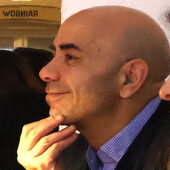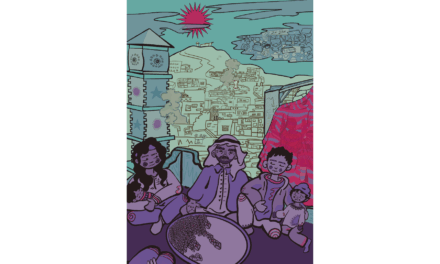
INTERVIEW WITH THIERRY VALLENET, COMPANY DIRECTOR AND CO-FOUNDER OF THE PARTÂGE ENDOWMENT FUND, AND MEMBER OF THE ASSOCIATION DES AUDACIEUSES ET DES AUDACIEUX.
In Luxemburg wird die Wohnungskrise mittlerweile als nationaler Notstand anerkannt. Doch indem sich die öffentliche Debatte fast ausschließlich auf ihre wirtschaftlichen und strukturellen Dimensionen konzentriert, geraten wesentliche soziale Realitäten in den Hintergrund. Dazu gehört auch das Altern von LGBTIQ+-Personen.
Queere Senior:innen im Großherzogtum, die in der öffentlichen Politik weitgehend unbeachtet bleiben, sind mit vielfältigen Herausforderungen konfrontiert: Lebenswege, die häufig von Diskriminierung geprägt sind, erhöhte Prekarität und soziale Isolation. Auf einem angespannten Wohnungsmarkt gehören sie zu denjenigen, die besonders große Schwierigkeiten haben, Zugang zu angemessenem Wohnraum zu finden.
Mit seinem inklusiven Wohnprojekt lädt Thierry Vallenet, ein aufmerksamer Beobachter der sozialen und demografischen Entwicklungen im Großherzogtum, dazu ein, die Perspektive zu verändern: Wohnen nicht nur als eine Frage von Angebot und Nachfrage zu betrachten, sondern auch als eine Frage der Würde, der Sicherheit und der sozialen Verbundenheit.
queer.lu: Wenn wir die Situation von LGBTIQ+-Senior:innen angesichts der Wohnungskrise betrachten, was sagt Ihrer Meinung nach die Tatsache aus, dass dieses Thema in der öffentlichen Debatte in Luxemburg kaum vorkommt?
Thierry Vallenet: Zunächst ist es wichtig, daran zu erinnern, dass die Wohnungskrise in Luxemburg Teil einer umfassenderen europäischen Entwicklung ist, hier jedoch aufgrund der hohen Grundstückspreise besonders ausgeprägt ist. Diese Situation lässt sich durch das Zusammenspiel mehrerer Faktoren erklären: die Zunahme von Einpersonenhaushalten infolge von Trennungen, die Alterung der Bevölkerung sowie politische Maßnahmen, die diese Entwicklungen unterschätzt haben, insbesondere im Hinblick auf den Druck auf den Grundstücksmarkt und die Spekulation.
In diesem Zusammenhang sind es immer die vulnerabelsten Gruppen, die zuerst und häufig am stärksten betroffen sind: Rentner:innen mit niedrigem Einkommen, Alleinerziehende, Migrant:innen – und unter ihnen auch LGBTIQ+-Senior:innen.
Diese Generation verkörpert eine besondere Geschichte. Viele von ihnen haben die 1970er- und 1980er-Jahre erlebt, eine Zeit, die von offener gesellschaftlicher und beruflicher Homophobie sowie gesundheitlichen Belastungen geprägt war. Dies führte zu unterbrochenen Erwerbsbiografien, Diskriminierung am Arbeitsplatz und einem schlechteren Gesundheitszustand. Das Ergebnis ist eindeutig: häufig unvollständige Rentenansprüche, wenig angesammeltes Vermögen und begrenzte finanzielle Mittel.
Hinzu kommt ein entscheidender Faktor: Einsamkeit. Viele von ihnen haben weder Kinder noch ein starkes familiäres Netzwerk. Während andere Senior:innen auf enge Freund:innen und Familienangehörige zählen können, werden viele LGBTIQ+-Personen ohne dieses emotionale und soziale Sicherheitsnetz alt. Diese Kombination aus wirtschaftlicher und sozialer Vulnerabilität rechtfertigt meiner Ansicht nach besondere Aufmerksamkeit.
Kann man davon sprechen, dass diese Senior:innen unsichtbar gemacht werden?
Ich würde nicht von einer bewussten Unsichtbarmachung sprechen. Glücklicherweise gibt es heute keine offen diskriminierenden politischen Maßnahmen mehr. Das System bleibt jedoch gegenüber bestimmten Realitäten blind.
Die Wohnungskrise wirkt wie ein wirtschaftlicher Filter: Sie schließt zuerst diejenigen aus, die über weniger finanzielle Mittel verfügen. Und die Lebenswege von LGBTIQ+-Senior:innen in Luxemburg wie auch anderswo in Europa führen häufiger dazu, dass sie sich in einer solchen Situation befinden. Das Problem liegt daher weniger in einer direkten Diskriminierung als vielmehr darin, dass ihre Geschichte und ihre spezifischen Bedürfnisse nicht ausreichend berücksichtigt werden.
Dennoch müssen wir konsequent bleiben: LGBTIQ+-Bewegungen haben sich immer für Inklusion eingesetzt. Es kann daher nicht darum gehen, auf diese Unsichtbarkeit zu reagieren, indem neue Formen der Ausgrenzung geschaffen werden. Deshalb basiert das von uns vertretene Modell auf einem grundlegenden Prinzip: Inklusivität.
So tell us about this model – what is a ‘House of Diversity’?
They are inclusive housing schemes primarily designed for LGBTIQ+ seniors, but open to allies. The first House of Diversity opened its doors in Lyon in autumn 2025, in the Croix-Rousse district.
What defines this model is precisely its openness: these are not closed-off places, but spaces integrated into the city and connected to their neighbourhood. The aim is twofold: to offer a safe environment to people who often face stigma, while maintaining a rich and connected social life.
Economically, the model is designed to be innovative. Where a place in a non-medical care home can be very expensive, the Association des Audacieuses et des Audacieux is able to offer affordable rents, at around 400 euros per month. To achieve this, a balance had to be struck between three pillars: public land made available by a local authority; partial public funding for construction; and a private contribution via sponsorship to cover the remaining costs.
Added to this are two essential elements: a community coordinator, responsible for fostering social connections and preventing isolation; and an intergenerational scheme, with a student housed free of charge in exchange for services. This model promotes solidarity, independence and diversity.
Is the fear of being ‘shoved back into the closet’ in a retirement home justified?
It is very real. Despite progress, forms of homophobia persist in some establishments: inappropriate behaviour, judgemental attitudes, the isolation of certain residents, and the erasure of identities.
We still see situations where people prefer to hide their sexual orientation, or even remove personal photos for fear of others’ reactions. This reality cannot be ignored.
There is, of course, a shift taking place, linked to generational change. But it remains slow. This is why two approaches are needed: training professionals in the sector on these issues and developing alternatives such as ‘Houses of Diversity’, where people can grow old without sacrificing their identity.
What are the main obstacles to the ‘House of Diversity’ model in Luxembourg?
The main obstacle is neither regulatory nor ideological. There is no strong institutional opposition, nor any formal blockage. The problem lies elsewhere: LGBTIQ+ seniors are simply not a political priority.
Public resources are currently largely tied up in other social emergencies, which tends to push specific issues, such as housing for LGBTIQ+ people, into the background.
There is, however, a degree of openness. Some institutional stakeholders understand the value of an inclusive project. But without a clear political mandate or dedicated funding, initiatives struggle to materialise.
The only requirement from the public authorities would be that the project remains open and non-exclusive — which, incidentally, is fully in line with our approach, particularly in terms of reaching out to isolated seniors who still live at home, near the House of Diversity.
What about funding, and why is it so difficult to attract sponsors?
Because a project of this nature requires solid public backing. We’re talking about investments of around 10 million euros. Without an initial commitment from public authorities — provision of land, partial funding — it is very difficult to convince private stakeholders.
Unlike in the United States, the culture of philanthropy in Europe remains more limited. Companies do not invest extensively in social projects without a clear framework or guarantees. Taxation is also a decisive factor.
This is why the process must follow a specific sequence: first a public commitment, then the mobilisation of private funding. Otherwise, projects remain mere intentions.
Could coliving—this shared housing model where residents live in the same space while each having a private room—be an alternative?
Yes, to some extent. Coliving already addresses two key issues: the cost of housing and isolation. By sharing spaces, it helps reduce expenses whilst fostering a sense of community.
This model, already very common among young professionals in Luxembourg, could be adapted for LGBTIQ+ seniors. It would offer an alternative that is both more affordable and less lonely than living alone.
I am particularly in favour of intergenerational models, which foster interaction between different age groups. Ageing exclusively among people of the same age is not necessarily desirable.
How do you see the situation evolving over the coming decades?
I remain cautiously optimistic. In the long term, the falling birth rate could ease the pressure on housing. But in the short and medium term, the situation remains tense.
Public authorities are reluctant to invest large sums, fearing a long-term market downturn. This caution is understandable, but it must not prevent us from addressing current needs.
It is essential that the issue of LGBTIQ+ seniors is recognised as a specific challenge, at the intersection of housing, ageing, mental health and equality. Without this recognition, no concrete progress will be possible.
What role can local stakeholders play in this equation?
Their role is central. Charities and the media can raise awareness of this reality, challenge public authorities and facilitate connections with business partners.
But, here too, a hierarchy of actions is necessary: first securing a clear public commitment, then mobilising businesses and sponsors. Without an institutional foundation, initiatives will remain fragile.
In this context, what is missing for this type of project to actually see the light of day in Luxembourg?
The model exists; it works. The needs have been identified; the resources are there. Nothing, in reality, makes this project impossible.
What is missing is a decision.
To make housing for LGBTIQ+ seniors a clear political priority, on par with other social emergencies. Once this commitment is made, the conditions will be in place for concrete projects to emerge.
For further information: www.audacieusement.org