At least in Hinduism, they are. Across India, Nepal and beyond, the God Shiva is worshipped — a deity of destruction and transformation, of death and rebirth. And Shiva’s mythology is filled with queer, gender-bending stories. Before recommending some South Asian LGBTIQ+ movies and series, I wish to pause and acknowledge this rich queer heritage.
One of the most striking tales is that of अर्धनारीश्वर (Ardhanarishwara: Half Woman God; in Sanskrit). The story goes that Goddess Parvati, out of deep love and devotion for her husband Shiva, wished to unite with him beyond the Spiritual realm, in physical form. Together they became Ardhanarishwara — half male, half female — representing both energies, transcending man-made concepts like gender and separation.
Another fascinating tale features the extremely tempting Goddess Mohini (the Enchantress in Sanskrit) who is, in fact, Vishnu in female form. In the great legend of the Samurda Manthan (the Churning of the ocean to obtain the Elixir of immortality), Vishnu became Mohini to trick the demons. Even Shiva himself was enchanted, pursued Mohini, and eventually fathered a son with her named Ayyapa അയ്യപ്പ, still worshipped in Kerala today.
Indian heritage also has a different side. Quite nearby, in the state of Karnataka along with its border with Maharashtra, the Goddess Yellama ಎಲ್ಲಮ್ಮ is worshipped. By tradition, certain low caste, poor girls, who, due to being born with knots in their hair (one example of what’s considered a bad omen) are married off to this Goddess and become de facto Devdasis (servants of the goddess). Many suffered lifelong exploitations, often at the hand of upper caste men. Young boys too were sometimes forced into this fate: If they showed certain signs they were declared no longer men and compelled to live as women, dressed up as brides of the goddess. The powerful movie Jogwa जोगवा (2009), tells this story, portraying the love between a Jogta (a devotee forced to live as a trans woman) and Jogtin (female devotee).
Another LGBTQ+ gem is Nataranga नटरंग (The Dancer/Performer) (2010), the story of a strong wrestler who dreams of having his own Tamasha (folk theatre). To achieve it, he must play the role of a Nacha. A Nacha is effeminate as fuck! And is often used as a homophobic slur in the Marathi language. The film follows his painful transformation as he defies rigid traditions in order to pursue his dream!
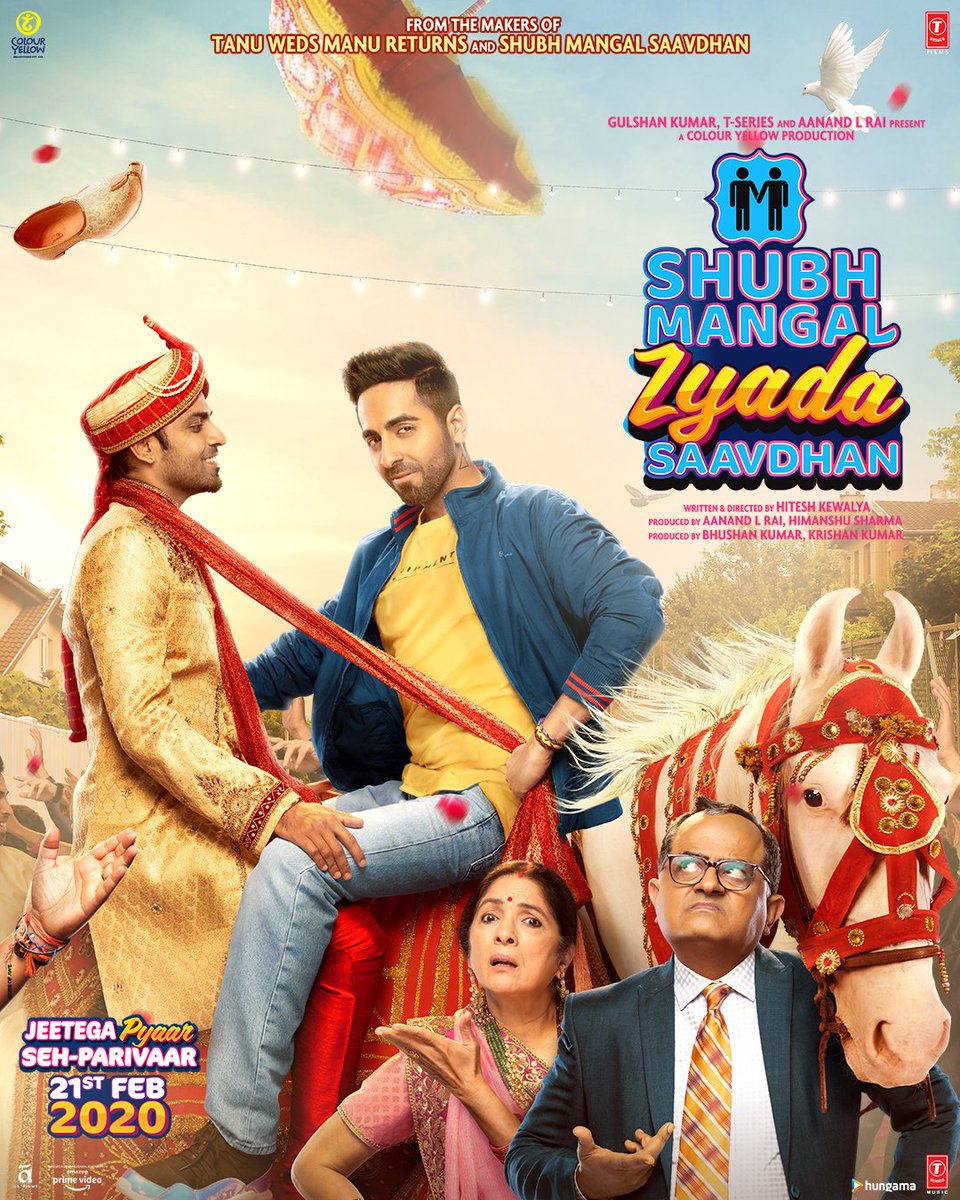
Shubh Mangal Savdhan, dir. R.S. Prasanna, 2017
Bollywood too, has its LGBTQ+ milestones. Shubh Mangal Zyada Savdhan (2020), was the first mainstream Hindi film to show a gay couple with dignity, instead of portraying them as ridiculous jokes. But Bollywood still has its contradictions: some directors, queer themselves, although never openly, continue to depict homosexuality through cheap gags. And of course, the notorious casting couch in Bollywood does not discriminate by gender or sexuality.
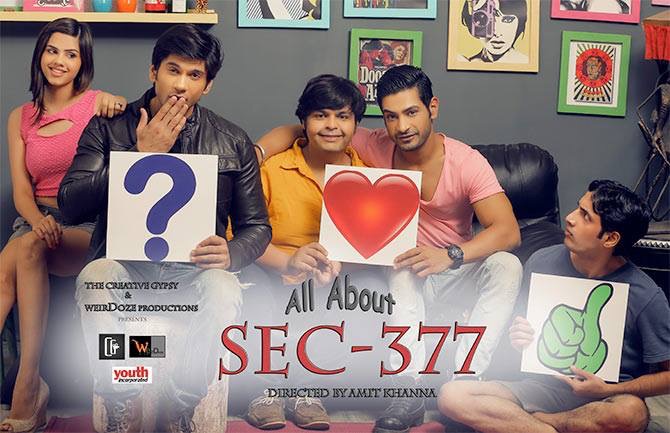
Beyond Bollywood, Youtube gave us the amazing series All About Section 377 (2016) named after the homophobic British colonial law criminalizing same-sex sex. The show follows a gay couple living in Mumbai and their cousin, who gradually learns to accept them.
South Asia also has long traditions of drag and gender play. In Karachi’s zoo, people once flocked to see Mumtaz Begum ممتاز بيگم — a fox-headed woman played by a drag performer. Basically it’s a woman with the body of a fox, but it is actually a man in drag and this is a popular spectacle in Karachi, Pakistan.
In Indian comedy shows like Comedy Circus and Comedy Nights with Kapil, drag remains a staple, though usually performed by cis straight men. Today, however, a new generation of drag queens — inspired by both local traditions and RuPaul’s Drag Race — are thriving. One of my favorites is Zeesh (@zeeessshh), a phenomenal Muslim drag artist from Bangalore and Mumbai. To be queer and Muslim in India is to face hostility from all sides, yet Zeesh embodies resilience and creativity.
Could there be a queer Indian Muslim cultural renaissance today, like in the Mughal courts — full of queer Sufi poetry, Shayaris, Qawalis, Gazhals composed by the likes of Amir Khusro, Bulleh Shah, and Shah Hussain, with homoerotic or gender-fluid themes, written in perhaps the most beautiful language in the world — Urdu? One can only dream.
And then, there are the Hijras — South Asia’s officially recognized “third gender”. Often trans women or intersex, Hijras once held respected ceremonial roles, blessing newborns and performing at weddings. But colonial rule, with its imported Christian homophobia, stripped them of their status. Today, they are pushed to the margins, surviving by begging on trains, performing on the streets, or being forced into sex work. Still, many people continue to believe in their blessings, giving them money in hopes of good fortune.
Their endurance is remarkable. Even in modern shows like Hiramandi (2024) which focuses on sex workers (trans and gay characters along with the cis female ones). This show is especially popular within queer communities, because themes of objectification, being desired only for sex, and unrequited love resonate all too strongly. Take Chandramukhi চন্দ্রমুখী in Devdas: an orphaned courtesan in the courts of Kolkata, Bengal. She falls deeply for a handsome, charming but alcoholic guy Dev — who in turn is madly in love with the extremely beautiful and sweet Paro…
Though Devdas (2002) isn’t officially a queer story, its tragic love triangle, steeped in longing, rejection, and impossible desire, feels profoundly queer.