Luxembourg Pride Heads Back to the Capital – With Mixed Feelings
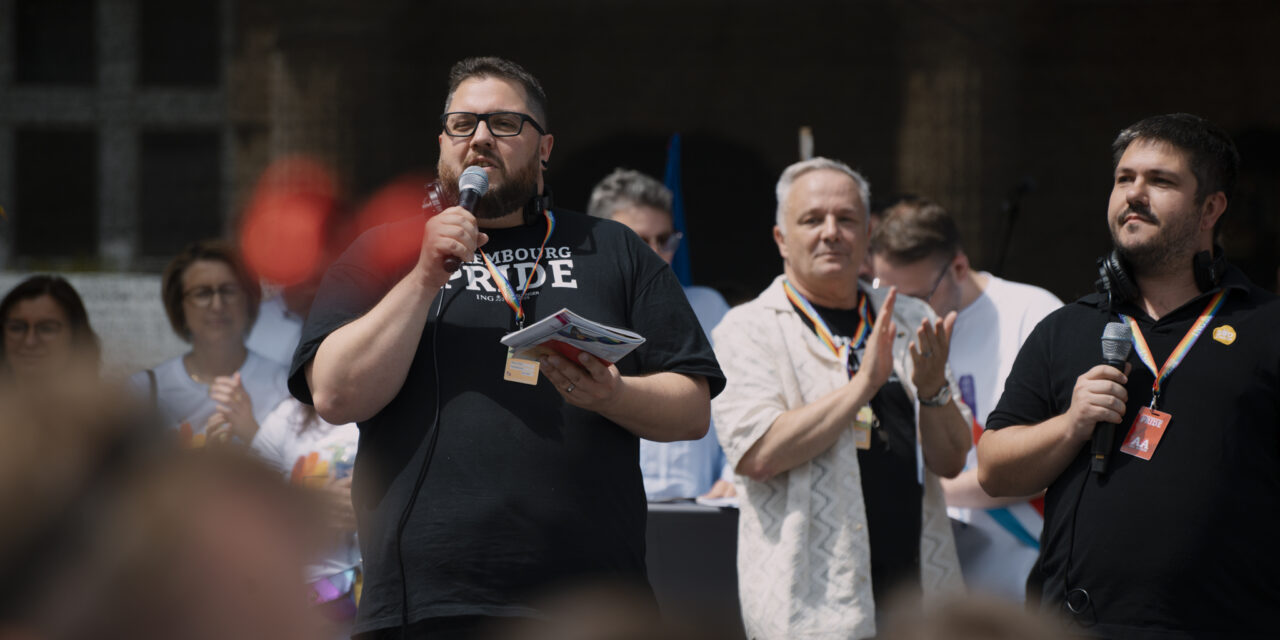
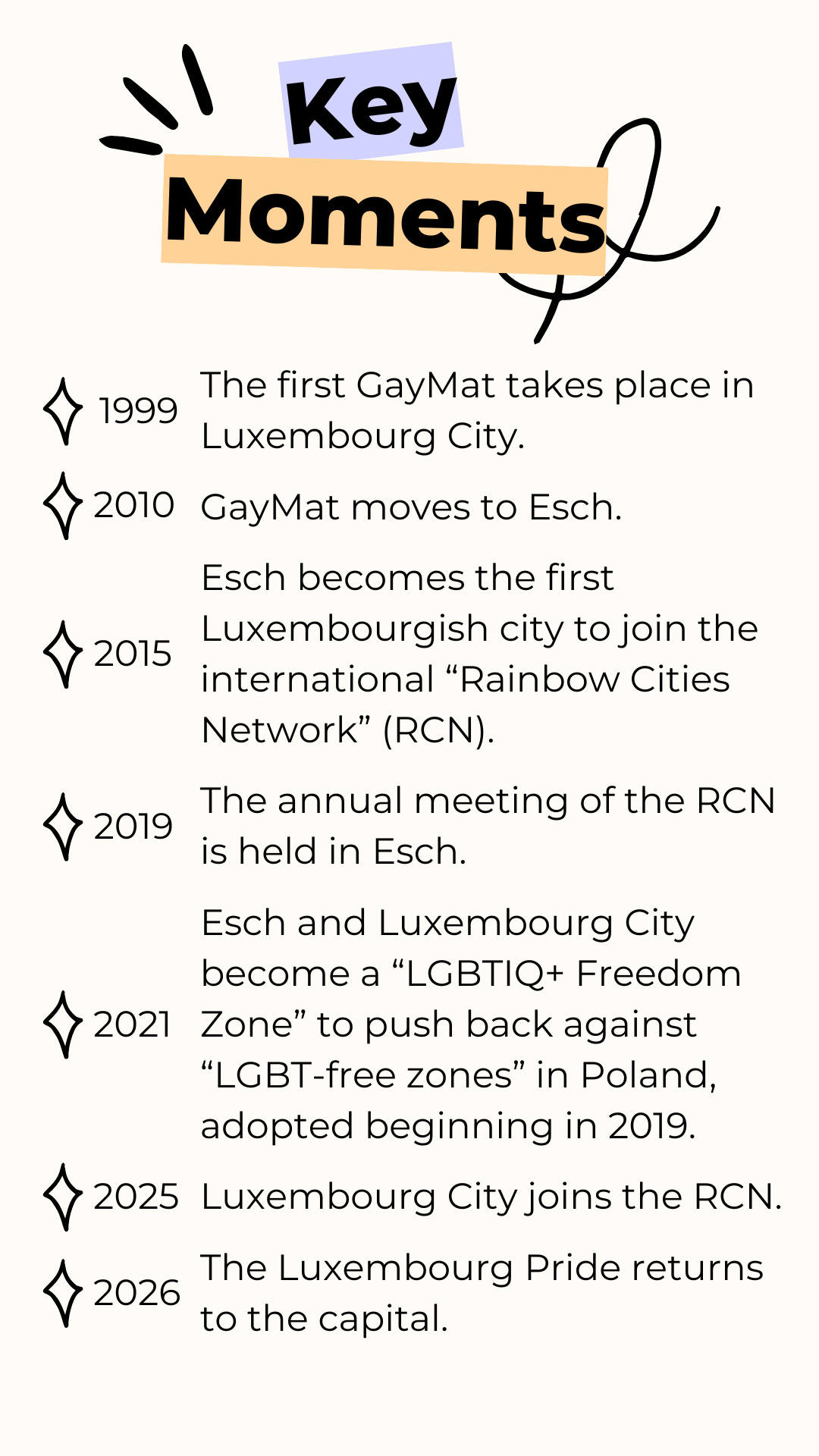
“We wouldn’t want to miss it,” said Vera Spautz (LSAP) in the daily newspaper Tageblatt in 2014. The then-mayor of Esch was referring to GayMat — now known as Luxembourg Pride — which was hosted in Esch for the first time in 2010, after organizers suspended the march in Luxembourg City and began searching for a new home.
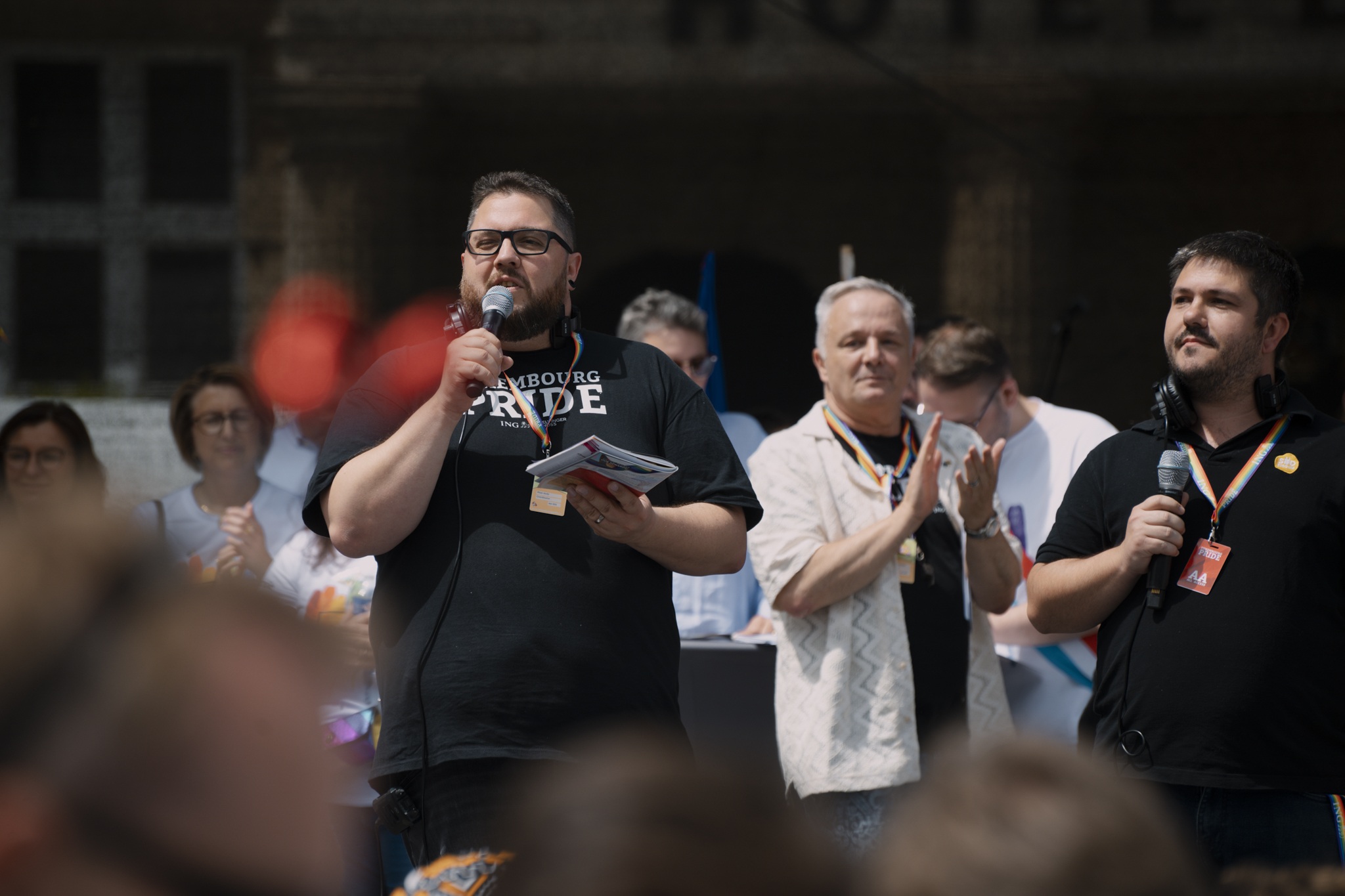
“We didn’t feel supported there. In 2009, we unexpectedly had to share the location with the flea market. The following year, it seemed impossible to reserve Place d’Armes again, and there was no discussion at all about a convention with financial support,” Andy Maar and Laurent Boquet, board members of Rosa Lëtzebuerg, told queer.lu.
“We had the impression that the capital did not understand what Pride is. In Esch, however, the situation was very different: the city understood the purpose of Pride, and from the very first year there was strong support, which has continued to this day.”
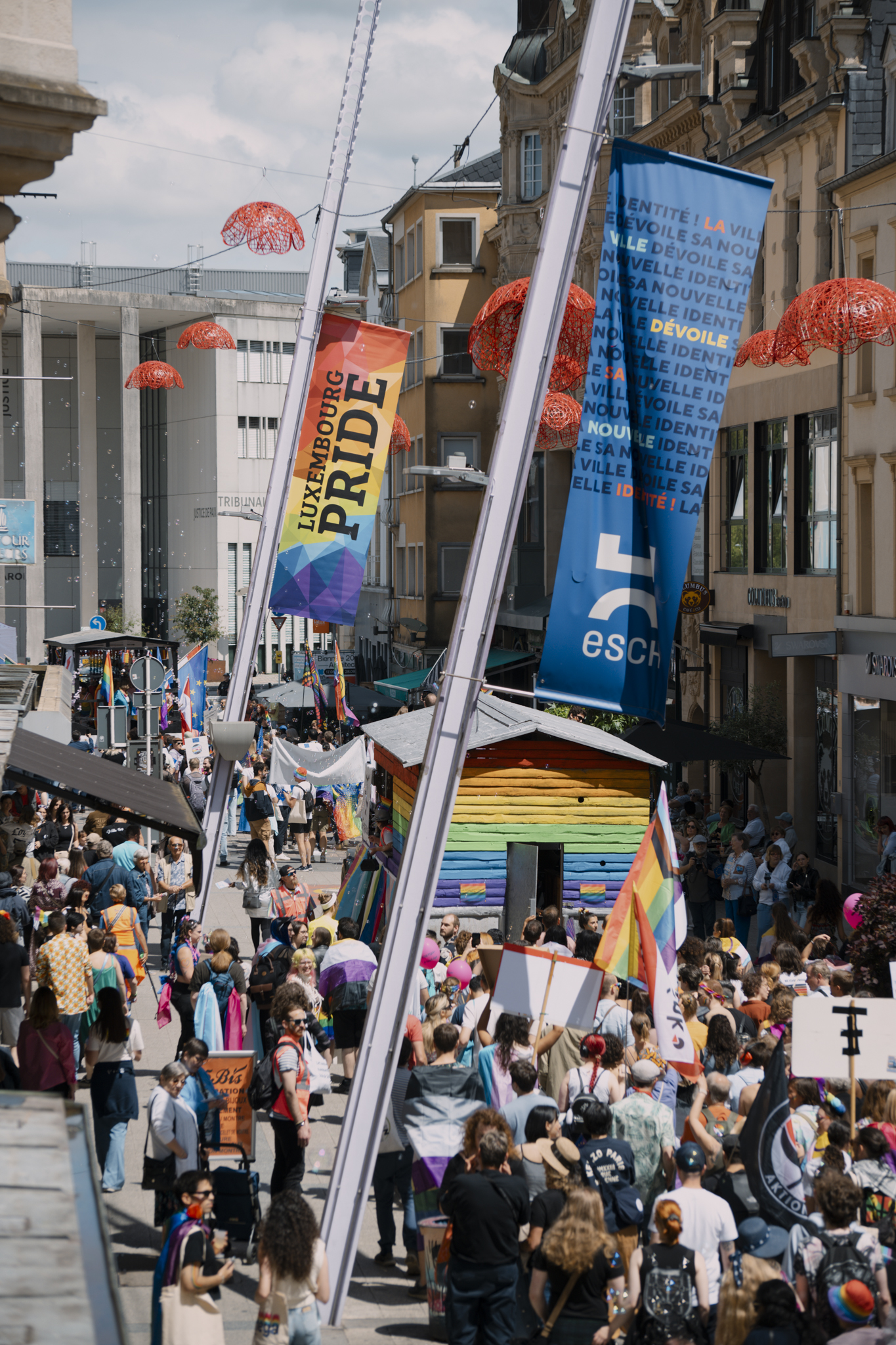
Twelve years later, that agreement is coming to an end. From 2026 onward, Luxembourg Pride will alternate between Esch-sur-Alzette and Luxembourg City.
But why this change?
“It also became clear that queer political issues are no longer taboo. In recent years, both Esch and Luxembourg City have implemented many measures in the areas of inclusion and the visibility of queer people,” said Maar and Boquet.
“It was therefore only logical that Luxembourg City reached out to us to discuss Pride. Our exchanges with the mayors of both cities reassure us that Pride has the support of both.”
No Hard Feelings in Esch
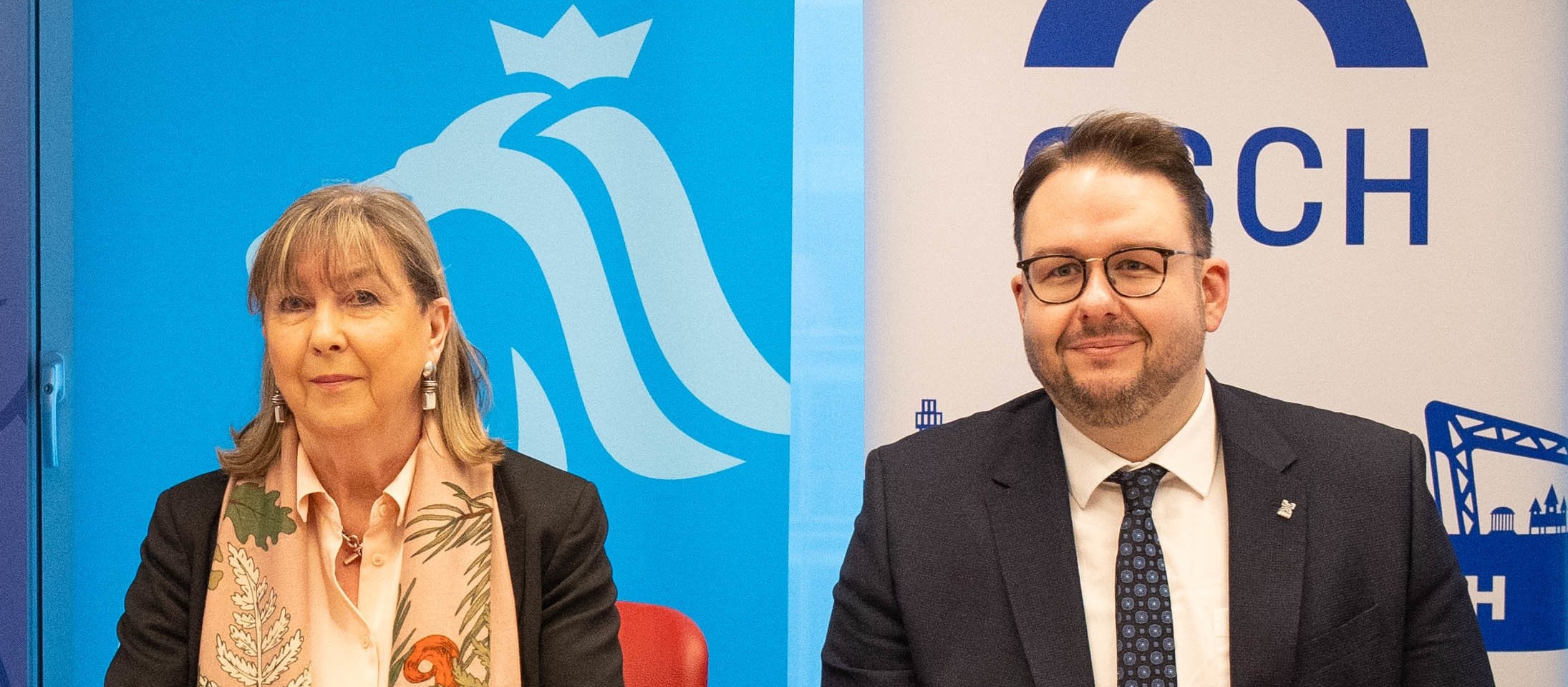
In December 2025, Esch Mayor Christian Weis (CSV) told Tageblatt that the relocation of Pride was still pending a final decision. Weis appeared calm and open-minded back then. “I am still relaxed about it”, assured the mayor to queer.lu, now that the situation is clear. “We are very proud and happy to have been the host city of Luxembourg Pride in the past. We have always said that we strongly identify with its values of coexistence, solidarity, and human rights. We see ourselves as a city of living together, and we have demonstrated this over decades.”
He understood the decision: “Luxembourg Pride has evolved into a national event and continues to grow. It is logical that the organizers would at some point want to expand beyond Esch. Having Luxembourg City as the capital also carries strong symbolic value. Therefore, alternating between the two cities makes sense.”
The Mood in Luxembourg City
It is unclear how his counterpart, Lydie Polfer (DP), the mayor of the municipality of Luxembourg, views all of this. She declined interview requests with queer.lu. Instead, she referred us to Maurice Bauer, the municipality’s First Alderman, deputy and fellow party member of Christian Weis.
Bauer has been a part of the city council since 2011. He has spoken out on the return of the Luxembourg Pride to the capital on several occasions in the past and emphasized that he never understood the decision to let the Pride go in the first place. He told the Wort: “Pride belongs in the capital. I am firmly convinced of that. Especially in times like these, it would be a national commitment to diversity.”
He stressed on several occasions that the municipal council was (almost) unanimously behind the initiative. This was also evident at the relevant sitting in May, during which the grant of 250,000 euros for Luxembourg Pride was approved. Opposition came from just one person: the right-wing deputy and alderman Tom Weidig (ADR). He was the only one to vote against the municipality’s agreement with Luxembourg Pride.
Weidig justified his vote by saying the event was “ideological” and served “political activism.” In his speech, he described the move of Luxembourg Pride to the capital as “de mauvais goût” (of bad taste) and said: “I can tell you that the people of Esch are unhappy that Luxembourg City has stolen their Pride Parade from them.”
Maurice Bauer’s response can be read in an article in Tageblatt, in which he is quoted as follows: “We haven’t taken Pride away from Esch; instead, a compromise has been reached with Esch and the organizers.” He also clarified that Luxembourg City spends less per resident on the Pride than Esch, which offered 125,000 euros.
For his part, Christian Weis is unaware of resentment towards the capital, at least in political circles. “There seems to be a broad consensus among most parties that this arrangement is a good thing. The exchange is functioning well,” said the mayor. “I have discussed several times with my colleague Maurice Bauer, how to ensure a fair, constructive collaboration on equal footing. That is what really matters. If it had been said that Pride would never return to Esch, that would have hurt much more.” He assumes that the ADR in Esch is rather pleased that Luxembourg Pride will not be taking place there this year.
The Implications
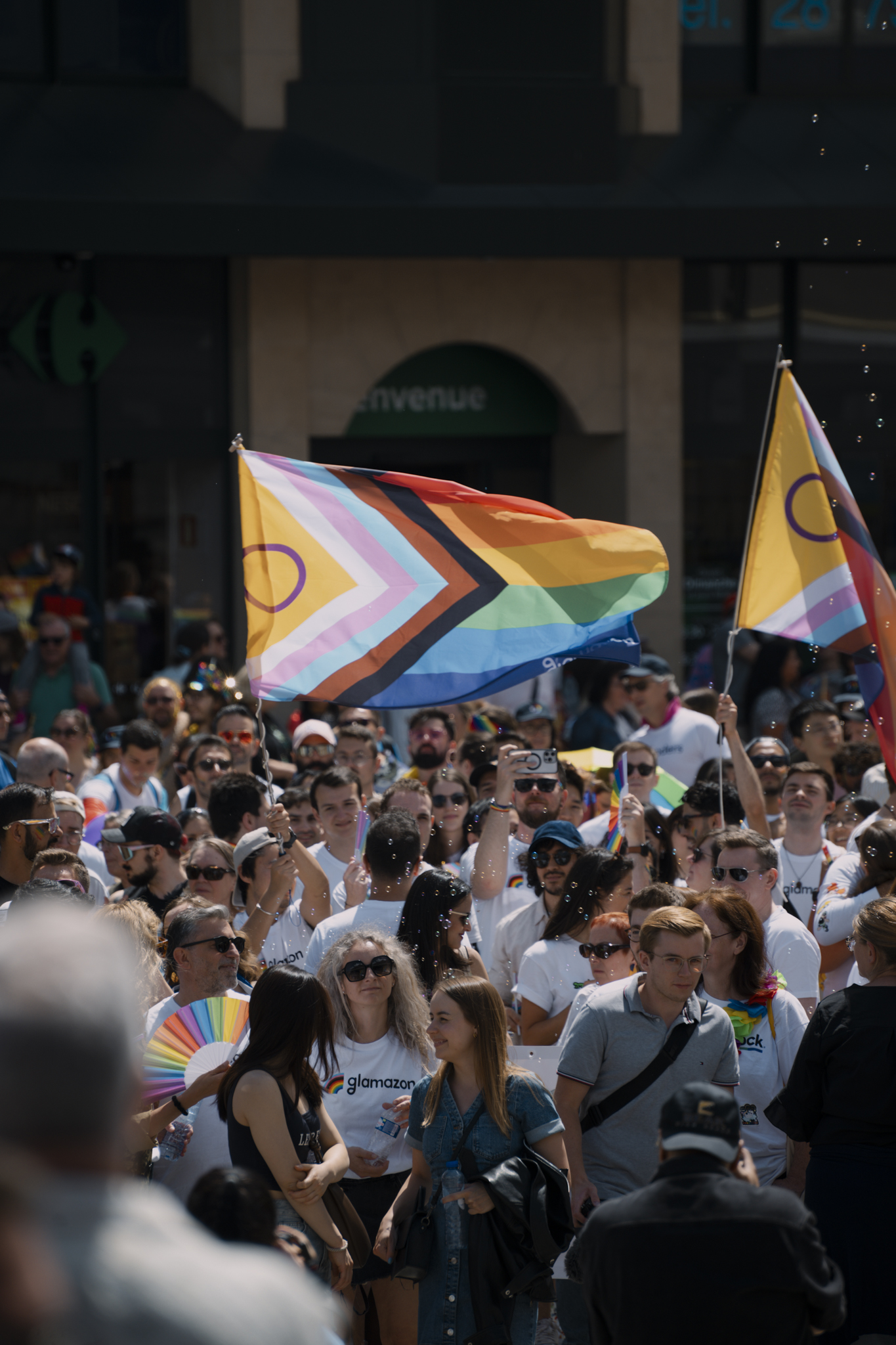
When asked, Christian Weis admits that rotating the Pride event could have a negative impact on tourism in Esch. He doesn’t have exact figures, but said it was clearly noticeable that the city was bustling during Pride. People came from everywhere. Weis observed that the Luxembourg Pride especially attracted visitors from the Greater Region.
“It was always an event that brought activity to Esch, especially in the surrounding days. There was more going on in the streets, people stayed in hotels, and they visited bars,” he clarified. “Of course, we hope that we will not feel this loss too strongly and that we can compensate for it with other tourist offers. If the international guests are already travelling to Luxembourg for Pride, I would like to think that they will also come to Esch — for example, to visit the National Museum of Resistance and Human Rights.”
Meanwhile, it is unclear what the Luxembourg City Tourist Office or the Union Commerciale Ville de Luxembourg (UCVL) expect from Luxembourg Pride. Nor is there any word of special offers or initiatives related to the event. The Luxembourg City Tourist Office declined an interview with queer.lu and referred us to the municipality; the UCVL had not responded by the time of the publication deadline.
Of course, the rotation doesn’t just affect the cities and tourism, but also the work of the organizing team. Even though everyone involved has high praise for each other, they still must adapt.
“In Esch, we have developed a certain routine over many years. We know the procedures and the people. Throughout all these years, Esch has always been extremely helpful in all matters, which we greatly appreciate”, explained Maar and Boquet. “The collaboration with Luxembourg City is something new. Both we and the relevant municipal services are still learning what hosting Pride in 2026 in the capital entails. Since this is a new endeavor and Pride differs from other events in several important ways, some processes remain relatively complex.”
One remaining challenge is logistics and ensuring the safety of participants — “an area where Esch has been very actively supportive,” according to Maar and Boquet.
“What we can say with certainty is that everyone we have worked with so far, both in Esch and now in Luxembourg City, has been highly motivated to contribute to the success of Pride. Most importantly, the political will exists in both cities and that can’t be taken for granted.”
The Political Landscape
Worldwide, one can observe trends and movements targeting LGBTQIA+ communities. Between GayMat’s founding in 1999 and its partial return to Luxembourg City this year, the legal and social landscape for LGBTQIA+ people has undergone significant changes worldwide. For instance, the Hungarian government under former Prime Minister Viktor Orbán (Fidesz) banned Pride events in Hungary in 2025. Budapest Pride and Pécs Pride took place anyway — as acts of protest.
The backlash is also evident in the realm of sponsorship. Contrary to expectations, the relocation of Luxembourg Pride to the capital has not resulted in increased support.
“It’s the opposite,” revealed Maar and Boquet. “The trend of large international companies becoming increasingly cautious about supporting projects in the so-called DEI (Diversity, Equity, and Inclusion) domain continues.”
Various factors play a role. U.S. President Donald Trump’s executive order “Ending Illegal Discrimination and Restoring Merit-Based Opportunity,” signed in January 2025, is one of them. Anyone working with the U.S. government is required to discontinue their diversity programs, and federal agencies are even prohibited from implementing them. Inflation and internal corporate decisions to scale back DEI initiatives in favor of other initiatives have also contributed to the trend.
The diversification of events during Pride Week in Luxembourg also plays a role. For example, some companies are investing in the “Pride Run”, organized by BeProud S.à.r.l.-S.I.S and Impact Luxembourg S.à.r.l.-S.I.S, rather than Luxembourg Pride a.s.b.l.
“While we are, of course, happy that LGBTQIA+ people are gaining more visibility overall, we also believe that companies — especially larger ones — have a certain social responsibility,” commented Maar and Boquet. “It is also a location advantage for them when their employees and clients benefit from the legal framework that has been fought for by the local community over many years.”
This is particularly relevant at a time when hostility toward LGBTQIA+ communities is increasing worldwide, including in Luxembourg. On a political level, this is partly due to the ADR, which regularly draws attention for its anti-LGBTQIA+ statements and harsh criticism of relevant NGOs in Luxembourg.
In his previously mentioned speech, Tom Weidig not only tried to sow discord between the residents of Esch and those of the capital, but also accused the Luxembourg Pride ASBL, formerly known as Rosa Lëtzebuerg Events (founded in 2014), of lacking financial transparency because no annual financial statements have been filed with the Luxembourg Business Registers since 2014. Weidig also suggested that Rosa Lëtzebuerg might still hold unused funds.
“We see this criticism for what it is intended to be: it serves to reinforce the self-image of the ADR as a conservative opposition party and to appeal to its electorate,” responded Maar and Boquet. “However, we must respond where he spreads half-truths: it is true that Rosa Lëtzebuerg holds larger sums of money on its accounts at certain times of the year, but these funds are allocated to financing the Rainbow Center and paying staff salaries. These budgets, which are established through agreements with the state, cannot be used for other purposes. To avoid precisely this kind of mixing of funds, Pride has been separated from the operational activities of Rosa Lëtzebuerg.”
Rosa Lëtzebuerg Events had primarily a symbolic significance and no financial activities.
“Starting with the 2025 edition, a major structural reorganization was undertaken. The association has been completely redefined, modernized, and restructured to meet the current and future needs of Luxembourg Pride,” stated Rosa Lëtzebuerg upon request. “In this context, the association is now officially named Luxembourg Pride ASBL. In a clear commitment to good governance, transparency, and organizational autonomy, all financial operations related to Luxembourg Pride are now managed directly by Luxembourg Pride ASBL. This new organization ensures clear, independent, and transparent financial management vis-à-vis institutional partners, sponsors, volunteers, and the public.”
Accordingly, separate financial statements will also be issued in the coming years.
Overall, Luxembourg Pride is undergoing a transformation in many ways. Christian Weis is less emotional than one of his predecessors, Vera Spautz, but he assured us: “I will for sure visit the Luxembourg Pride in the capital. It may even be a bit more relaxed for me, since I don’t need to be present in case organizational questions arise.”
Luxembourg Pride doesn’t happen in a vacuum — it’s part of a global movement. In a brief interview with queer.lu, Patrick van der Pas of the European Pride Organizers Association (EPOA), discusses the significance of Luxembourg Pride for Europe and explains why, in defending LGBTQIA+ rights, it’s not just the capital cities that matter.
queer.lu: Patrick van der Pas, this year Luxembourg Pride is moving from Esch to the capital, Luxembourg City. Why is it important for Pride’s visibility that it takes place in a capital city?
Patrick van der PasCapital city Pride events often play an important national role because they usually receive more national media attention and are (often) closer to political institutions. Having pride in a capital city can therefore have a significant impact as it helps amplify discussions around LGBTQIA+ rights on a national and international level.
queer.lu: What role do regional and local Pride events play for the communities?
Patrick van der PasRegional and local Pride events can play a very important role for LGBTQIA+ communities. They help create visibility and safer spaces within local and regional contexts, especially in places where LGBTQIA+ representation may still be limited. For many people, local Pride events are also more accessible and personal than larger national events. They can strengthen local communities, create opportunities for dialogue with local institutions and residents, and help people feel seen and represented within their own environment. In recent years, we have increasingly seen smaller Pride events become important symbols of visibility and resilience across Europe. National and regional Prides therefore play an important and complementary role within the wider Pride movement and the lived experiences of the LGBTQIA+ community.
queer.lu: What significance does Luxembourg Pride hold for Europe?
Patrick van der PasLuxembourg Pride holds importance not only on a national level, but also within the wider Greater Region. Due to Luxembourg’s location and international character, it naturally connects communities across borders. It should also not be forgotten that Luxembourg hosts several important European institutions. This gives Prides in Luxembourg additional symbolic relevance within the broader European discussion around LGBTQIA+ rights and visibility. At the same time, Luxembourg Pride can also serve as an example for other smaller European countries by showing how local Pride events can still have national and international impact.
International cooperation between Pride organizations, including through EPOA and events such as EuroPride, further demonstrates how local Pride events can amplify international solidarity and connect European LGBTQIA+ communities while remaining rooted in their local context. Luxembourg Pride is also a member of EPOA and therefore also contributes to a stronger Pan-European Pride movement this way.
Patrick van der Pas is a board member of the EPOA. Van der Pas oversees communication and media inquiries.