 English
 Français
 Deutsch
Stories from outside – the museum can be whatever you want it to be
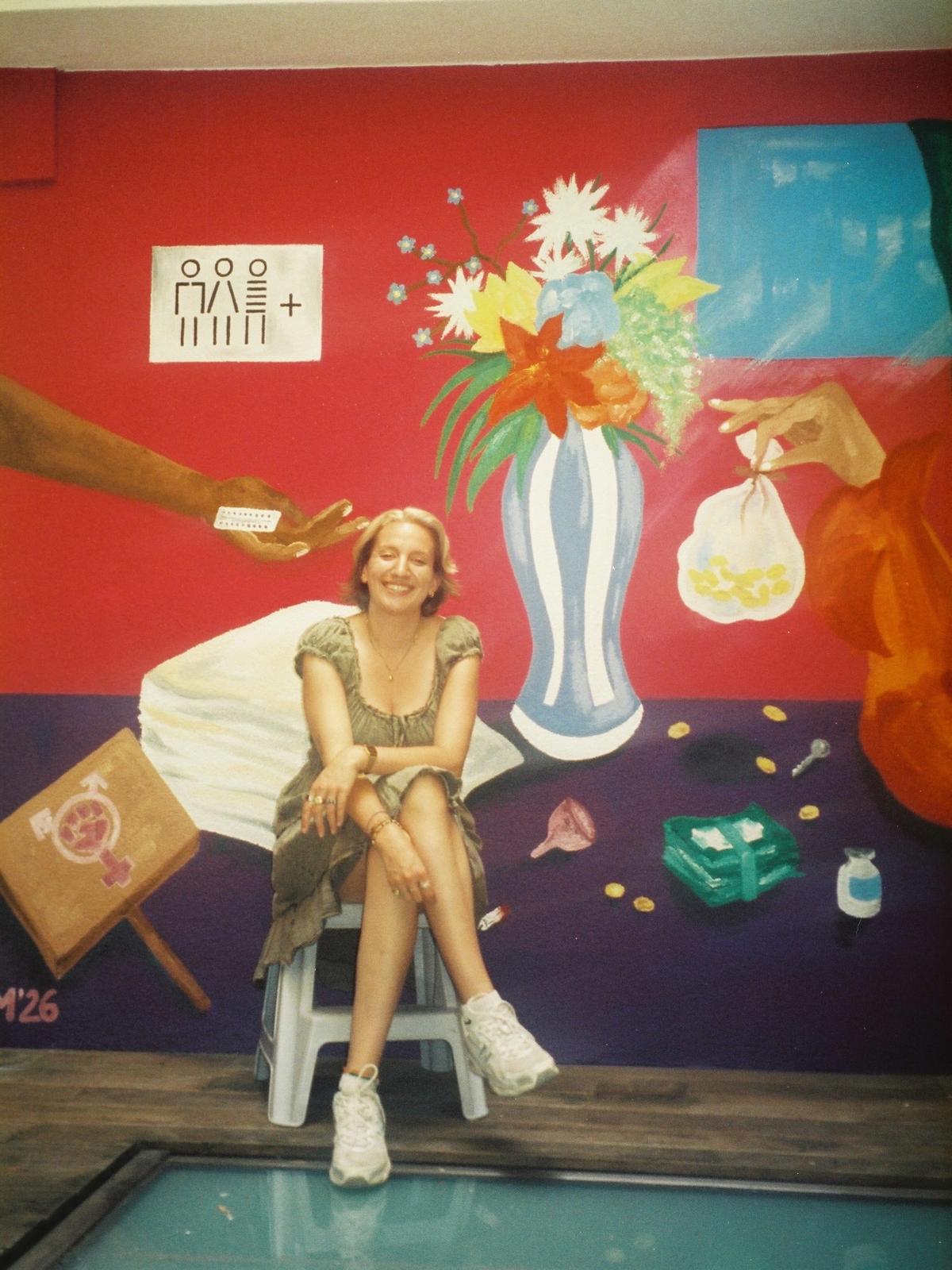
I’ve been going to museums ever since I was little. Instead of playgrounds and amusement parks, I wandered through long museum hallways, surrounded by Mona Lisas staring me down. As my Dad dragged me from one classical museum to another (because contemporary or modern art was not yet on the agenda), I learned to enjoy it. I gradually felt at home in the dramatic lighting of Caravaggio, the perfectionism of Titien and the wild compositions of Arcimboldo. I interiorised the rules of big artistry. The rule of thirds, value contrasts, pigments. And it all made sense at the time.
As I grew older and started going on my own adventures, I learned to see things from perspectives that were foreign or different from my own. In real life, through new connections, and on paper, through my beloved books. I started listening to voices that I had never heard of before. I started bringing more nuance to my life.
And suddenly the museum didn’t look so rigid anymore.
The rules I had learned started shifting. I started questioning my own interpretations of them, as well as the lens through which our society approaches art and art history as a whole. Everything we know is far less objective than we are led to believe (everything is, in fact, subjective).
So, let’s lean into our own human subjectivity and have some fun with it.
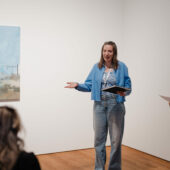
Stories from outside is a guided-visit concept that invites participants to reimagine the museum by seeing artworks under a different light, with the help of literature. More specifically, through queer, decolonial, feminist, ecological and intersectional voices that have existed “outside” the museum.
The goal is to bring perspectives that are often absent from cultural institutions into the museum. It is about putting ourselves in other people’s shoes through art, and opening up space for new interpretations, feelings, and ways of seeing.
Because even the 50-word descriptions next to centuries-old paintings matter. The tone, the perspective, the assumptions we have, matter.
Let’s get into it.
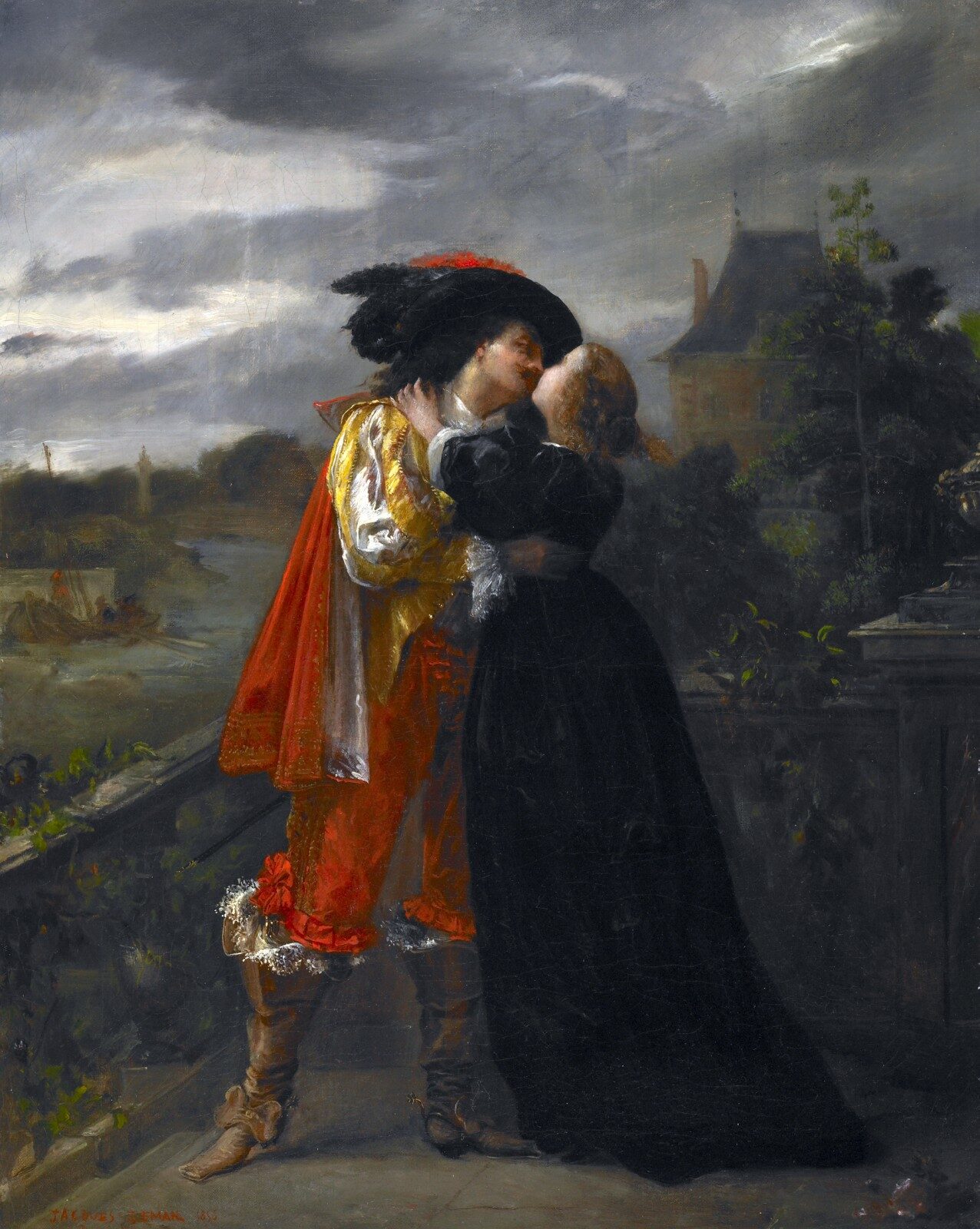
Take Jacques Edmond Leman’s The Farewell Kiss, painted in 1856 oil on canvas and displayed in Gallery –1 , French Art Around 1850.
Have a good look at it.
Now place beside it an extract from 300 000 Kisses: Tales of queer love from the ancient world by Sean Hewitt and Luke Edward Hall, based on Sappho’s Fragment 31.
Sappho, for context, was an iconic, lesbian, Greek poet (yes, in that order) from Lesbos that wrote openly and intensely about her love and desire for women:
That man looks like a god descended,
The one pressed to you, his face in yours,
Your breaths together in the sweet talk
and laughter of your embrace…
It makes my heart flutter, my chest
uneasy to watch the two of you.
I try to speak, but my voice
Is lost with the sight of you.
There is a fire, a gauze of flame
Flickering under my skin,
And my vision hazes, blurs,
and I hear the thunder
of my own heart beating in my ears,
And I find I have turned pale,
Sallow as the grass, almost on the edge
Of death as I watch, and know
I must stay here, feeling always so …
What happens when we look at this 1856 painting through her eyes, or through the eyes of someone whose experience of love has historically been left outside of the museum?
The painting might look different.
The artwork itself has not changed, but our relationship to it has.
Take Sappho’s words:
On the surface, we might see the familiar scene of a man and a woman sharing a farewell kiss. But through Sappho’s perspective, the man becomes almost incidental. What comes into focus is the woman in his arms and the physical ache of watching someone you desire be intimate with someone else.
Her heart flutters, her voice disappears, her vision blurs; desire becomes something felt throughout the body, almost overwhelming her.
We are no longer simply looking at a kiss between two lovers, we can imagine the scene from the perspective of a woman longing for the woman in the man’s arms. The museum opens up and becomes a space for interpretation, dialogue, and possibility precisely because of the subjectivity we bring to the art.
The exploratory visits at the Villa Vauban will start again in October, combining artworks from the collection with literary texts and questions around identity, systems of power, belonging and other ways of seeing.
The project starts from an awareness that Villa Vauban and its collections are institutionally and symbolically charged. What happens when we bring in stories, perspectives, and experiences from outside into the museum?
Perhaps the museum can be whatever we want it to be.
Perhaps it can even become a place where those stories finally have room to enter.
See you there.